
Pelvic floor muscle exercise plus manometric biofeedback,
does it really help with Improved erectile function in men with erectile dysfunction?
research showsPelvic floor muscle exercise plus manometric biofeedback is rated C because it may improve erectile function in men with erectile dysfunction. The trial randomized 55 men, but the three-month primary analysis was a completer analysis of 50, with 25 per group, rather than intention to treat. The successful primary IIEF erectile-function endpoint showed an adjusted between-group difference of 7.0 points (95% CI 2.4 to 11.6), exceeding the study's cited six-point clinical-improvement threshold. A single small trial and crossover of controls after three months left no long-term randomized comparison, supporting C with 47 points.
ads claimPromotion can turn this into a claim that Kegel exercises cure erectile dysfunction, outperform medication, or work for everyone. The trial evaluated a three-month combined intervention with physiotherapist instruction, pressure feedback, and lifestyle advice, and did not directly compare medication.
Useful facts when choosing a product
- The pivotal trial used five weekly 30-minute physiotherapist sessions with manometric feedback to verify correct contraction, followed by daily home exercise for six months.
- The intervention was a combined program of correct muscle selection, contraction and relaxation, and sustained practice rather than simply increasing repetitions of unsupervised Kegel exercises.
- Men with pelvic pain, painful urination or ejaculation, or suspected hypertonic pelvic floor should seek male pelvic-floor assessment before strengthening.
- Erectile dysfunction can signal vascular disease, diabetes, medicine effects, hormonal disease, neurologic disease, or psychological factors, so new or persistent symptoms require etiologic assessment.
Chamgap Semantic Classification Code
Candidate index · review held
X.pelvic-floor-muscle-exercise-plus-manometric-biofeedback.behavioral.erectile-function-with-erectile-dysfunction.improve.UNKBehaviors, exposures and policies > Pelvic floor muscle exercise plus manometric biofeedback > Behavioral delivery > erectile function with erectile dysfunction > Improvement claim > Unknown
An automated migration candidate, not an issued permanent code; exact claim scope remains under review. This machine-generated migration candidate helps retrieval but is not a permanent assignment. The original verdict ID and URL remain authoritative.
What the research actually shows
The single-center United Kingdom trial randomized 55 men with erectile dysfunction for at least six months to pelvic floor exercise, manometric biofeedback, and lifestyle advice (28) or lifestyle advice alone (27). Only 25 per group had three-month data, making the primary analysis a completer rather than intention-to-treat analysis. The prespecified IIEF erectile-function primary endpoint succeeded with an adjusted 7.0-point difference, P=0.004, above the cited six-point clinical threshold. Controls then crossed to intervention, so six-month results lacked a concurrent randomized control. A 2019 review included ten trials, five concerning erectile dysfunction, but could not pool them because methods and protocols were heterogeneous and quality was low to moderate.
Why this is classified as C (47)
The IIEF erectile-function primary endpoint succeeded by an adjusted 7.0 points in 50 completers and exceeded a six-point clinical-improvement threshold. The analysis was not intention to treat, and one small short-term trial without long-term randomized control or independent confirmation supports C with 47 points.
Counterpoint. This may be a low-risk adjunct for men who prefer a nonpharmacologic option or have suspected weakness, but it does not replace standard evaluation or establish superiority over PDE5 inhibitors.
Rejudgment record. Cross-check applied — Distinguished 55 randomized participants from the actual three-month analysis of 50 completers, accepted the adjusted 7.0-point IIEF primary-endpoint difference and clinical threshold, and applied the small single non-ITT trial ceiling. Only 50 completers were analyzed after 55 were randomized, so the analysis was not intention to treat, and no independent confirmatory trial exists.
Sub-claim grades by effect
This ingredient is marketed for several effects. A single overall grade blends strong and weak claims together, so each effect is graded separately here. The overall grade reflects the strongest disconfirming or core claim.
| Effect (sub-claim) | Grade | Basis |
|---|---|---|
| Improved IIEF erectile function at three months | C | The primary endpoint succeeded by an adjusted 7.0 points in 50 completers, but this was one small non-ITT trial. |
| Sustained erectile-function improvement for six months or longer | C | Human six-month follow-up exists, but controls crossed to intervention after three months, leaving no concurrent randomized comparison and no established longer durability. |
| Superior erectile-function improvement versus PDE5 inhibitors | ? | A repeat search found no human randomized study directly testing this comparative efficacy endpoint. Narrative comparison with a separate drug trial is not a head-to-head comparison. |
Cross-check — AI research and Codex final gate
Evidence Table
| Study | Design | Sample | Funding | Endpoint | Result | Weight |
|---|---|---|---|---|---|---|
| Dorey G et al. 2004 | Single-center randomized controlled trial with control crossover after three months | 55 randomized (28/27); three-month completer analysis 50 (25/25), not intention to treat | Inadequately reported; hospital and university academic research | Primary: three-month IIEF erectile-function domain | Primary endpoint met: baseline-adjusted between-group difference 7.0 points (95% CI 2.4 to 11.6), P=0.004. | Key direct randomized evidence, but single, small, and completer-based |
| Myers C and Smith M. 2019 | Systematic review of pelvic floor muscle training | 10 trials, including 5 concerning erectile dysfunction | Academic research; no manufacturer concentration reported | Improvement or normalization of erectile function and premature-ejaculation outcomes | Generally positive direction, but low-to-moderate study quality and intervention heterogeneity prevented pooling. | Evidence breadth and quality-limitation assessment |
Receipt — 2 References
All 2 cited sources were verified for existence at the original page (as of 2026-07-24).
Final verification and publication gate: Codex · Evidence date: 2026-07-24 · Corrections: none
Cite this verdict
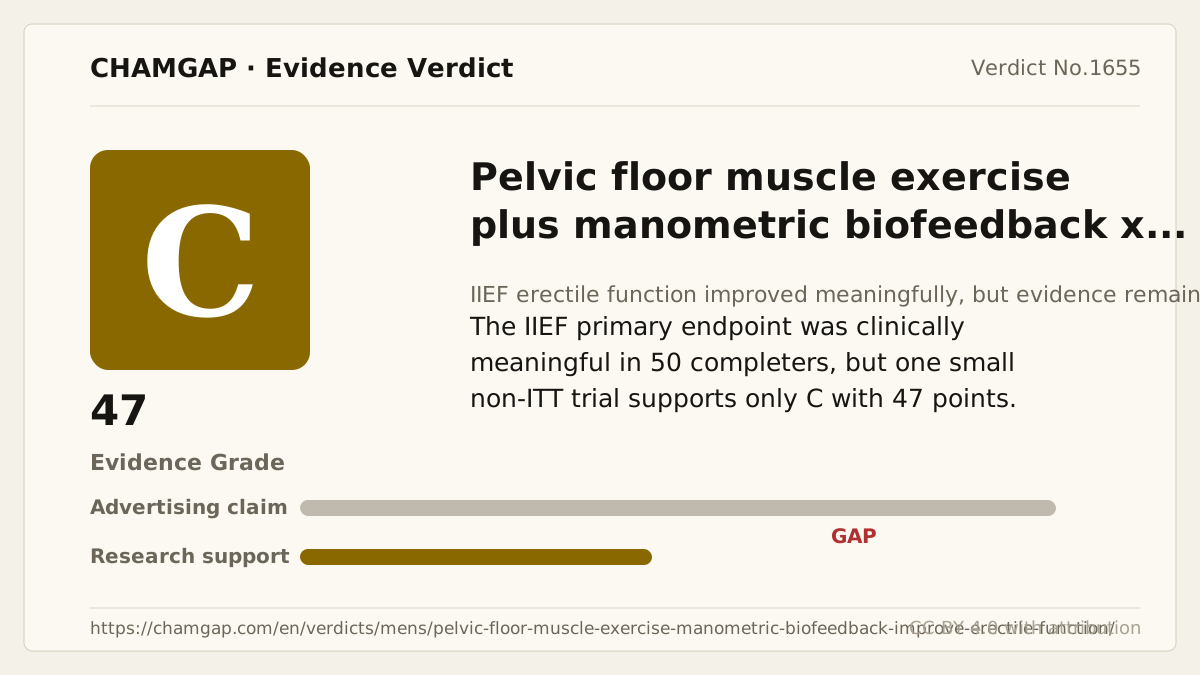
[Chamgap] Pelvic floor muscle exercise plus manometric biofeedback x improved erectile function — Evidence Grade C·47. 2 cited sources checked. Source: https://chamgap.com/en/verdicts/mens/pelvic-floor-muscle-exercise-manometric-biofeedback-improve-erectile-function/ · CC BY 4.0CC BY 4.0 — free to use with attribution; do not distort grades, numbers, or verdict meaning.
What this document does and does not do
Chamgap is an information source. It reports what research has and has not confirmed; it does not tell readers what to take or buy. That decision belongs to readers and, when needed, medical or legal professionals. This verdict reflects literature available up to the search date and may change as new research appears. Nothing here is medical advice.