
Finasteride 5 mg,
does it really help with Reduced prostate-cancer diagnoses in men aged 55 years or older?
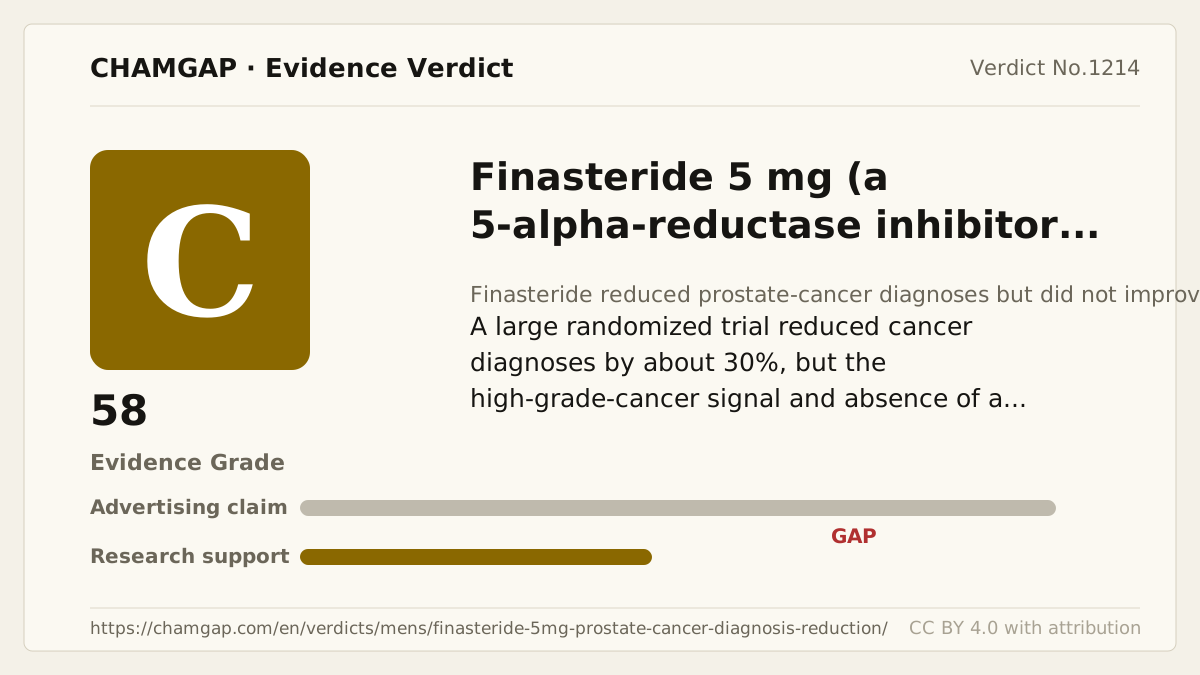
research showsFinasteride 5 mg reduced prostate-cancer diagnoses in the large randomized PCPT, but the final rating is C. In the extended analysis, diagnoses occurred in 10.5% versus 14.9% of participants (RR 0.70), while high-grade cancers with Gleason scores 7 to 10 were more common, at 3.5% versus 3.0%, and 15-year overall survival was virtually identical, at 78.0% versus 78.2%. Because finasteride reduces prostate volume and PSA, it can alter biopsy and detection patterns, so fewer diagnoses do not automatically mean fewer lethal cancers or deaths. Cancer prevention is not an approved indication, and sexual adverse effects, breast symptoms, and the high-grade-cancer signal are separated under safety.
ads claimA summary can easily say 30% prostate-cancer prevention, but the PCPT outcome was cancer detected through screening and protocol biopsies. Omitting the reduction in detected low-grade disease, high-grade signal, and unchanged survival exaggerates the clinical meaning.
Useful facts when choosing a product
- Finasteride 5-mg products such as Proscar are prescription medicines for benign prostatic hyperplasia. They should be distinguished by dose and indication from 1-mg products used for male-pattern hair loss.
- The 5-mg-per-day prostate-cancer prevention strategy studied in the PCPT is not an approved indication. Men should not start it solely for cancer prevention without discussing individual risk and screening plans with a clinician.
- Finasteride can reduce serum PSA by about 50%, changing interpretation of the test. A confirmed increase during treatment warrants evaluation even when the value remains within the usual range for untreated men.
- Decreased libido, erectile dysfunction, ejaculatory disorders, and breast tenderness or enlargement can occur. The PCPT high-grade-cancer signal remains a labeling precaution.
Chamgap Semantic Classification Code
Candidate index · review held
M.finasteride.UNK.prostate-cancer-diagnoses-aged-or-older.reduce.placeboMedicinal interventions > Finasteride > Unknown > prostate-cancer diagnoses aged or older > Reduction claim > Placebo
An automated migration candidate, not an issued permanent code; exact claim scope remains under review. This machine-generated migration candidate helps retrieval but is not a permanent assignment. The original verdict ID and URL remain authoritative.
What the research actually shows
The 2003 Thompson PCPT randomly assigned 18,882 men aged 55 years or older with a normal digital rectal examination and PSA no higher than 3.0 ng/mL under double masking to finasteride 5 mg per day or placebo. Among men with final-status data, prostate cancer occurred in 18.4% versus 24.4%, while Gleason 7-to-10 cancers occurred in 6.4% versus 5.1%. The 2013 Thompson long-term follow-up assessed cancer incidence and up to 18 years of survival among 18,880 randomized participants. Cancer was diagnosed in 989 of 9,423 men (10.5%) versus 1,412 of 9,457 men (14.9%), but high-grade cancer occurred in 333 men (3.5%) versus 286 men (3.0%), and 15-year overall survival was 78.0% versus 78.2%. This directly supports fewer diagnoses, not prevention of lethal prostate cancer or longer life.
Why this is classified as C (58)
The large double-blind PCPT strongly supports a reduction in prostate-cancer diagnoses, including in extended follow-up. The endpoint is influenced by prostate size, PSA, and biopsy detection, however, and it was accompanied by a high-grade-cancer signal, unchanged 15-year overall survival, and an unapproved prevention indication. Applying the disputed-diagnosis-endpoint and no-survival-benefit rule gives C with 58 points. Sexual effects, breast symptoms, and the high-grade signal remain separate safety issues.
Counterpoint. For men taking 5 mg for benign prostatic hyperplasia, the PCPT does not mean that the medicine increases total prostate-cancer diagnoses. PSA adjustment and evaluation of a sustained increase are still necessary, and starting treatment solely for cancer prevention is a separate decision.
Rejudgment record. New verdict — Accepted the reduction in prostate-cancer diagnoses in the large randomized PCPT, but applied the C ceiling for a disputed diagnosis endpoint because prostate shrinkage and PSA reduction affect detection, a high-grade-cancer signal occurred, 15-year overall survival was unchanged, and cancer prevention is unapproved
Sub-claim grades by effect
This ingredient is marketed for several effects. A single overall grade blends strong and weak claims together, so each effect is graded separately here. The overall grade reflects the strongest disconfirming or core claim.
| Effect (sub-claim) | Grade | Basis |
|---|---|---|
| Reduced prostate-cancer diagnoses in men aged 55 years or older | C | Diagnoses were strongly reduced in the large PCPT, but detection effects, the high-grade signal, and no survival gain limit the claim to C. |
| Reduced death from prostate cancer | D | Long-term follow-up did not establish a significant reduction in prostate-cancer deaths. |
| Prolonged overall survival | D | Fifteen-year overall survival was 78.0% with finasteride and 78.2% with placebo. |
Cross-check — AI research and Codex final gate
Evidence Table
| Study | Design | Sample | Funding | Endpoint | Result | Weight |
|---|---|---|---|---|---|---|
| Thompson IM et al. 2003 PCPT | Multicenter randomized double-blind placebo-controlled seven-year prevention trial | 18,882 men aged 55 years or older; 9,060 included in the final-status analysis | Supported by the United States National Cancer Institute | Biopsy-confirmed prostate-cancer prevalence or diagnosis and Gleason grade over seven years | Cancer was diagnosed in 18.4% versus 24.4%, a 24.8% reduction, but Gleason 7-to-10 cancer occurred in 6.4% versus 5.1%. | Key large randomized diagnosis-endpoint trial |
| Thompson IM Jr et al. 2013 PCPT follow-up | Long-term cancer-incidence and survival follow-up by randomized assignment | 18,880 eligible randomized men with up to 18 years of follow-up | Supported by the United States National Cancer Institute | Prostate-cancer diagnosis, high-grade cancer, overall survival, and survival after diagnosis | Diagnoses were 10.5% versus 14.9% (RR 0.70), high-grade cancers were 3.5% versus 3.0% (RR 1.17), and 15-year overall survival was 78.0% versus 78.2% (HR for death 1.02). | Confirmation of persistent diagnosis reduction and no survival benefit |
Receipt — 2 References
All 2 cited sources were verified for existence at the original page (as of 2026-07-23).
Final verification and publication gate: Codex · Evidence date: 2026-07-23 · Corrections: none
Cite this verdict
[Chamgap] Finasteride 5 mg x reduced prostate-cancer diagnoses in men aged 55 years or older — Evidence Grade C·58. 2 cited sources checked. Source: https://chamgap.com/en/verdicts/mens/finasteride-5mg-prostate-cancer-diagnosis-reduction/ · CC BY 4.0CC BY 4.0 — free to use with attribution; do not distort grades, numbers, or verdict meaning.
What this document does and does not do
Chamgap is an information source. It reports what research has and has not confirmed; it does not tell readers what to take or buy. That decision belongs to readers and, when needed, medical or legal professionals. This verdict reflects literature available up to the search date and may change as new research appears. Nothing here is medical advice.