
Desmopressin ODT,
does it really help with Reduced nocturnal voids and longer sleep until first void in adult men with confirmed nocturnal polyuria?
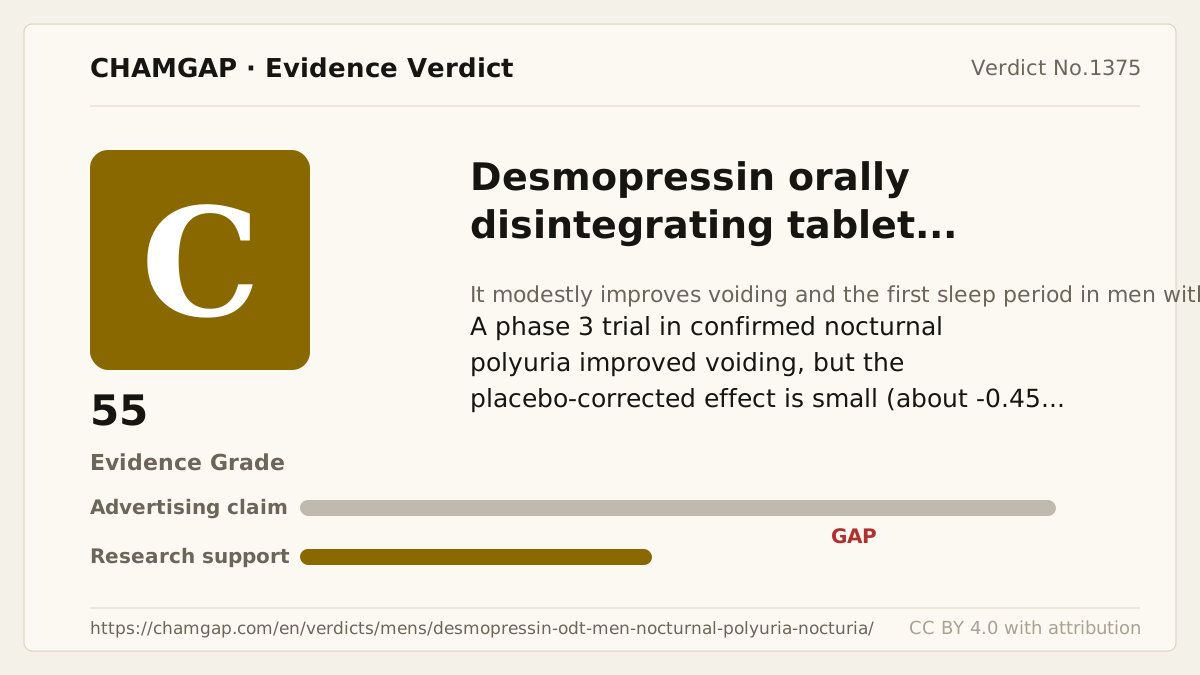
research showsDesmopressin ODT is rated C. Placebo-controlled phase 3 evidence shows fewer nocturnal voids and a longer first sleep period in men with confirmed nocturnal polyuria, but the placebo-corrected effect is small (about -0.45 voids) and a hyponatremia boxed warning applies. In a 12-week Japanese trial of 342 men, 50 micrograms reduced nocturnal voids by 1.21 from baseline (placebo-corrected about -0.45) and prolonged time to first void by 117.6 minutes from baseline (placebo-corrected about +54.6 minutes). Across broader male nocturia the Cochrane short-term benefit was only -0.46 voids with low-quality evidence. Symptom relief is the treatment goal so it is not D, but the modest effect near the MCID and hyponatremia risk keep it below B at C.
ads claimMarketing may imply guaranteed uninterrupted sleep all night. The evidence shows a partial reduction in nocturnal voids and a longer first sleep period, contingent on confirmation of nocturnal polyuria, fluid restriction, and serum-sodium monitoring.
Useful facts when choosing a product
- Desmopressin mimics vasopressin V2-receptor activity, increasing renal water reabsorption and reducing nighttime urine production.
- Recommended ODT doses are sex-specific; 50 micrograms was studied in men, and the tablet is allowed to dissolve under the tongue without water according to product instructions.
- Fluid intake is restricted around dosing, and serum sodium is checked before initiation, early after starting or increasing treatment, and repeatedly in high-risk patients.
- Hyponatremia, headache, nausea, weight gain, edema, confusion, and seizures can occur; older age, low sodium, kidney or heart disease, and medicines such as diuretics increase risk.
Chamgap Semantic Classification Code
Candidate index · review held
UNK.desmopressin-orally-disintegrating-tablet.MULTI.nocturnal-voids-and-longer-sleep-until-first-void-with-confirmed-nocturnal-polyuria.reduce.placeboUnknown > Desmopressin orally disintegrating tablet > Multiple: primary unresolved > nocturnal voids and longer sleep until first void with confirmed nocturnal polyuria > Reduction claim > Placebo
An automated migration candidate, not an issued permanent code; exact claim scope remains under review. This machine-generated migration candidate helps retrieval but is not a permanent assignment. The original verdict ID and URL remain authoritative.
What the research actually shows
Yamaguchi and colleagues conducted separate phase 3 trials in 342 men and 190 women with nocturnal polyuria. In men, 50 micrograms reduced nocturnal voids by 1.21 from baseline and prolonged time to first void by 117.60 minutes at 12 weeks, with significant differences versus placebo. A Cochrane review of 14 trials and 2,966 men with broader nocturia estimated mean differences of -0.46 voids through three months and -0.85 from three to 12 months, but evidence quality was low. A pooled analysis by Juul identified older age and low baseline sodium as hyponatremia risks and proposed minimum effective sex-specific dosing with sodium monitoring.
Why this is classified as C (55)
A phase 3 trial in men selected for nocturnal polyuria directly improved nocturnal voiding and the first sleep period, but the placebo-corrected effect was about -0.45 voids, the Cochrane short-term difference was -0.46 voids, and a hyponatremia boxed warning applies. A modest symptom effect with a safety ceiling gives C with 55 points.
Counterpoint. This verdict concerns a prescription V2 analog, not red-ginseng oil. A bladder diary should confirm nocturnal polyuria, and sleep apnea, edema, heart failure, prostate, and bladder causes still require evaluation.
Rejudgment record. Cross-check applied — Credited direct symptom-target improvements in a phase 3 placebo-controlled trial of men selected for nocturnal polyuria, but reflected the small placebo-corrected effect (about -0.45 voids), the Cochrane short-term -0.46 voids, and the hyponatremia boxed warning, adjusting the B draft to C at cross-check.
Sub-claim grades by effect
This ingredient is marketed for several effects. A single overall grade blends strong and weak claims together, so each effect is graded separately here. The overall grade reflects the strongest disconfirming or core claim.
| Effect (sub-claim) | Grade | Basis |
|---|---|---|
| Reduced nocturnal voids in men with nocturnal polyuria | C | The population-specific phase 3 trial was significant, but the average effect in broader meta-analysis was small. |
| Longer sleep until first void in men with nocturnal polyuria | C | The 50-microgram group increased 117.6 minutes from baseline and was significant versus placebo, but follow-up was 12 weeks. |
| Large improvement in all male nocturia regardless of cause | C | The pooled effect is small and fits best when nocturnal polyuria is confirmed. |
Cross-check — AI research and Codex final gate
Evidence Table
| Study | Design | Sample | Funding | Endpoint | Result | Weight |
|---|---|---|---|---|---|---|
| Yamaguchi O et al. 2020 | Two multicenter phase 3 randomized double-blind placebo-controlled trials | 342 men and 190 women with nocturnal polyuria; this verdict uses the male trial | Ferring Pharmaceuticals | Nocturnal voids and time to first void over 12 weeks | In men, 50 micrograms reduced nocturnal voids by 1.21 from baseline and prolonged time to first void by 117.60 minutes, significantly versus placebo. | Key population-specific phase 3 evidence |
| Han J et al. 2017 Cochrane | Systematic review and meta-analysis of randomized and quasi-randomized trials | 14 trials and 2,966 men | Cochrane Urology; authors from public and academic institutions | Nocturnal voids, sleep disturbance, quality of life, and major adverse events | Mean differences versus placebo were -0.46 voids short term and -0.85 from three to 12 months, but most evidence was low quality. | Effect-size and certainty limitation |
| Juul KV et al. 2017 | Pooled safety analysis of low-dose ODT clinical trials | Three trials and 1,443 participants | Ferring Pharmaceuticals | Hyponatremia risk factors and a sodium-monitoring strategy | Older age and low baseline sodium increased risk, supporting minimum effective sex-specific dosing and early sodium monitoring. | Key safety ceiling |
Receipt — 3 References
All 3 cited sources were verified for existence at the original page (as of 2026-07-23).
Final verification and publication gate: Codex · Evidence date: 2026-07-23 · Corrections: none
Cite this verdict
[Chamgap] Desmopressin ODT x fewer nocturnal voids and longer sleep until first void in men with nocturnal polyuria — Evidence Grade C·55. 3 cited sources checked. Source: https://chamgap.com/en/verdicts/mens/desmopressin-odt-men-nocturnal-polyuria-nocturia/ · CC BY 4.0CC BY 4.0 — free to use with attribution; do not distort grades, numbers, or verdict meaning.
What this document does and does not do
Chamgap is an information source. It reports what research has and has not confirmed; it does not tell readers what to take or buy. That decision belongs to readers and, when needed, medical or legal professionals. This verdict reflects literature available up to the search date and may change as new research appears. Nothing here is medical advice.