
Bicalutamide,
does it really help with Reduction in metastasis, prostate-cancer death, and all-cause death when added to salvage radiotherapy for men with rising PSA after prostatectomy?
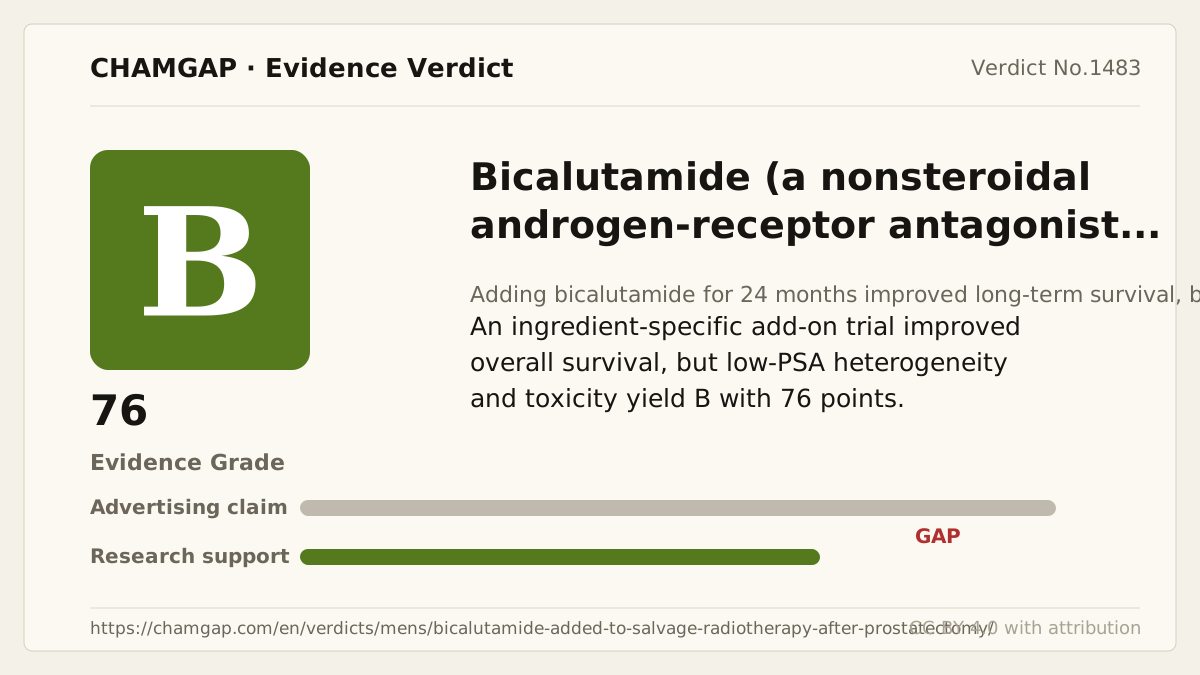
research showsBicalutamide is rated B because the ingredient-specific RTOG 9601 trial found that adding 24 months of treatment to salvage radiotherapy improved long-term overall survival, metastasis, and prostate-cancer mortality in men with persistent or recurrent PSA after prostatectomy. Twelve-year overall survival was 76.3% versus 71.3%. It was a single pivotal add-on trial, and a post hoc analysis found no survival benefit but more other-cause mortality and high-grade cardiac or neurologic toxicity at PSA levels of 0.6 ng/mL or less.
ads claimPromotion may imply that every PSA rise warrants two years of bicalutamide. The evidence supports a selective add-on decision incorporating pathology, PSA level, salvage timing, life expectancy, and toxicity.
Useful facts when choosing a product
- Bicalutamide is an oral androgen-receptor antagonist; the regimen tested here was 150 mg daily for 24 months added to salvage radiotherapy.
- Gynecomastia and breast pain can be common, and liver enzymes and symptoms should be monitored for hepatotoxicity.
- With prolonged high-dose use, cardiovascular and neurologic harm and possible other-cause mortality should be discussed according to PSA level and baseline risk.
Chamgap Semantic Classification Code
Candidate index · review held
M.bicalutamide.oral.metastasis-prostate-cancer-death-and-all-cause-death-when-added-to-salvage-radiotherapy-with-rising-psa-after-prostatectomy.reduce.MULTIMedicinal interventions > Bicalutamide > Oral > metastasis, prostate-cancer death, and all-cause death when added to salvage radiotherapy with rising PSA after prostatectomy > Reduction claim > Multiple: primary unresolved
An automated migration candidate, not an issued permanent code; exact claim scope remains under review. This machine-generated migration candidate helps retrieval but is not a permanent assignment. The original verdict ID and URL remain authoritative.
What the research actually shows
Shipley and colleagues randomized 760 men with postprostatectomy PSA of 0.2 to 4.0 ng/mL to salvage radiotherapy plus bicalutamide 150 mg daily for 24 months or placebo. Twelve-year overall survival was 76.3% versus 71.3%, with fewer prostate-cancer deaths and distant metastases. In the 2020 secondary analysis by Dess and colleagues, 389 men with PSA of 0.6 ng/mL or less had no overall-survival benefit and experienced more other-cause mortality and grade 3 to 5 cardiac or neurologic events. This was a post hoc subgroup result, not the original primary analysis.
Why this is classified as B (76)
A single ingredient-specific double-blind add-on trial improved overall survival, cancer-specific mortality, and metastasis, but post hoc low-PSA lack of benefit, harm heterogeneity, and prolonged high-dose toxicity yield B with 76 points.
Counterpoint. Salvage radiotherapy is now often delivered at lower PSA levels, and other short- or long-course hormonal options exist. Individual risk and treatment timing matter more than the trial-average effect.
Rejudgment record. New verdict — Accepted the ingredient-specific randomized add-on benefit for overall survival, metastasis, and prostate-cancer mortality in RTOG 9601, while assigning B for a single pivotal trial and post hoc low-PSA heterogeneity showing no benefit and possible harm
Sub-claim grades by effect
This ingredient is marketed for several effects. A single overall grade blends strong and weak claims together, so each effect is graded separately here. The overall grade reflects the strongest disconfirming or core claim.
| Effect (sub-claim) | Grade | Basis |
|---|---|---|
| Improvement in overall survival | B | RTOG 9601 showed 12-year overall survival of 76.3% versus 71.3%, but it was a single add-on trial. |
| Reduction in prostate-cancer mortality | B | Cancer-specific mortality fell in the ingredient-specific randomized add-on trial. |
| Reduction in distant metastasis | B | It fell in the overall trial, but net benefit in early salvage at low PSA is uncertain. |
Cross-check — AI research and Codex final gate
Evidence Table
| Study | Design | Sample | Funding | Endpoint | Result | Weight |
|---|---|---|---|---|---|---|
| Shipley WU et al. 2017 NRG/RTOG 9601 | Multicenter randomized double-blind placebo-controlled add-on phase 3 trial | 760 men with persistent or recurrent PSA after prostatectomy | Supported by the US National Cancer Institute; study drug supplied by AstraZeneca | Overall survival; prostate-cancer death and distant metastasis | Twelve-year overall survival was 76.3% versus 71.3%, with fewer prostate-cancer deaths and metastases. | Pivotal ingredient-specific survival trial |
| Dess RT et al. 2020 RTOG 9601 secondary analysis | Post hoc PSA subgroup secondary analysis of a randomized trial | 760 overall; 389 with PSA of 0.6 ng/mL or less | Public support including the US NIH and NCI | Overall survival, metastasis, other-cause mortality, and high-grade cardiac or neurologic toxicity by PSA | At PSA of 0.6 ng/mL or less, there was no overall-survival benefit and other-cause mortality and grade 3 to 5 cardiac or neurologic events increased. | Applicability and harm boundary; post hoc |
Receipt — 2 References
All 2 cited sources were verified for existence at the original page (as of 2026-07-23).
Final verification and publication gate: Codex · Evidence date: 2026-07-23 · Corrections: none
Cite this verdict
[Chamgap] Bicalutamide x improved survival with salvage radiotherapy after prostatectomy — Evidence Grade B·76. 2 cited sources checked. Source: https://chamgap.com/en/verdicts/mens/bicalutamide-added-to-salvage-radiotherapy-after-prostatectomy/ · CC BY 4.0CC BY 4.0 — free to use with attribution; do not distort grades, numbers, or verdict meaning.
What this document does and does not do
Chamgap is an information source. It reports what research has and has not confirmed; it does not tell readers what to take or buy. That decision belongs to readers and, when needed, medical or legal professionals. This verdict reflects literature available up to the search date and may change as new research appears. Nothing here is medical advice.