
Ursodeoxycholic acid,
does it really help with Dissolution of small noncalcified cholesterol gallstones in a functioning gallbladder?
research showsUDCA is rated B because it can actually dissolve radiolucent, noncalcified, small cholesterol gallstones when gallbladder function is preserved. In an early randomized placebo trial, complete dissolution at six months occurred in 8 of 31 UDCA recipients, 26%, versus none with placebo. In a 197-participant double-blind dose trial, approximately 8.4 mg/kg/day produced complete dissolution in 28.9% and complete or partial response in 55.2%. The eligible population is highly selected, treatment takes months and sometimes up to two years, and large or calcified stones respond poorly. Recurrence can approach one half within five years, and low-dose maintenance did not significantly prevent recurrence in one trial. Direct stone-disappearance outcomes and an established narrow indication support B with 63 points after accounting for modest effect size, recurrence, and the age of the evidence. Diarrhea, contraindications, and the danger of delaying surgery are separated under safety.
ads claimA brand name or liver-tonic image should not be expanded into universal gallstone dissolution. Evidence is limited to radiolucent, noncalcified cholesterol stones in a functioning gallbladder, especially small or floating stones. Prescription doses and approved indications can differ among products, and acute symptoms or suspected complications require prompt assessment rather than waiting for dissolution.
Useful facts when choosing a product
- UDCA is a prescription bile acid, and the gallstone-dissolution dose is based on body weight and the product label. Lower-dose products intended for other uses should not be combined as an improvised substitute.
- Candidates usually have radiolucent, noncalcified cholesterol stones in a functioning gallbladder, with better responses for smaller stones. Imaging is needed to assess size, calcification, and gallbladder function before treatment.
- Dissolution may require months and sometimes up to about two years, with periodic ultrasound assessment. A lack of even partial response around one year makes eventual success much less likely.
- Diarrhea is among the common adverse effects, and abdominal or biliary symptoms can worsen. Fever, jaundice, or persistent right-upper-quadrant pain requires urgent assessment for complications.
Chamgap Semantic Classification Code
Candidate index · review held
M.ursodeoxycholic-acid.UNK.dissolution-of-small-noncalcified-cholesterol-gallstones-in-a-functioning-gallbladder.assess.MULTIMedicinal interventions > Ursodeoxycholic acid > Unknown > Dissolution of small noncalcified cholesterol gallstones in a functioning gallbladder > Association or change assessment > Multiple: primary unresolved
An automated migration candidate, not an issued permanent code; exact claim scope remains under review. This machine-generated migration candidate helps retrieval but is not a permanent assignment. The original verdict ID and URL remain authoritative.
What the research actually shows
Nakagawa in 1977 assigned 44 people with radiolucent stones and a visualized gallbladder to UDCA 600 mg/day, 150 mg/day, or placebo and found complete dissolution in 8 of 31 UDCA recipients versus none at six months. Erlinger in 1984 double-blind randomized 197 people across doses and found 28.9% complete dissolution and 55.2% complete or partial dissolution at approximately 8.4 mg/kg/day, with the strongest response below 5 mm. Petroni in 2001 randomized 154 people with functioning gallbladders and radiolucent stones no larger than 15 mm to UDCA alone or combination therapy; complete dissolution at 24 months was 28% and 30%, respectively, without combination superiority. Hood in 1993 followed 93 patients after successful dissolution and reported 33.9% cumulative recurrence at 42 months plus no significant benefit from low-dose maintenance. Primary biliary cholangitis in verdict 531 and NASH in verdict 560 are different diseases and outcomes.
Why this is classified as B (63)
A placebo-controlled complete-dissolution result of 26% versus 0% at six months and a 197-participant dose trial with 28.9% complete dissolution directly support the claim in functioning gallbladders with radiolucent stones. Multiple trials consistently show better response for small stones. Complete dissolution nevertheless occurs in a minority, eligibility is narrow, treatment is slow, and recurrence after stopping is common. Older trial methods and manufacturer involvement in part of the evidence also reduce certainty. The direct dissolution outcome and established indication keep the grade above C, while parity with the B axis for primary biliary cholangitis in verdict 531 supports B with 63 points. NASH verdict 560 concerns a different disease, and diarrhea, contraindications, and delayed surgery are separate safety issues.
Counterpoint. Cholecystectomy remains definitive treatment for many patients with symptomatic stones, while UDCA is mainly considered for selected people who have high surgical risk or decline surgery. Imaging shrinkage does not guarantee that biliary pain or complications disappear, and successful dissolution still requires recurrence surveillance.
Rejudgment record. Cross-verification incorporated — Prioritized placebo-controlled complete dissolution and dose-responsive direct imaging outcomes under the strict selection of radiolucent noncalcified cholesterol stones in a functioning gallbladder, while deducting for complete response near 26% to 29%, preference for very small stones, prolonged treatment, frequent recurrence, and some older manufacturer-involved evidence, with separate axes for PBC verdict 531 and NASH verdict 560
Sub-claim grades by effect
This ingredient is marketed for several effects. A single overall grade blends strong and weak claims together, so each effect is graded separately here. The overall grade reflects the strongest disconfirming or core claim.
| Effect (sub-claim) | Grade | Basis |
|---|---|---|
| Complete dissolution of small noncalcified cholesterol gallstones in a functioning gallbladder | B | Placebo-controlled dissolution of 26% versus 0% and 28.9% in a dose trial directly support imaging disappearance, although complete response occurs in a minority. |
| Partial dissolution or volume reduction of selected cholesterol gallstones | B | Complete or partial response reached 55.2% in the dose trial and was consistently greater for small stones. |
| Prevention of recurrence with maintenance UDCA after gallstone dissolution | C | Recurrence was about 34% by 42 months, and low-dose UDCA was not significantly better than placebo, limiting evidence for durable prevention. |
Cross-check — AI research and Codex final gate
Evidence Table
| Study | Design | Sample | Funding | Endpoint | Result | Weight |
|---|---|---|---|---|---|---|
| Nakagawa S et al. 1977 | Randomized placebo-controlled clinical trial with blinded image reading | 44 participants; 31 receiving UDCA and 13 receiving placebo | Limited reporting | Complete gallstone dissolution on cholecystography at six months | Gallstones dissolved in 8 of 31 UDCA recipients, 26%, and in no placebo recipient. | Pivotal direct placebo-controlled dissolution evidence |
| Erlinger S et al. 1984 | Multicenter randomized double-blind dose-response trial | 197 participants | Roussel-Uclaf prepared study medication and coordinated statistical analysis | Complete and partial dissolution at six months and dose response | At approximately 8.4 mg/kg/day, complete dissolution was 28.9% and complete or partial dissolution was 55.2%, with the best response below 5 mm. | Key dose-response and selection evidence |
| Petroni ML et al. 2001 | Multicenter randomized active-controlled trial | 154 participants | Academic multicenter study with no industry sponsorship stated in the abstract | Complete dissolution and stone-volume reduction through 24 months | Complete dissolution was 28% with UDCA alone and 30% with combination treatment, without superiority of the combination. | Supports realistic longer-term complete-dissolution rates |
| Hood KA et al. 1993 | Prospective post-dissolution follow-up with randomized maintenance comparison | 93 participants followed for up to 66 months | Mixed Medical Research Council and industry research support | Gallstone recurrence and prevention with low-dose UDCA | Cumulative recurrence was 33.9% at 42 months, and recurrence did not differ significantly between low-dose UDCA and placebo. | Limits durability and recurrence prevention |
Receipt — 5 References
All 5 cited sources were verified for existence at the original page (as of 2026-07-21).
Final verification and publication gate: Codex · Evidence date: 2026-07-21 · Corrections: none
Cite this verdict
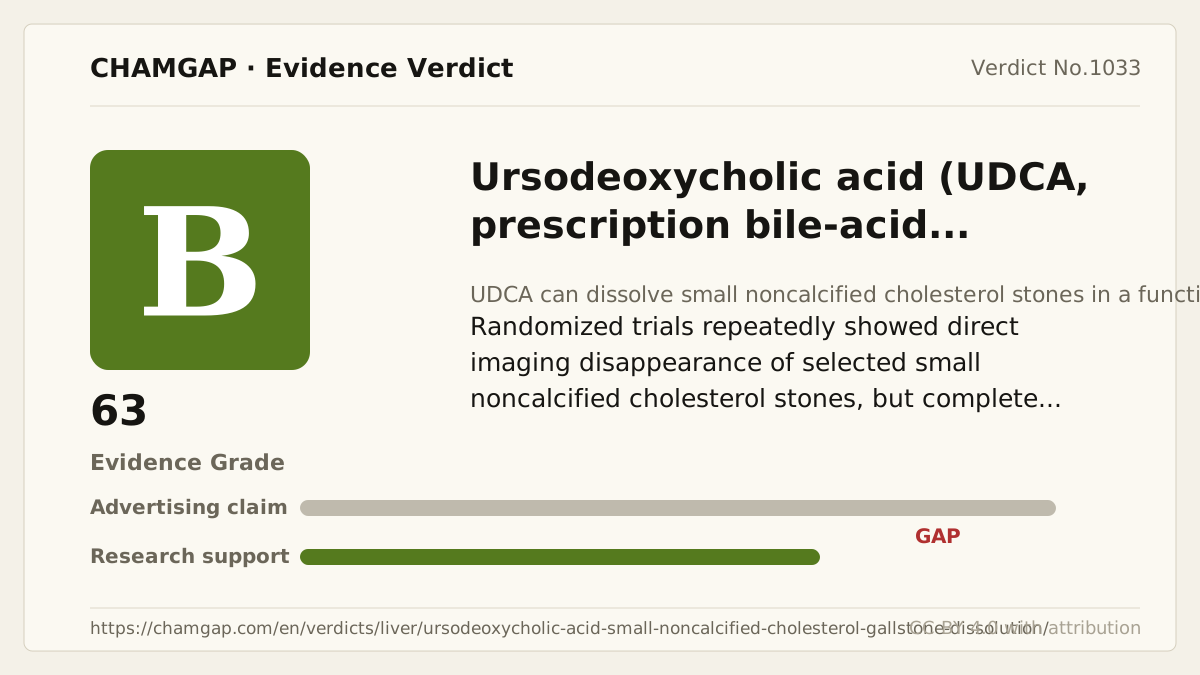
[Chamgap] Ursodeoxycholic acid x dissolution of small noncalcified cholesterol gallstones in a functioning gallbladder — Evidence Grade B·63. 5 cited sources checked. Source: https://chamgap.com/en/verdicts/liver/ursodeoxycholic-acid-small-noncalcified-cholesterol-gallstone-dissolution/ · CC BY 4.0CC BY 4.0 — free to use with attribution; do not distort grades, numbers, or verdict meaning.
What this document does and does not do
Chamgap is an information source. It reports what research has and has not confirmed; it does not tell readers what to take or buy. That decision belongs to readers and, when needed, medical or legal professionals. This verdict reflects literature available up to the search date and may change as new research appears. Nothing here is medical advice.