
Terlipressin,
does it really help with Verified reversal of renal dysfunction in cirrhosis-associated hepatorenal syndrome with acute kidney injury?
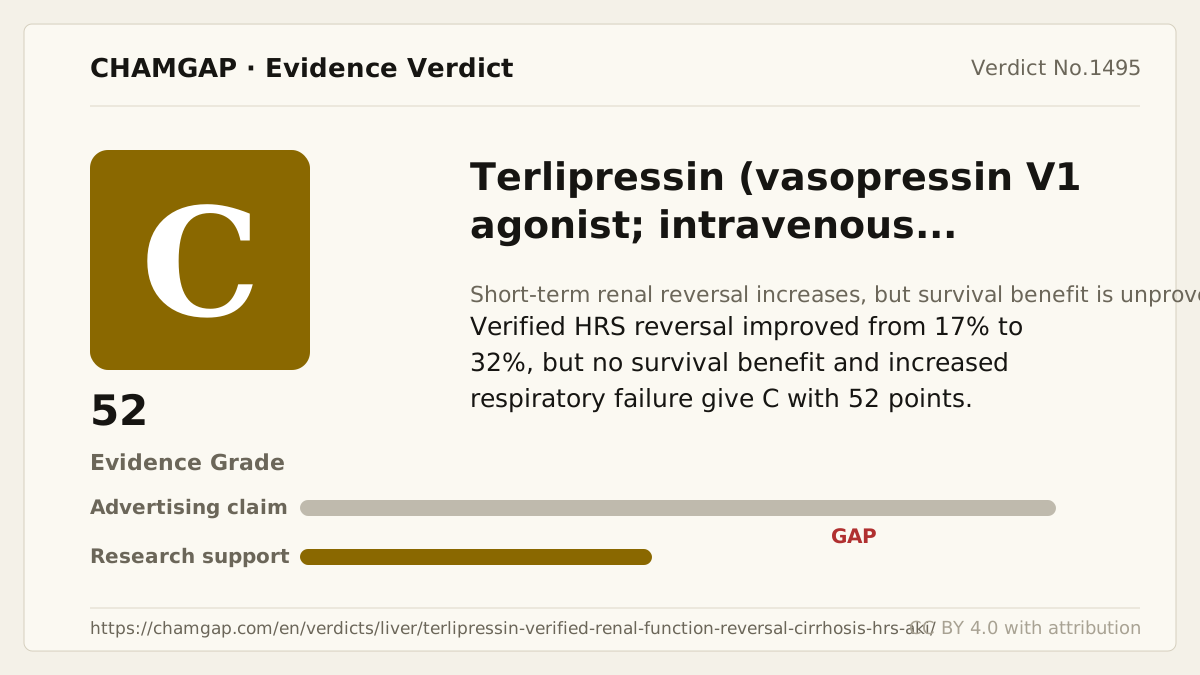
research showsTerlipressin is rated C because it improves verified HRS reversal and serum creatinine in cirrhosis-associated HRS-AKI. In the 300-participant placebo-controlled CONFIRM phase 3 trial, verified HRS reversal occurred in 32% versus 17%, but 90-day survival did not improve and respiratory failure and death from respiratory disorders increased. The surrogate renal-reversal benefit is real, but unproven survival benefit and serious harm limit the grade to C.
ads claimA claim that the drug restores kidney function can be expanded into longer survival or recovery without transplantation. The verified result is short-term creatinine-based reversal, requiring careful selection, albumin and volume management, and oxygen monitoring.
Useful facts when choosing a product
- Terlipressin is a vasopressin analogue that constricts splanchnic vessels to improve effective arterial volume and renal perfusion; it is given intravenously in hospital with albumin.
- Oxygen saturation, respiratory status, volume overload, and kidney function require repeated assessment; treatment should not start or should stop with hypoxia or worsening respiratory symptoms.
- Besides respiratory failure, coronary, peripheral, or mesenteric ischemia, abdominal pain, bradycardia, and hypertension can occur.
- Net benefit varies with transplant candidacy, acute-on-chronic liver-failure severity, baseline creatinine, and volume status, requiring specialist selection.
Chamgap Semantic Classification Code
Candidate index · review held
M.terlipressin.intravenous.verified-reversal-of-renal-dysfunction-in-cirrhosis-associated-hepatorenal-syndrome-with-acute-kidney-injury.assess.placeboMedicinal interventions > Terlipressin > Intravenous > Verified reversal of renal dysfunction in cirrhosis-associated hepatorenal syndrome with acute kidney injury > Association or change assessment > Placebo
An automated migration candidate, not an issued permanent code; exact claim scope remains under review. This machine-generated migration candidate helps retrieval but is not a permanent assignment. The original verdict ID and URL remain authoritative.
What the research actually shows
CONFIRM randomized 300 adults with HRS-1 at 60 North American sites in a 2:1 ratio to terlipressin or placebo, with albumin strongly recommended in both groups. Verified HRS reversal occurred in 63 of 199 versus 17 of 101, and any HRS reversal in 39% versus 18%. Mortality through 90 days did not decrease, while respiratory failure and death from respiratory disorders increased. A randomized-trial meta-analysis also found HRS-reversal RR 2.08 and lower creatinine without a definitive 90-day survival improvement.
Why this is classified as C (52)
A placebo-controlled trial improved creatinine-based verified HRS reversal, but did not improve 90-day survival and increased respiratory failure and respiratory death, giving C with 52 points under the surrogate-endpoint rule.
Counterpoint. In carefully selected HRS-AKI patients, short-term renal reversal can still be clinically valuable as part of a transplantation or renal-replacement strategy.
Rejudgment record. New verdict — Accepted creatinine-based verified HRS reversal in the placebo-controlled CONFIRM trial while applying the surrogate-endpoint limitation because 90-day survival was not improved and respiratory failure and death from respiratory disorders increased
Sub-claim grades by effect
This ingredient is marketed for several effects. A single overall grade blends strong and weak claims together, so each effect is graded separately here. The overall grade reflects the strongest disconfirming or core claim.
| Effect (sub-claim) | Grade | Basis |
|---|---|---|
| Verified HRS reversal in cirrhosis-associated HRS-AKI | C | CONFIRM found 32% versus 17%, but this is a short-term creatinine-based surrogate. |
| Improvement in serum creatinine | C | Randomized trials and meta-analysis showed improvement, but it does not substitute for long-term survival. |
| Short-term HRS reversal without renal replacement therapy | C | Some 30-day composite outcomes improved, but 90-day survival benefit was unproven and respiratory failure increased. |
Cross-check — AI research and Codex final gate
Evidence Table
| Study | Design | Sample | Funding | Endpoint | Result | Weight |
|---|---|---|---|---|---|---|
| Wong F et al. CONFIRM, 2021 | Multicenter randomized double-blind placebo-controlled phase 3 trial | 300 adults with HRS-1; 199 assigned terlipressin and 101 placebo | Mallinckrodt Pharmaceuticals | Verified HRS reversal, 90-day survival, and safety | Verified reversal was 32% versus 17%; no 90-day survival benefit; respiratory failure was 14% versus 5% and respiratory-disorder death 11% versus 2%. | Key surrogate efficacy and harm evidence |
| Mohamed MM et al. 2021 | Systematic review and meta-analysis of randomized controlled trials | Eight randomized trials with 974 participants | No external research funding reported | HRS reversal, creatinine, renal replacement therapy, and 90-day survival | HRS reversal RR was 2.08 and creatinine decreased; renal-replacement reduction was a trend and 90-day survival did not definitively improve. | Synthesis confirming efficacy and survival limitation |
Receipt — 2 References
All 2 cited sources were verified for existence at the original page (as of 2026-07-23).
Final verification and publication gate: Codex · Evidence date: 2026-07-23 · Corrections: none
Cite this verdict
[Chamgap] Terlipressin x verified renal-function reversal in cirrhosis-associated HRS-AKI — Evidence Grade C·52. 2 cited sources checked. Source: https://chamgap.com/en/verdicts/liver/terlipressin-verified-renal-function-reversal-cirrhosis-hrs-aki/ · CC BY 4.0CC BY 4.0 — free to use with attribution; do not distort grades, numbers, or verdict meaning.
What this document does and does not do
Chamgap is an information source. It reports what research has and has not confirmed; it does not tell readers what to take or buy. That decision belongs to readers and, when needed, medical or legal professionals. This verdict reflects literature available up to the search date and may change as new research appears. Nothing here is medical advice.