
Sofosbuvir/velpatasvir/voxilaprevir,
does it really help with SVR12 virologic cure on retreatment of chronic hepatitis C after failure of an NS5A-containing DAA regimen?
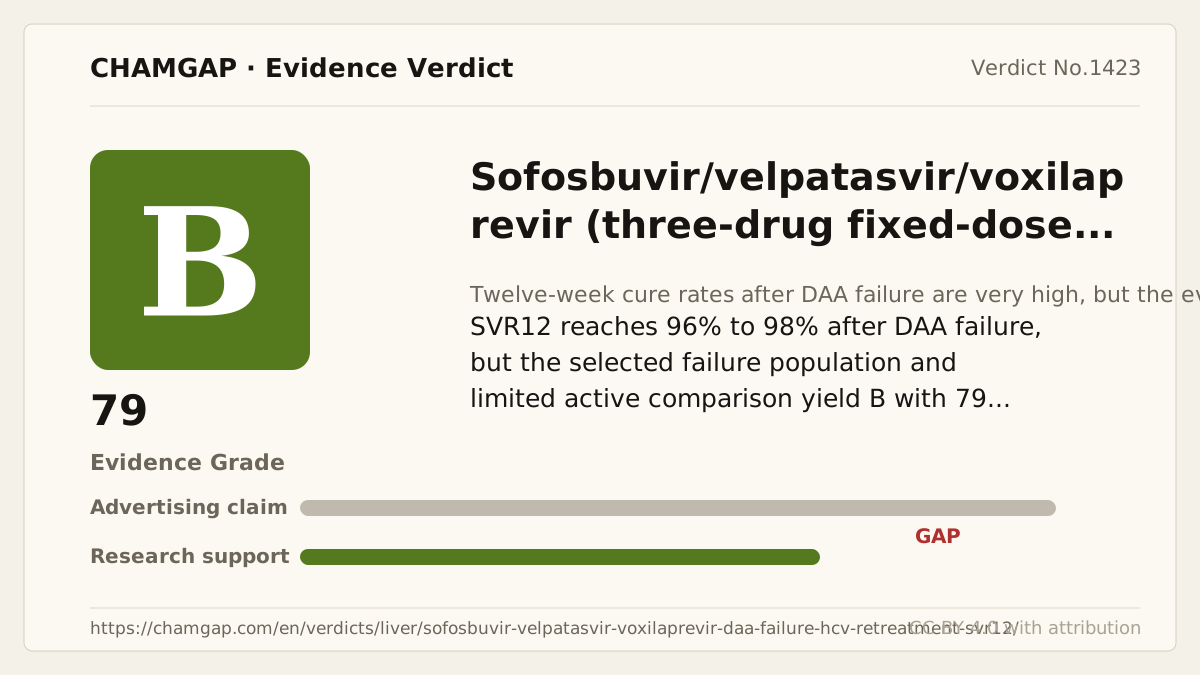
research showsThe three-drug DAA Vosevi is rated B because it produced 96% SVR12 in retreatment of chronic hepatitis C after failure of an NS5A inhibitor-containing DAA regimen. In POLARIS-1, SVR12 was 96% among 263 participants receiving 12 weeks of the triple regimen, while the deferred-treatment placebo group had 0% during placebo. In POLARIS-4, non-NS5A DAA failures achieved 98% with the triple regimen versus 90% with the two-drug regimen. Cure rates are very high, but evidence is limited to retreatment and the POLARIS-1 placebo was not an active effective comparator, imposing a B ceiling.
ads claimCalling it the strongest first treatment for every hepatitis C patient exceeds the evidence. The central evidence and indication concern 12-week retreatment after prior DAA failure, especially failure involving an NS5A inhibitor.
Useful facts when choosing a product
- Vosevi combines sofosbuvir 400 mg, velpatasvir 100 mg, and voxilaprevir 100 mg in one prescription tablet generally taken once daily for 12 weeks as retreatment.
- Because it contains the protease inhibitor voxilaprevir, it should not be used in decompensated cirrhosis or a history of hepatic decompensation, and specialist liver assessment is required.
- Common adverse effects include headache, fatigue, diarrhea, and nausea; as with all DAAs, hepatitis B testing and monitoring for reactivation are required.
- This three-drug retreatment is distinct from the two-drug sofosbuvir/velpatasvir regimen commonly used for initial therapy.
Chamgap Semantic Classification Code
Candidate index · review held
M.sofosbuvir-velpatasvir-voxilaprevir.UNK.svr12-virologic-cure-on-retreatment-of-chronic-hepatitis-c-after-failure-of-an-ns5a-containing-daa-regimen.assess.MULTIMedicinal interventions > Sofosbuvir/velpatasvir/voxilaprevir > Unknown > SVR12 virologic cure on retreatment of chronic hepatitis C after failure of an NS5A-containing DAA regimen > Association or change assessment > Multiple: primary unresolved
An automated migration candidate, not an issued permanent code; exact claim scope remains under review. This machine-generated migration candidate helps retrieval but is not a permanent assignment. The original verdict ID and URL remain authoritative.
What the research actually shows
One report by Bourlière and colleagues presented POLARIS-1 and POLARIS-4. POLARIS-1 assigned 415 previous NS5A-regimen failures to triple therapy or placebo, with 96% SVR12 among all 263 triple-therapy recipients. POLARIS-4 assigned non-NS5A DAA failures to triple therapy in 182 participants or sofosbuvir/velpatasvir in 151, producing 98% and 90% SVR12.
Why this is classified as B (79)
POLARIS-1 showed 96% SVR12 after NS5A failure and POLARIS-4 reproduced 98%. The evidence nevertheless concerns a selected retreatment population, uses deferred-treatment placebo, and concentrates active-comparator data in one trial, supporting B with 79 points. Safety is managed separately.
Counterpoint. After DAA failure, the failed drug classes, cirrhosis status, and interactions should be reviewed rather than repeating a regimen without specialist guidance.
Rejudgment record. New verdict — Accepted SVR12 in POLARIS-1 and POLARIS-4 as direct virologic cure evidence, while applying the ceiling for a DAA-failure retreatment population and limited placebo and active comparisons
Sub-claim grades by effect
This ingredient is marketed for several effects. A single overall grade blends strong and weak claims together, so each effect is graded separately here. The overall grade reflects the strongest disconfirming or core claim.
| Effect (sub-claim) | Grade | Basis |
|---|---|---|
| SVR12 after failure of an NS5A-containing DAA regimen | B | POLARIS-1 found 96% SVR12 with 12 weeks of triple therapy. |
| Successful retreatment after non-NS5A DAA failure | B | POLARIS-4 found 98% with triple therapy versus 90% with dual therapy. |
| SVR12 in patients with compensated cirrhosis | B | High SVR12 included compensated cirrhosis but does not apply to decompensated cirrhosis. |
Cross-check — AI research and Codex final gate
Evidence Table
| Study | Design | Sample | Funding | Endpoint | Result | Weight |
|---|---|---|---|---|---|---|
| Bourlière M et al. 2017 POLARIS-1 | Phase 3 randomized double-blind placebo-controlled trial | 415 NS5A failures; 263 triple therapy and 152 placebo | Gilead Sciences | SVR 12 weeks after treatment | Triple-therapy SVR12 was 96%; placebo-period SVR was 0%. | Key NS5A-failure evidence |
| Bourlière M et al. 2017 POLARIS-4 | Phase 3 randomized active-controlled trial | 333 non-NS5A DAA failures; 182 triple therapy and 151 dual therapy | Gilead Sciences | SVR12 | Triple therapy achieved 98% (178/182) versus 90% (136/151) with sofosbuvir/velpatasvir. | Active retreatment comparison |
Receipt — 2 References
All 2 cited sources were verified for existence at the original page (as of 2026-07-23).
Final verification and publication gate: Codex · Evidence date: 2026-07-23 · Corrections: none
Cite this verdict
[Chamgap] Sofosbuvir/velpatasvir/voxilaprevir x HCV retreatment after DAA failure — Evidence Grade B·79. 2 cited sources checked. Source: https://chamgap.com/en/verdicts/liver/sofosbuvir-velpatasvir-voxilaprevir-daa-failure-hcv-retreatment-svr12/ · CC BY 4.0CC BY 4.0 — free to use with attribution; do not distort grades, numbers, or verdict meaning.
What this document does and does not do
Chamgap is an information source. It reports what research has and has not confirmed; it does not tell readers what to take or buy. That decision belongs to readers and, when needed, medical or legal professionals. This verdict reflects literature available up to the search date and may change as new research appears. Nothing here is medical advice.