
Seladelpar,
does it really help with Improved ALP-bilirubin biochemical response and pruritus in primary biliary cholangitis with inadequate UDCA response?
research showsSeladelpar is rated C because it improves biochemical response and pruritus in primary biliary cholangitis with inadequate response or intolerance to UDCA. In the 12-month RESPONSE trial, the composite ALP-bilirubin biochemical response was 61.7% versus 20.0%, and the six-month pruritus NRS change among participants with moderate-to-severe itch favored seladelpar at -3.2 versus -1.7. The pivotal efficacy outcomes were nevertheless biochemical surrogates and a subjective symptom; the trial was not designed or powered to establish fewer transplants, liver failure events, or deaths. Rule ① therefore yields C with 54 points.
ads claimPromotion can translate lower ALP and bilirubin directly into stopped disease progression or longer survival. The directly established range is biochemical response and relief of pruritus.
Useful facts when choosing a product
- Seladelpar is a prescription drug used with UDCA in adults with inadequate UDCA response, or alone when UDCA is not tolerated.
- The United States label recommends 10 mg once daily with or without food and does not recommend use in decompensated cirrhosis.
- Liver tests are obtained before and during treatment, and treatment is interrupted while suspected biliary obstruction is evaluated.
- Common adverse reactions include headache, abdominal pain, nausea, abdominal distension, and dizziness; abnormal liver tests and symptoms of myalgia or myopathy also require monitoring.
Chamgap Semantic Classification Code
Candidate index · review held
M.seladelpar.UNK.alp-bilirubin-biochemical-response-and-pruritus-in-primary-biliary-cholangitis-with-inadequate-udca-response.improve.placeboMedicinal interventions > Seladelpar > Unknown > ALP-bilirubin biochemical response and pruritus in primary biliary cholangitis with inadequate UDCA response > Improvement claim > Placebo
An automated migration candidate, not an issued permanent code; exact claim scope remains under review. This machine-generated migration candidate helps retrieval but is not a permanent assignment. The original verdict ID and URL remain authoritative.
What the research actually shows
The RESPONSE Study Group randomized 193 patients with PBC and inadequate response or intolerance to UDCA in a 2:1 ratio to seladelpar 10 mg or placebo. The 12-month composite biochemical response was 61.7% versus 20.0%, and ALP normalization was 25.0% versus 0%. Among 49 and 23 participants with baseline NRS scores of at least 4, the six-month pruritus changes were -3.2 and -1.7. ENHANCE was stopped early because of an erroneous safety signal in a different liver-disease trial, but its blinded three-month analysis found biochemical response rates of 78.2% versus 12.5% and pruritus changes of -3.14 versus -1.55 for 10 mg and placebo. Neither trial had the event count or follow-up to establish transplantation, liver failure, or survival effects.
Why this is classified as C (54)
The 61.7% versus 20.0% biochemical response and pruritus NRS difference in RESPONSE provide direct positive randomized evidence. ALP and bilirubin remain surrogates, pruritus is subjective, and effects on transplantation, liver failure, and survival are unconfirmed, producing C with 54 points under rule ①.
Counterpoint. Symptom and laboratory improvement has clinical value but does not establish fewer long-term clinical events. Specialist assessment of disease stage and liver tests remains necessary.
Rejudgment record. Cross-check applied — Accepted the RESPONSE biochemical response of 61.7% versus 20.0% and pruritus improvement, but applied the rule ① ceiling of C because only ALP-bilirubin surrogates and a subjective symptom are established while transplantation, liver failure, and survival remain unconfirmed
Sub-claim grades by effect
This ingredient is marketed for several effects. A single overall grade blends strong and weak claims together, so each effect is graded separately here. The overall grade reflects the strongest disconfirming or core claim.
| Effect (sub-claim) | Grade | Basis |
|---|---|---|
| Improved composite ALP-bilirubin biochemical response | C | RESPONSE found 61.7% versus 20.0%, but this is a surrogate rather than a long-term clinical event. |
| Improved pruritus in PBC | C | The NRS declined more than placebo among participants with moderate-to-severe itch, but it is subjective and subgroup based. |
| Improved transplantation, liver-failure, or survival outcomes | C | Current trials were not designed or powered to establish these hard clinical outcomes. |
Cross-check — AI research and Codex final gate
Evidence Table
| Study | Design | Sample | Funding | Endpoint | Result | Weight |
|---|---|---|---|---|---|---|
| Hirschfield GM et al.; RESPONSE Study Group. 2024 RESPONSE | Multicenter randomized double-blind placebo-controlled phase 3 trial | 193 patients with PBC and inadequate response or intolerance to UDCA | Sponsored by CymaBay Therapeutics | Twelve-month composite ALP-bilirubin biochemical response; six-month pruritus NRS | Biochemical response was 61.7% versus 20.0%; the pruritus NRS change was -3.2 versus -1.7 in the moderate-to-severe itch subgroup. | Pivotal phase 3 surrogate and symptom evidence |
| Hirschfield GM et al.; ENHANCE Study Group. 2023 ENHANCE | Blinded three-month analysis of an early-terminated randomized double-blind placebo-controlled phase 3 trial | 89 assigned to 5 mg, 89 to 10 mg, and 87 to placebo | Sponsored by CymaBay Therapeutics | Composite biochemical response, ALP normalization, and pruritus NRS | At three months, the 10-mg biochemical response was 78.2% versus 12.5%, with pruritus changes of -3.14 versus -1.55. | Concordant but early-terminated and short-term |
Receipt — 2 References
All 2 cited sources were verified for existence at the original page (as of 2026-07-23).
Final verification and publication gate: Codex · Evidence date: 2026-07-23 · Corrections: none
Cite this verdict
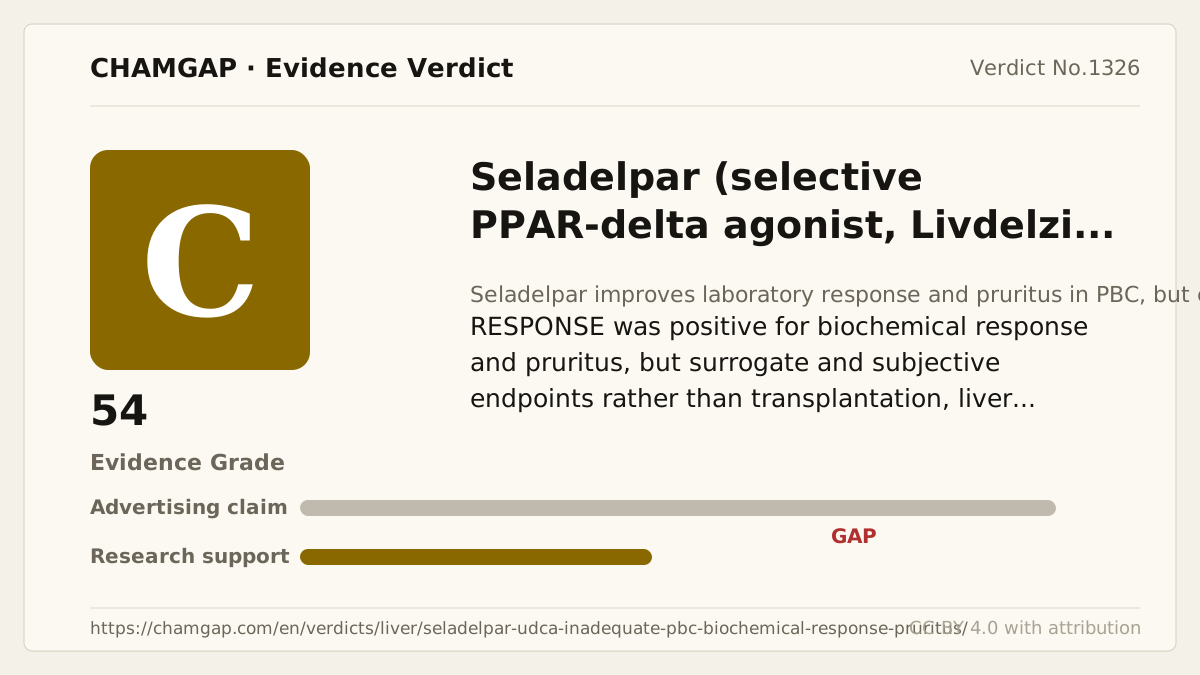
[Chamgap] Seladelpar x improved biochemical response and pruritus in PBC with inadequate UDCA response — Evidence Grade C·54. 2 cited sources checked. Source: https://chamgap.com/en/verdicts/liver/seladelpar-udca-inadequate-pbc-biochemical-response-pruritus/ · CC BY 4.0CC BY 4.0 — free to use with attribution; do not distort grades, numbers, or verdict meaning.
What this document does and does not do
Chamgap is an information source. It reports what research has and has not confirmed; it does not tell readers what to take or buy. That decision belongs to readers and, when needed, medical or legal professionals. This verdict reflects literature available up to the search date and may change as new research appears. Nothing here is medical advice.