
Resmetirom,
does it really help with MASH resolution and at least one-stage fibrosis improvement in noncirrhotic MASH with F2 to F3 fibrosis?
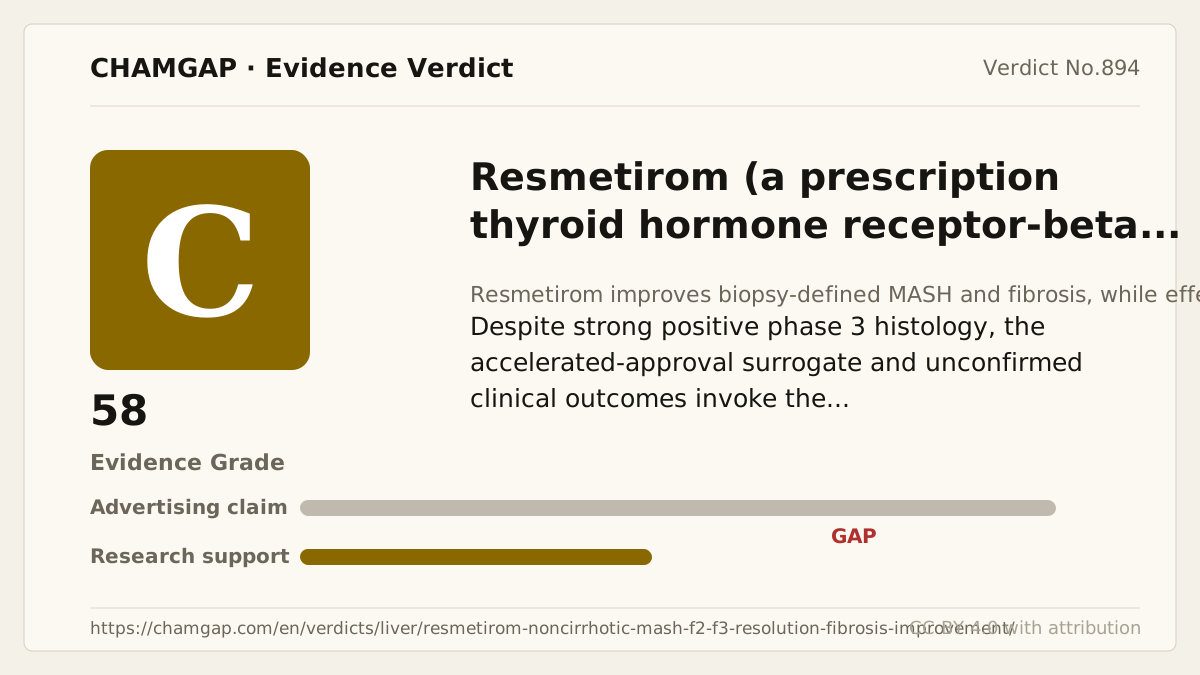
research showsResmetirom is rated C because a large phase 3 trial increased both 52-week histologic MASH resolution and improvement of fibrosis by at least one stage in noncirrhotic MASH with F2 to F3 fibrosis. Both coprimary outcomes were strongly positive in MAESTRO-NASH. Liver-biopsy histology, however, is the FDA-designated surrogate endpoint supporting accelerated approval, while progression to cirrhosis, decompensation, transplantation, or liver death is still under confirmatory study. The surrogate-endpoint ceiling is C, and clinical-event benefit is separately graded unknown.
ads claimPromotion may expand the findings into reversal of liver fibrosis or prevention of cirrhosis and liver death. Evidence currently covers average 52-week biopsy response in selected noncirrhotic F2 to F3 patients, not prevention of clinical events.
Useful facts when choosing a product
- Resmetirom is a once-daily prescription medicine used with diet and exercise for selected patients with noncirrhotic MASH and moderate-to-advanced fibrosis, with selection and dosing governed by labeling.
- Accelerated approval rests on 52-week liver-biopsy surrogate outcomes, and continued approval depends on verification of clinical benefit in the ongoing confirmatory trial.
- Diarrhea, nausea, vomiting, abdominal pain, and pruritus can occur, while hepatotoxicity and gallbladder-related adverse reactions require observation.
- It can increase statin exposure and interacts with CYP2C8 or OATP1B1/1B3 inhibitors, requiring review of LDL changes and concomitant medicines.
Chamgap Semantic Classification Code
Candidate index · review held
M.resmetirom.UNK.mash-resolution-and-at-least-one-stage-fibrosis-improvement-in-noncirrhotic-mash-with-f2-to-f3-fibrosis.improve.placeboMedicinal interventions > Resmetirom > Unknown > MASH resolution and at least one-stage fibrosis improvement in noncirrhotic MASH with F2 to F3 fibrosis > Improvement claim > Placebo
An automated migration candidate, not an issued permanent code; exact claim scope remains under review. This machine-generated migration candidate helps retrieval but is not a permanent assignment. The original verdict ID and URL remain authoritative.
What the research actually shows
MAESTRO-NASH enrolled 1,759 participants for the overall trial and safety assessment, but the NEJM week-52 histology primary analysis included 966 patients and the FDA F2 to F3 efficacy population included 888. In the primary analysis, MASH resolution was 25.9% and 29.9% versus 9.7%, and fibrosis improvement was 24.2% and 25.9% versus 14.2%. An earlier 125-person phase 2 trial showed lower MRI-measured liver fat and supportive histologic signals. The FDA granted accelerated approval on histologic surrogates and required the 54-month confirmatory trial to assess progression to cirrhosis, decompensation, transplantation, and liver death. Clinical outcomes remained unconfirmed on July 20, 2026.
Why this is classified as C (58)
Both histologic coprimary outcomes were strongly positive in the 966-patient primary analysis. Liver-biopsy histology remains the FDA-designated accelerated-approval surrogate, however, and the composite clinical outcome of progression to cirrhosis, decompensation, transplantation, or liver death is unconfirmed. Applying boundary rule 1, the surrogate-endpoint ceiling yields high C with 58 points.
Counterpoint. As the first disease-targeted medicine for high-risk F2 to F3 disease, it has clinical importance when lifestyle therapy is insufficient. Fibrosis stage, comorbidities, and concomitant drugs still require specialist assessment.
Rejudgment record. Cross-check revision — Cross-check: histology is a surrogate endpoint and clinical outcomes remain unconfirmed; boundary rule 1 caps the grade at C
Sub-claim grades by effect
This ingredient is marketed for several effects. A single overall grade blends strong and weak claims together, so each effect is graded separately here. The overall grade reflects the strongest disconfirming or core claim.
| Effect (sub-claim) | Grade | Basis |
|---|---|---|
| Histologic MASH resolution in noncirrhotic F2 to F3 disease | C | Both doses were significant versus placebo in a large 52-week phase 3 trial, but this is a histologic surrogate used for FDA accelerated approval. |
| At least one-stage fibrosis improvement in noncirrhotic F2 to F3 disease | C | Improvement was more frequent with both doses than placebo, but this is a histologic surrogate used for FDA accelerated approval. |
| Reduction in progression to cirrhosis, liver failure, transplantation, or liver death | ? | Confirmatory results are not yet available, so efficacy for human clinical events cannot be graded. |
Cross-check — AI research and Codex final gate
Evidence Table
| Study | Design | Sample | Funding | Endpoint | Result | Weight |
|---|---|---|---|---|---|---|
| Harrison SA et al. MAESTRO-NASH. 2024 | Week-52 analysis of a multicenter randomized double-blind placebo-controlled phase 3 trial | 966 in the histology primary analysis; 888 in the FDA F2 to F3 efficacy population; 1,759 in overall enrollment and safety | Funded by Madrigal Pharmaceuticals | MASH resolution without worsening fibrosis and at least one-stage fibrosis improvement without worsening MASH | In the 966-patient primary analysis, MASH resolution was 25.9% and 29.9% versus 9.7%, and fibrosis improvement was 24.2% and 25.9% versus 14.2%, with both doses significant versus placebo. | Pivotal large histologic evidence |
| Harrison SA et al. 2019 | Multicenter randomized double-blind placebo-controlled phase 2 trial | 125 participants | Funded by Madrigal Pharmaceuticals | Week-12 MRI-PDFF liver-fat change and week-36 histology | Liver fat fell significantly, with week-36 histologic signals supporting the phase 3 findings. | Supportive dose and mechanistic evidence |
| MAESTRO-NASH 54-month confirmatory phase | Ongoing long-term randomized clinical-outcome follow-up | Continued follow-up of MAESTRO-NASH | Madrigal Pharmaceuticals; FDA confirmatory requirement | Composite of progression to cirrhosis, liver events, transplantation, and death | Clinical-benefit results remained unconfirmed as of July 20, 2026. | Gap in hard clinical outcomes |
Receipt — 2 References
All 2 cited sources were verified for existence at the original page (as of 2026-07-20).
Final verification and publication gate: Codex · Evidence date: 2026-07-20 · Corrections: none
Cite this verdict
[Chamgap] Resmetirom x histologic MASH resolution and fibrosis improvement in noncirrhotic disease — Evidence Grade C·58. 2 cited sources checked. Source: https://chamgap.com/en/verdicts/liver/resmetirom-noncirrhotic-mash-f2-f3-resolution-fibrosis-improvement/ · CC BY 4.0CC BY 4.0 — free to use with attribution; do not distort grades, numbers, or verdict meaning.
What this document does and does not do
Chamgap is an information source. It reports what research has and has not confirmed; it does not tell readers what to take or buy. That decision belongs to readers and, when needed, medical or legal professionals. This verdict reflects literature available up to the search date and may change as new research appears. Nothing here is medical advice.