
Odevixibat , an ileal bile acid transporter inhibitor,
does it really help with Improved pruritus and serum bile acid response in pediatric PFIC?
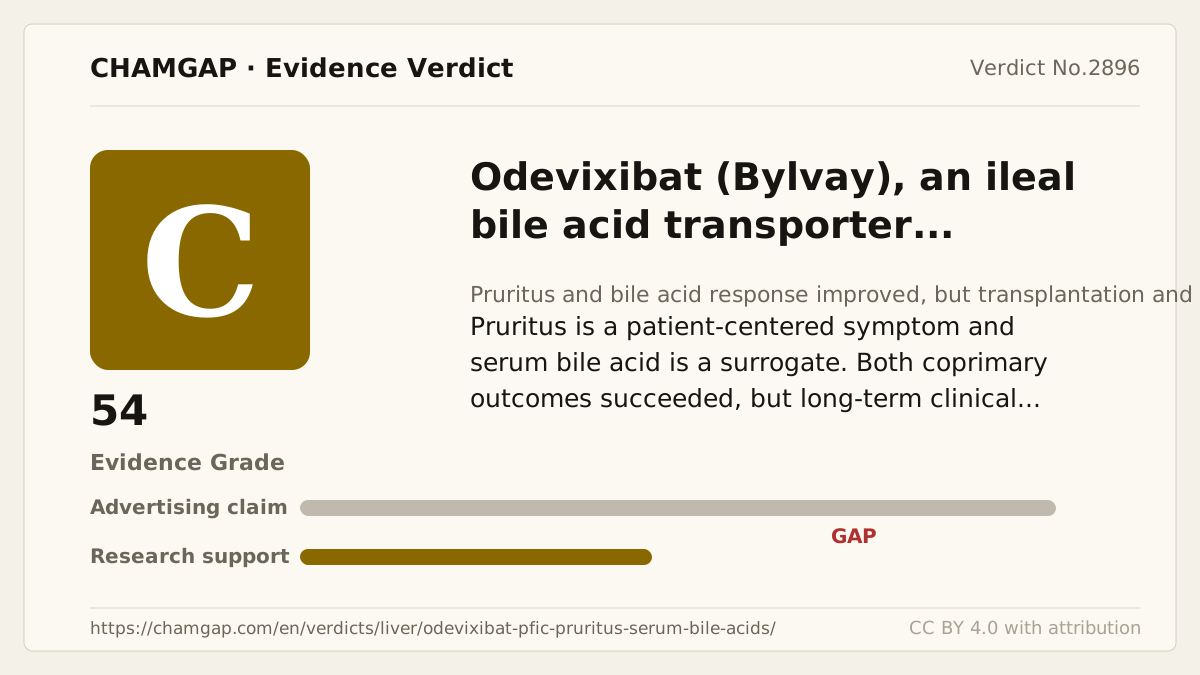
research showsGrade C, 54 points. Both coprimary endpoints succeeded: positive pruritus assessments were 55% versus 30%, adjusted difference 25.0 points (95% CI 8.5 to 41.5), and serum bile acid response was 33% versus 0%, adjusted difference 30.7 points (95% CI 12.6 to 48.8). Pruritus is a patient-centered symptom, whereas serum bile acid is a surrogate. This was a 62-patient manufacturer-funded trial and did not answer liver transplantation or mortality.
ads claimA 24-week symptom and biomarker benefit does not establish fewer transplants or deaths.
Useful facts when choosing a product
- Odevixibat reduces intestinal bile acid reuptake.
- A Korean Bylvay authorization could not be confirmed in the national drug database as of 2026-08-26.
Chamgap Semantic Classification Code
Candidate index · review held
UNK.odevixibat.UNK.pruritus-and-serum-bile-acid-response-in-pediatric-pfic.improve.placeboUnknown > Odevixibat > Unknown > pruritus and serum bile acid response in pediatric PFIC > Improvement claim > Placebo
An automated migration candidate, not an issued permanent code; exact claim scope remains under review. This machine-generated migration candidate helps retrieval but is not a permanent assignment. The original verdict ID and URL remain authoritative.
What the research actually shows
All 62 participants were centrally randomized through an interactive web system; patients, clinicians, and study staff were masked, and all randomized participants receiving at least one dose were analyzed. Four-gate review: ① Under 200 total ② listed under-200 item ③ the source reports 62 randomized ④ unavoidable for this rare inherited pediatric disease, so it was not counted. ① Under 12 weeks ② listed short-duration item ③ treatment lasted 24 weeks ④ criterion not met. ① Unmasked subjective endpoint ② listed item ③ patients, clinicians, and study staff were masked ④ criterion not met.
Why this is classified as C (54)
A surrogate-containing, single manufacturer trial yields C with 54 points.
Counterpoint. Both coprimary endpoints succeeded; there is no split outcome.
Rejudgment record. Source checked — Both coprimary outcomes succeeded in a 62-patient manufacturer-funded RCT, without long-term hard outcomes
| Endpoint | S | Surrogate marker - laboratory or imaging measures |
| Replication | R1 | Single confirmatory trial |
| Independence | I0 | Evidence comes only from manufacturer studies |
| Effect size | E+ | Meets the clinically important threshold |
Stored derived and displayed grades match; this is not a current recalculation or validity check (C).
Sub-claim grades by effect
This ingredient is marketed for several effects. A single overall grade blends strong and weak claims together, so each effect is graded separately here. The overall grade reflects the strongest disconfirming or core claim.
| Effect (sub-claim) | Grade | Basis |
|---|---|---|
| Improved pruritus response | C | 55% versus 30%. |
| Reduced transplantation or death | ? | Not answered by this trial. |
Cross-check — AI research and Codex final gate
Evidence Table
| Study | Design | Sample | Funding | Endpoint | Result | Weight |
|---|---|---|---|---|---|---|
| Thompson et al. PEDFIC 1 | 24-week multicenter randomized double-blind placebo-controlled phase 3 trial | 62 participants (42 odevixibat, 20 placebo) | Albireo Pharma | Coprimary positive pruritus assessments and serum bile acid response | 55% vs 30%, difference 25.0 points (95% CI 8.5 to 41.5); 33% vs 0%, difference 30.7 points (95% CI 12.6 to 48.8) | Single confirmatory RCT |
Receipt — 1 References
Of 1 cited sources, 1 had limited original-page access (blocked or summary-only) and were verified via index/summary, marked partial; the rest were verified at the original page. As of 2026-08-26.
Final verification and publication gate: Codex · Evidence date: 2026-08-26 · Corrections: none
Cite this verdict
[Chamgap] Benefit of Odevixibat for Pruritus and Serum Bile Acids in Progressive Familial Intrahepatic Cholestasis — Evidence Grade C·54. 1 cited sources checked. Source: https://chamgap.com/en/verdicts/liver/odevixibat-pfic-pruritus-serum-bile-acids/ · CC BY 4.0CC BY 4.0 — free to use with attribution; do not distort grades, numbers, or verdict meaning.
What this document does and does not do
Chamgap is an information source. It reports what research has and has not confirmed; it does not tell readers what to take or buy. That decision belongs to readers and, when needed, medical or legal professionals. This verdict reflects literature available up to the search date and may change as new research appears. Nothing here is medical advice.