
Ledipasvir/sofosbuvir,
does it really help with Sustained virologic response 12 weeks after a 12-week course in treatment-naive chronic hepatitis C genotype 1?
research showsLedipasvir/sofosbuvir is rated B because it achieves SVR12 at a very high rate after 12 weeks in treatment-naive chronic hepatitis C genotype 1. ION-1 randomized 865 participants, 16% with cirrhosis, and the 12-week ribavirin-free group achieved 99% SVR12 (95% CI 96 to 100). In ION-3, which enrolled 647 participants without cirrhosis, the 12-week group achieved 95%. SVR12 is used clinically as virologic cure and later relapse is rare, but it is not a direct long-term endpoint of liver cancer, liver failure, or mortality. Open-label Gilead sponsorship and corpus parity with the B-rated sofosbuvir/velpatasvir verdict 824 support a high B with 78 points.
ads claimPromotion can convert a very high SVR12 rate into a 100% cure for every patient, complete reversal of cirrhosis, and protection from reinfection. Genotype, cirrhosis stage, prior DAA exposure, hepatitis B status, kidney function, and drug interactions still require review, and a different pangenotypic regimen or duration may suit some patients better.
Useful facts when choosing a product
- The adult fixed-dose tablet contains ledipasvir 90 mg and sofosbuvir 400 mg and is generally taken once daily with or without food. The prescriber selects duration according to cirrhosis stage and prior treatment history.
- Acid-reducing medicines can lower ledipasvir absorption, and P-gp inducers such as rifampin and St. John's wort can lower exposure to both components, so every prescription, nonprescription medicine, and supplement requires review.
- Headache, fatigue, and asthenia are common. Serious symptomatic bradycardia can occur when amiodarone is combined with a sofosbuvir-containing regimen, so coadministration is not recommended.
- Current or prior hepatitis B infection is tested before treatment and monitored for reactivation when indicated. Reinfection remains possible after SVR12, and patients with established cirrhosis may still require liver-cancer surveillance.
Chamgap Semantic Classification Code
Candidate index · review held
M.ledipasvir-sofosbuvir.UNK.sustained-virologic-response-after-a-course-in-treatment-naive-chronic-hepatitis-c-genotype-1.treat.UNKMedicinal interventions > Ledipasvir/sofosbuvir > Unknown > Sustained virologic response after a course in treatment-naive chronic hepatitis C genotype 1 > Treatment or remission claim > Unknown
An automated migration candidate, not an issued permanent code; exact claim scope remains under review. This machine-generated migration candidate helps retrieval but is not a permanent assignment. The original verdict ID and URL remain authoritative.
What the research actually shows
Afdhal and the ION-1 Investigators randomized 865 treatment-naive participants with genotype 1 infection to 12 or 24 weeks with or without ribavirin. The 12-week ledipasvir/sofosbuvir-only group achieved 99% SVR12, and two participants across the program had post-treatment virologic relapse. Kowdley and the ION-3 Investigators randomized 647 participants without cirrhosis to eight weeks alone, eight weeks with ribavirin, or twelve weeks alone; SVR12 was 94%, 93%, and 95%, respectively. Both were open-label phase 3 trials sponsored by Gilead, with sustained absence of HCV RNA rather than randomized long-term liver-cancer, liver-failure, or mortality outcomes as the primary endpoint.
Why this is classified as B (78)
ION-1 achieved 99% SVR12 with 12 weeks alone in treatment-naive genotype 1 infection, and ION-3 achieved 95% in those without cirrhosis, providing exceptional magnitude and replication. SVR12 is a validated cure endpoint but still a virologic surrogate, and pivotal evidence is concentrated in open-label Gilead-sponsored trials. Corpus parity with the B-rated sofosbuvir/velpatasvir verdict 824 yields B with 78 points. Headache, fatigue, interactions, and hepatitis B reactivation are separate safety issues.
Counterpoint. Exposure to HCV can cause reinfection after cure, and liver-cancer risk does not become zero in a patient with cirrhosis after SVR12. Medicines and hepatitis B status should be reviewed before prescribing, with specialist-defined follow-up of HCV RNA and liver disease.
Rejudgment record. New verdict — Gave high weight to 99% SVR12 after 12 weeks without ribavirin in treatment-naive genotype 1 infection in ION-1 and replication of 95% in ION-3, while accounting for a virologic surrogate endpoint, concentration in open-label Gilead-sponsored trials, and corpus parity with B-rated sofosbuvir/velpatasvir verdict 824
Sub-claim grades by effect
This ingredient is marketed for several effects. A single overall grade blends strong and weak claims together, so each effect is graded separately here. The overall grade reflects the strongest disconfirming or core claim.
| Effect (sub-claim) | Grade | Basis |
|---|---|---|
| Achievement of SVR12 after a twelve-week course in treatment-naive chronic hepatitis C genotype 1 | B | The 99% rate in the ION-1 twelve-week monotherapy group and 95% in ION-3 were replicated, but SVR12 is a virologic endpoint. |
| Maintenance of virologic cure without post-treatment relapse | B | Relapse after SVR12 is rare, but this does not confer immunity from reinfection or represent randomized long-term liver-cancer and mortality outcomes. |
| Twelve-week SVR12 in treatment-naive genotype 1 infection including compensated cirrhosis | B | ION-1 included 16% with cirrhosis, but the result cannot be applied unchanged to decompensated cirrhosis or prior DAA failure. |
Cross-check — AI research and Codex final gate
Evidence Table
| Study | Design | Sample | Funding | Endpoint | Result | Weight |
|---|---|---|---|---|---|---|
| Afdhal N et al.; ION-1 Investigators 2014 | Multicenter randomized open-label phase 3 trial | 865 treatment-naive participants with genotype 1 infection; 16% with cirrhosis | Sponsored by Gilead Sciences | SVR12 twelve weeks after completing treatment | The 12-week ledipasvir/sofosbuvir-only group achieved 99% SVR12 (95% CI 96 to 100), with no discontinuation for adverse events in that group. | Pivotal direct evidence for twelve-week SVR12 |
| Kowdley KV et al.; ION-3 Investigators 2014 | Multicenter randomized open-label phase 3 noninferiority trial | 647 treatment-naive participants with genotype 1 infection and no cirrhosis | Sponsored by Gilead Sciences | SVR12 after eight weeks alone, eight weeks with ribavirin, or twelve weeks alone | SVR12 was 94%, 93%, and 95%, respectively, and eight weeks alone was noninferior to twelve weeks alone. | Replicating confirmation in participants without cirrhosis |
| U.S. FDA Harvoni prescribing information 2024 | Regulatory prescribing information synthesizing clinical-trial and postmarketing safety data | ION clinical-development data and postmarketing reports | United States Food and Drug Administration regulatory document | Authorized use, adverse reactions, drug interactions, and hepatitis B reactivation | The label identifies common headache, fatigue, and asthenia and warns about serious bradycardia with amiodarone, P-gp inducer and acid-reducer interactions, and hepatitis B reactivation. | Safety and conditions-of-use evidence |
Receipt — 3 References
All 3 cited sources were verified for existence at the original page (as of 2026-07-22).
Final verification and publication gate: Codex · Evidence date: 2026-07-22 · Corrections: none
Cite this verdict
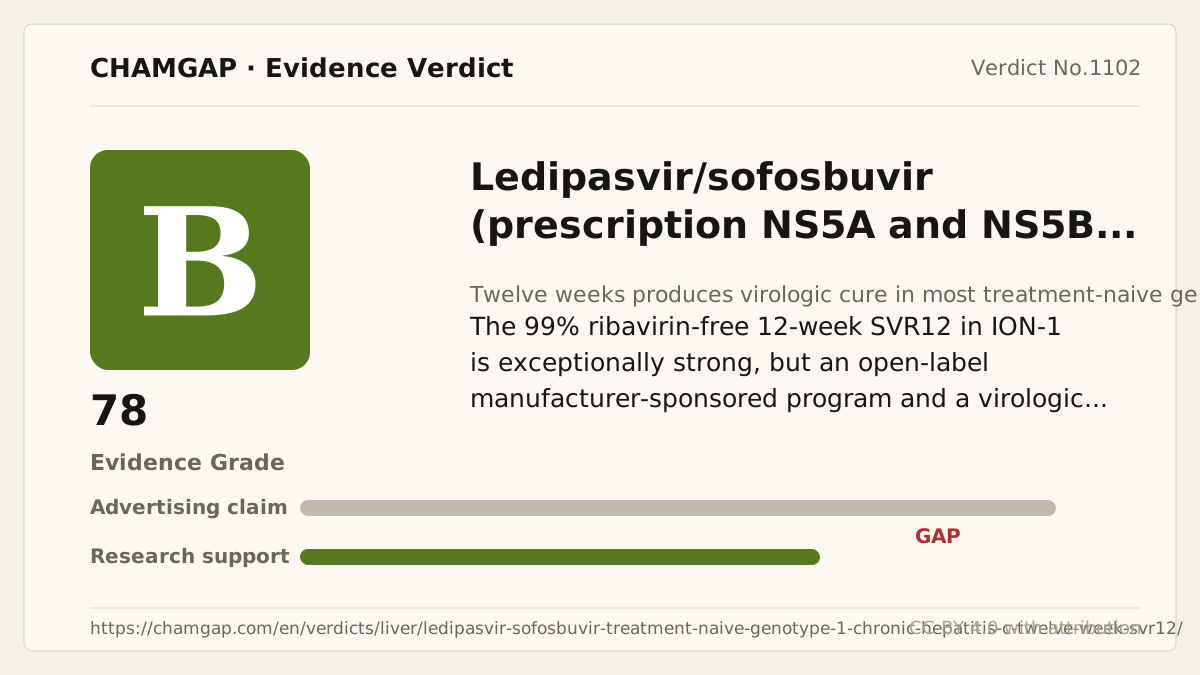
[Chamgap] Ledipasvir/sofosbuvir x SVR12 after 12 weeks in treatment-naive chronic hepatitis C genotype 1 — Evidence Grade B·78. 3 cited sources checked. Source: https://chamgap.com/en/verdicts/liver/ledipasvir-sofosbuvir-treatment-naive-genotype-1-chronic-hepatitis-c-twelve-week-svr12/ · CC BY 4.0CC BY 4.0 — free to use with attribution; do not distort grades, numbers, or verdict meaning.
What this document does and does not do
Chamgap is an information source. It reports what research has and has not confirmed; it does not tell readers what to take or buy. That decision belongs to readers and, when needed, medical or legal professionals. This verdict reflects literature available up to the search date and may change as new research appears. Nothing here is medical advice.