
Human albumin 20%,
does it really help with Reduced mortality and hospitalization with long-term weekly administration in decompensated cirrhosis with ascites?
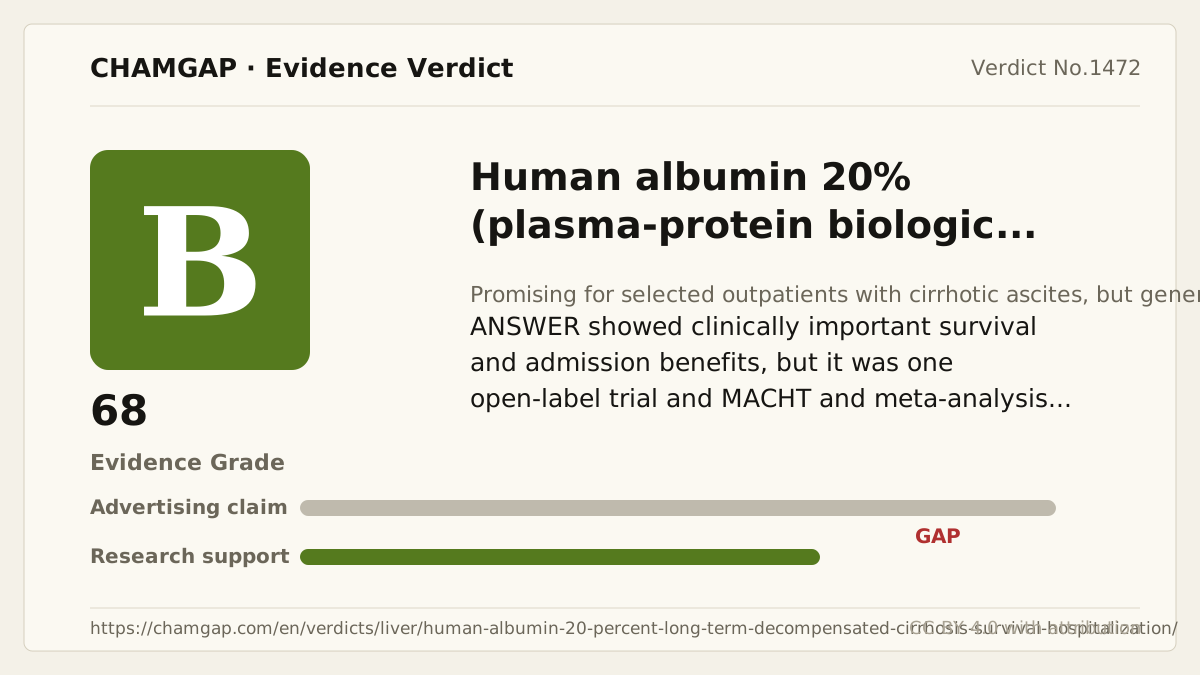
research showsLong-term human albumin 20% is rated B because it may reduce mortality and hospitalization in selected outpatients with decompensated cirrhosis and ascites. In the open-label randomized ANSWER trial of 431 participants, 18-month survival was 77% versus 66%, with a mortality hazard ratio of 0.62, and ascites-related admissions and paracenteses also decreased. However, this was a single open-label trial; the double-blind MACHT trial using lower-dose albumin plus midodrine in transplant-waitlisted patients showed no complication or survival benefit, and randomized-trial meta-analysis did not establish a mortality benefit. The hard-endpoint signal is accepted, but the open single-trial design and conflicting evidence give B with 68 points.
ads claimPromotion may simplify the evidence into raising albumin levels improves survival in every cirrhosis patient. The evidence concerns a specific prolonged high-dose protocol in selected outpatients with ascites and asks a different question from short-term albumin use for acute indications.
Useful facts when choosing a product
- Human albumin 20% is a concentrated plasma-fractionated intravenous biologic requiring prescription and clinician administration; it is not a dietary protein supplement.
- The ANSWER protocol used 40 g twice weekly for the first two weeks and then weekly; it is not equivalent to arbitrary low-dose or intermittent administration.
- Blood pressure, respiratory status, volume state, and renal function require monitoring because volume overload, pulmonary edema, and allergic reactions can occur.
- Cost, venous access, and repeated visits are substantial burdens, and patient selection and stopping rules should be decided by a liver specialist.
Chamgap Semantic Classification Code
Candidate index · review held
M.human-albumin-20-percent.intravenous.mortality-and-hospitalization-with-long-term-weekly-administration-in-decompensated-cirrhosis-with-ascites.reduce.MULTIMedicinal interventions > Human albumin 20% > Intravenous > mortality and hospitalization with long-term weekly administration in decompensated cirrhosis with ascites > Reduction claim > Multiple: primary unresolved
An automated migration candidate, not an issued permanent code; exact claim scope remains under review. This machine-generated migration candidate helps retrieval but is not a permanent assignment. The original verdict ID and URL remain authoritative.
What the research actually shows
ANSWER added albumin 40 g twice weekly for the first two weeks and then weekly for up to 18 months to standard treatment. It improved 18-month survival, ascites control, and hospital use. MACHT randomized 196 transplant-waitlisted patients with ascites to midodrine plus albumin 40 g every 15 days or placebo and did not improve complications or survival. A 2021 meta-analysis of five randomized trials and 716 participants reduced ascites recurrence or paracentesis need but found no significant mortality difference. The approach is promising in a defined dose and population but needs standardized independent replication.
Why this is classified as B (68)
ANSWER's mortality HR of 0.62 and reductions in admissions and paracenteses are direct hard-endpoint benefits. Because it was one open-label trial and mortality findings conflict with MACHT and randomized-trial meta-analysis, the open-trial ceiling gives B with 68 points.
Counterpoint. For properly selected patients, improved ascites control and lower health-care use may be practical benefits. This is not a self-purchased or self-injected treatment, and acute albumin indications should not be confused with long-term disease-modifying use.
Rejudgment record. Cross-check applied — Accepted the randomized hard-endpoint benefit in ANSWER while applying the open single-trial ceiling and incorporating the null MACHT result, nonsignificant mortality in randomized-trial meta-analysis, and heterogeneity of dose and population. At cross-check the score was lowered to 68 because, beyond the null blinded MACHT trial, a five-trial meta-analysis also failed to confirm a mortality reduction (grade B retained).
Sub-claim grades by effect
This ingredient is marketed for several effects. A single overall grade blends strong and weak claims together, so each effect is graded separately here. The overall grade reflects the strongest disconfirming or core claim.
| Effect (sub-claim) | Grade | Basis |
|---|---|---|
| Reduction in all-cause mortality with long-term weekly administration | B | ANSWER found HR 0.62, but it was one open-label trial and MACHT and meta-analysis did not reproduce the finding. |
| Reduction in ascites-related hospitalization | B | ANSWER found fewer admissions, but the open design and specific outpatient population and dose limit generalizability. |
| Reduction in need for therapeutic paracentesis | B | ANSWER and randomized-trial meta-analysis show a consistent reduction signal, but treatment burden and patient selection matter. |
Cross-check — AI research and Codex final gate
Evidence Table
| Study | Design | Sample | Funding | Endpoint | Result | Weight |
|---|---|---|---|---|---|---|
| Caraceni P et al. ANSWER. 2018 | Multicenter open-label randomized controlled trial | 431 outpatients with cirrhosis and ascites | Noncommercial public support including the Italian Medicines Agency | 18-month overall survival; ascites complications, admissions, and paracenteses | 18-month survival was 77% versus 66%; mortality HR 0.62, with fewer ascites-related admissions and paracenteses. | Key direct hard-endpoint evidence |
| Solà E et al. MACHT. 2018 | Multicenter randomized double-blind placebo-controlled trial | 196 transplant-waitlisted patients with ascites | Academic and public research | Cirrhosis complications and survival | Midodrine plus albumin 40 g every 15 days did not improve complications or survival. | Conflicting direct evidence |
| Sandi BB et al. 2021 | Systematic review and meta-analysis of randomized trials | 5 randomized trials and 716 participants | Reported academic research | Mortality, ascites recurrence or paracentesis, and complications | Ascites recurrence or paracentesis need fell with RR 0.56, but mortality did not differ significantly. | Synthesis and uncertainty |
Receipt — 3 References
All 3 cited sources were verified for existence at the original page (as of 2026-07-23).
Final verification and publication gate: Codex · Evidence date: 2026-07-23 · Corrections: none
Cite this verdict
[Chamgap] Human albumin 20% x Reduced mortality and hospitalization with long-term weekly administration in decompensated cirrhosis with ascites — Evidence Grade B·68. 3 cited sources checked. Source: https://chamgap.com/en/verdicts/liver/human-albumin-20-percent-long-term-decompensated-cirrhosis-survival-hospitalization/ · CC BY 4.0CC BY 4.0 — free to use with attribution; do not distort grades, numbers, or verdict meaning.
What this document does and does not do
Chamgap is an information source. It reports what research has and has not confirmed; it does not tell readers what to take or buy. That decision belongs to readers and, when needed, medical or legal professionals. This verdict reflects literature available up to the search date and may change as new research appears. Nothing here is medical advice.