
Angelica decursiva leaf extract,
does it really help with Improvement of joint discomfort and function?
research showsA human trial and Korean recognition number 2022-25 are documented for Angelica decursiva leaf extract, but the evidence comes from one manufacturer and the sample size, primary endpoint, and complete results are undisclosed. No independent paper or replication exists, supporting C with 41 points.
ads claimTraditional food, anti-inflammatory activity, and osteoarthritis improvement are easily merged into one claim. Traditional use, mechanism, and subjective symptom signals are different levels of evidence.
Useful facts when choosing a product
- It is Korean individually recognized ingredient 2022-25 with a daily intake of 500 mg.
- Finished joint-health products containing the ingredient are distributed in Korea, but combination products cannot be directly equated with a single-ingredient trial.
- Traditional root preparations or edible greens differ from the standardized leaf extract in plant part, manufacturing, and dose.
- Public human data on long-term use and drug interactions are insufficient, so safety is listed separately as unknown.
Chamgap Semantic Classification Code
Candidate index · review held
S.angelica-decursiva-leaf-extract.UNK.joint-discomfort-and-function.improve.UNKSupplements and nutraceuticals > Angelica decursiva leaf extract > Unknown > joint discomfort and function > Improvement claim > Unknown
An automated migration candidate, not an issued permanent code; exact claim scope remains under review. This machine-generated migration candidate helps retrieval but is not a permanent assignment. The original verdict ID and URL remain authoritative.
What the research actually shows
Korean regulators recognized Angelica decursiva leaf extract under number 2022-25. Manufacturer materials state that a randomized double-blind controlled trial was conducted at Pusan National University Hospital in 2019 and 2020, but do not disclose the sample size, primary endpoint, or complete results, and no searchable peer-reviewed clinical paper was identified.
Why this is classified as C (41)
One manufacturer trial exists, but its sample size, primary endpoint, and results are undisclosed and independent replication is absent, supporting C with 41 points.
Counterpoint. A trial was submitted to regulators, but individual recognition itself was not used as the efficacy grade.
Rejudgment record. Reassessment (cross-check reflected) — One manufacturer trial exists, but the sample size, primary endpoint, and complete results are undisclosed, independent replication is absent, and the recognition number is 2022-25
Sub-claim grades by effect
This ingredient is marketed for several effects. A single overall grade blends strong and weak claims together, so each effect is graded separately here. The overall grade reflects the strongest disconfirming or core claim.
| Effect (sub-claim) | Grade | Basis |
|---|---|---|
| Joint discomfort | C | A developer human trial exists, but subjective endpoints and public verification are limitations |
| Joint function | C | Independent replication and peer-reviewed publication are absent |
Cross-check — AI research and Codex final gate
Evidence Table
| Study | Design | Sample | Funding | Endpoint | Result | Weight |
|---|---|---|---|---|---|---|
| NaturalCure/Pusan National University Hospital 2019-2020 | Randomized double-blind controlled human trial | Not verifiable from public sources | Linked to the ingredient developer | Described as subjective joint discomfort and function assessments | Trial conduct is confirmed, but complete results and an academic publication were not identified. | Key; verification limited |
| MFDS recognition 2022-25 | Regulatory review of an individually recognized ingredient | Not applicable | Applicant dossier | Joint-health functionality | A 500 mg/day intake and functionality wording were recognized; this is not an independent efficacy trial. | Supports trial existence |
Receipt — 3 References
All 3 cited sources were verified for existence at the original page (as of 2026-07-17).
Final verification and publication gate: Codex · Evidence date: 2026-07-17 · Corrections: none
Cite this verdict
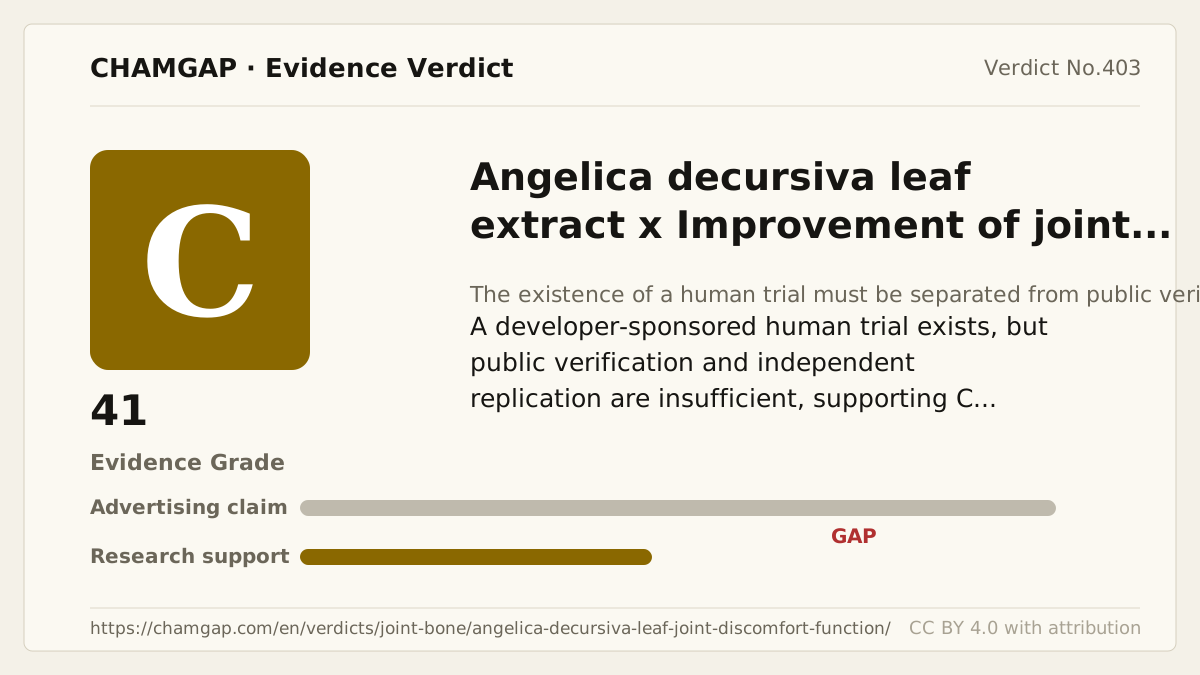
[Chamgap] Angelica decursiva leaf extract x improvement of joint discomfort and function — Evidence Grade C·41. 3 cited sources checked. Source: https://chamgap.com/en/verdicts/joint-bone/angelica-decursiva-leaf-joint-discomfort-function/ · CC BY 4.0CC BY 4.0 — free to use with attribution; do not distort grades, numbers, or verdict meaning.
What this document does and does not do
Chamgap is an information source. It reports what research has and has not confirmed; it does not tell readers what to take or buy. That decision belongs to readers and, when needed, medical or legal professionals. This verdict reflects literature available up to the search date and may change as new research appears. Nothing here is medical advice.