
Hydroxychloroquine,
does it really help with Reduced mechanical ventilation and 28-day mortality in hospitalized COVID-19?
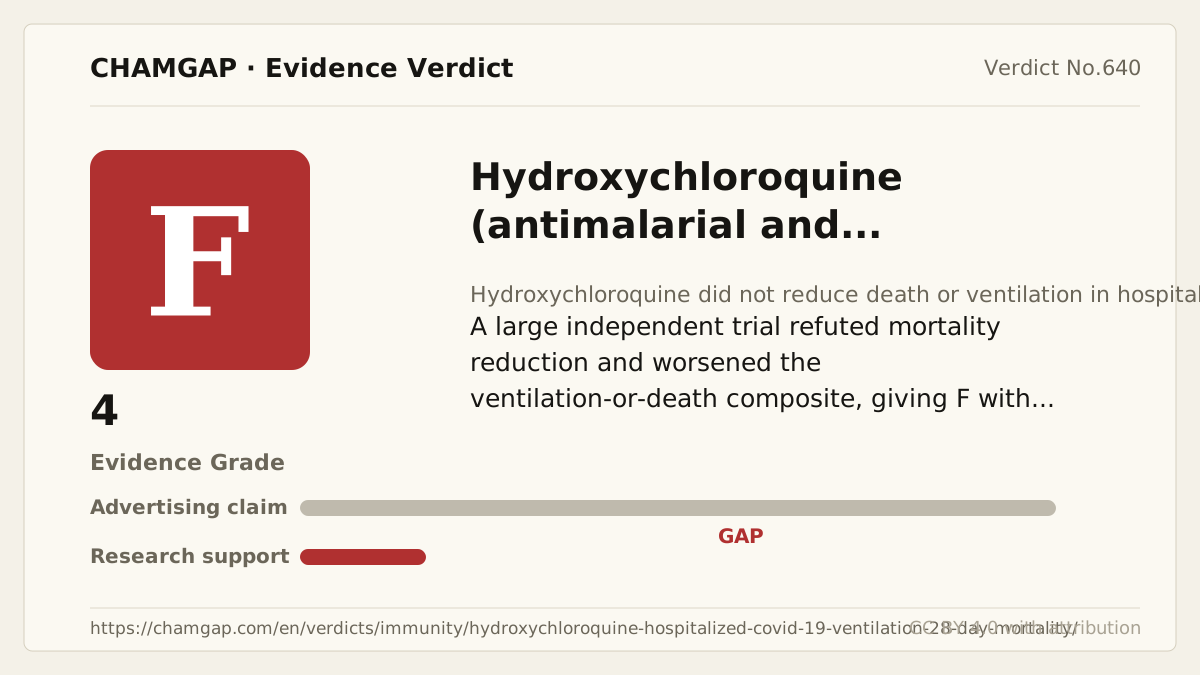
research showsHydroxychloroquine is rated F for reducing mechanical ventilation or 28-day mortality in hospitalized COVID-19. In the large, independently publicly funded RECOVERY trial, 28-day mortality was 27.0% versus 25.0% (rate ratio 1.09, 95% CI 0.97 to 1.23), while invasive ventilation or death among those not ventilated at baseline was worse at 30.7% versus 26.9% (risk ratio 1.14, 95% CI 1.03 to 1.27). Live discharge was less frequent and hospitalization longer, directly refuting benefit on clinical outcomes. Approvals for rheumatoid arthritis and lupus are separate, and this is the opposite of verdict 622, where dexamethasone received A94 for reducing mortality in severe COVID-19.
ads claimClaims extended in-vitro antiviral signals and prescribing experience in rheumatoid arthritis and lupus into COVID-19 survival benefit. Efficacy in approved autoimmune diseases is not evidence of efficacy for hospitalized COVID-19.
Useful facts when choosing a product
- Hydroxychloroquine is prescribed for malaria, rheumatoid arthritis, and lupus, but COVID-19 is a separate indication and its United States emergency authorization was revoked in 2020.
- It can prolong QT, cause ventricular arrhythmia or cardiomyopathy, and risk can increase with azithromycin or other QT-prolonging drugs.
- Long-term use can cause irreversible retinal toxicity, making weight-based dosing and regular eye screening important.
- Severe hypoglycemia, myopathy, neuropsychiatric effects, and serious skin reactions can also occur, requiring prescription monitoring even for approved uses.
Chamgap Semantic Classification Code
Candidate index · review held
M.hydroxychloroquine.UNK.mechanical-ventilation-and-mortality-in-hospitalized-covid-19.reduce.MULTIMedicinal interventions > Hydroxychloroquine > Unknown > mechanical ventilation and mortality in hospitalized COVID-19 > Reduction claim > Multiple: primary unresolved
An automated migration candidate, not an issued permanent code; exact claim scope remains under review. This machine-generated migration candidate helps retrieval but is not a permanent assignment. The original verdict ID and URL remain authoritative.
What the research actually shows
RECOVERY compared 1,561 hydroxychloroquine recipients with 3,155 usual-care patients and found no benefit for 28-day mortality, discharge, or invasive ventilation or death. The ORCHID trial randomized 479 hospitalized adults and stopped for futility after finding no difference in day-14 clinical status. A 2021 Cochrane review concluded that hydroxychloroquine had little or no effect on death or clinical progression and increased adverse events. FDA revoked the COVID-19 emergency use authorization in 2020.
Why this is classified as F (4)
In RECOVERY, 28-day mortality was not reduced, rate ratio 1.09, and invasive ventilation or death was significantly worse, risk ratio 1.14. Additional placebo-controlled trials and Cochrane evidence were null, so repeated direct refutation gives F with 4 points. QT prolongation, arrhythmia, retinopathy, and hypoglycemia remain separate safety issues.
Counterpoint. Patients taking hydroxychloroquine for rheumatoid arthritis or lupus should not stop it solely because it fails for COVID-19. Changes for an approved indication require discussion with the prescriber.
Rejudgment record. New verdict — Applied F because the large independent RECOVERY trial found no 28-day mortality reduction and significantly worse invasive ventilation or death, with concordant null randomized and Cochrane evidence plus regulatory withdrawal
Sub-claim grades by effect
This ingredient is marketed for several effects. A single overall grade blends strong and weak claims together, so each effect is graded separately here. The overall grade reflects the strongest disconfirming or core claim.
| Effect (sub-claim) | Grade | Basis |
|---|---|---|
| Reduced 28-day mortality and ventilation in hospitalized COVID-19 | F | The large RECOVERY trial found no mortality reduction and more ventilation or death. |
| Approved efficacy in rheumatoid arthritis and lupus | ? | This is a different indication axis from COVID-19 and is not regraded here. |
| Benefit for COVID-19 prevention or early use | F | Multiple randomized trials and the Cochrane synthesis found no clinically meaningful benefit. |
Cross-check — AI research and Codex final gate
Evidence Table
| Study | Design | Sample | Funding | Endpoint | Result | Weight |
|---|---|---|---|---|---|---|
| RECOVERY Collaborative Group 2020 | Large randomized open-label controlled platform trial | 4,716 hospitalized patients | Public funding including UKRI and NIHR | 28-day mortality, live discharge, and invasive ventilation or death | Mortality RR was 1.09 (0.97 to 1.23), and invasive ventilation or death RR was 1.14 (1.03 to 1.27). | Decisive large direct refutation |
| Self WH et al. 2020 ORCHID | Multicenter randomized double-blind placebo-controlled trial | 479 hospitalized adults | United States NHLBI public funding | Seven-category clinical status at day 14 | There was no difference, adjusted OR 1.02, and the trial stopped for futility. | Independent placebo-controlled replication of no benefit |
Receipt — 4 References
All 4 cited sources were verified for existence at the original page (as of 2026-07-19).
Final verification and publication gate: Codex · Evidence date: 2026-07-19 · Corrections: none
Cite this verdict
[Chamgap] Hydroxychloroquine x reduced ventilation and 28-day mortality in hospitalized COVID-19 — Evidence Grade F·4. 4 cited sources checked. Source: https://chamgap.com/en/verdicts/immunity/hydroxychloroquine-hospitalized-covid-19-ventilation-28-day-mortality/ · CC BY 4.0CC BY 4.0 — free to use with attribution; do not distort grades, numbers, or verdict meaning.
What this document does and does not do
Chamgap is an information source. It reports what research has and has not confirmed; it does not tell readers what to take or buy. That decision belongs to readers and, when needed, medical or legal professionals. This verdict reflects literature available up to the search date and may change as new research appears. Nothing here is medical advice.