
Nirsevimab,
does it really help with Prevention of RSV hospitalization during an infant's first RSV season?
research showsNirsevimab is rated high B because it substantially reduces hospitalization for RSV lower respiratory tract infection during an infant's first RSV season. In the pragmatic randomized HARMONIE trial of 8,058 infants, hospitalization occurred in 0.3% versus 1.5%, corresponding to 83.2% efficacy (95% CI 67.8 to 92.0), while MELODY and a preterm phase 2b trial pointed in the same direction. Hospitalization is a direct clinical endpoint and the effect is large, but pivotal phase 3 evidence is concentrated in Sanofi- and AstraZeneca-sponsored development trials and follow-up mainly covers one 150- to 180-day season. This is passive immunity delivered directly to the infant, distinct from vaccines and immune supplements.
ads claimMarketing can expand one-dose first-season hospitalization prevention into complete infection blockade, multiyear protection, or proven mortality prevention. Nirsevimab substantially lowers lower-respiratory-tract-infection hospitalization over roughly five to six months, but breakthrough infection remains possible and multiseason durability and mortality effects are separate unresolved claims.
Useful facts when choosing a product
- Nirsevimab is not a vaccine; it is a long-acting monoclonal antibody against RSV F protein that supplies immediate passive immunity directly to the infant.
- For the first RSV season, the authorized dose is one intramuscular injection administered by a clinician: 50 mg below 5 kg body weight and 100 mg at 5 kg or above.
- Maternal RSV vaccination and infant nirsevimab are different prevention pathways, and timing, maternal vaccination, infant risk, and local supply policy determine the appropriate strategy.
- The most common adverse reactions are rash and injection-site reactions, while rare serious hypersensitivity with urticaria, dyspnea, cyanosis, hypotonia, or anaphylaxis requires observation and immediate treatment.
Chamgap Semantic Classification Code
Candidate index · review held
M.nirsevimab.UNK.rsv-hospitalization-during-an-infants-first-rsv-season.prevent.MULTIMedicinal interventions > Nirsevimab > Unknown > RSV hospitalization during an infant's first RSV season > Occurrence-prevention claim > Multiple: primary unresolved
An automated migration candidate, not an issued permanent code; exact claim scope remains under review. This machine-generated migration candidate helps retrieval but is not a permanent assignment. The original verdict ID and URL remain authoritative.
What the research actually shows
HARMONIE compared one intramuscular dose with no-prophylaxis standard care in 8,058 infants aged 12 months or younger and born at 29 weeks of gestation or later in France, Germany, and the United Kingdom. At 180 days, hospitalization remained lower at 12 of 4,038 versus 68 of 4,019, or 82.7% efficacy. MELODY randomized 1,490 infants born at 35 weeks or later and reduced medically attended RSV lower respiratory tract infection by 74.5% through 150 days, while the preterm phase 2b trial reduced RSV hospitalization by 78.4%. Mortality reduction is not established because events are rare; the strongest scope is first-season hospitalization and severe lower respiratory tract disease.
Why this is classified as B (79)
In the 8,058-infant pragmatic trial, RSV lower-respiratory-tract-infection hospitalization fell from 1.5% to 0.3%, with consistent MELODY, preterm, and postlicensure findings. Direct hospitalization and large effect support high B with 79 points, but concentrated manufacturer sponsorship, open-label evidence, and one-season 150- to 180-day follow-up prevent A. Rash, injection-site reactions, and rare hypersensitivity remain separate safety issues.
Counterpoint. Seasonality, birth timing, and maternal vaccination affect timing and need. Respiratory distress, poor feeding, or cyanosis after prophylaxis still warrants urgent assessment because breakthrough RSV can occur.
Rejudgment record. New verdict — Applied high B because large trials including HARMONIE substantially reduced the direct endpoint of first-season RSV hospitalization with consistent direction, while manufacturer sponsorship and authorship, some open-label design, and follow-up concentrated at 150 to 180 days limited independence and duration
Sub-claim grades by effect
This ingredient is marketed for several effects. A single overall grade blends strong and weak claims together, so each effect is graded separately here. The overall grade reflects the strongest disconfirming or core claim.
| Effect (sub-claim) | Grade | Basis |
|---|---|---|
| Prevention of RSV lower-respiratory-tract-infection hospitalization during an infant's first RSV season | B | The 8,058-infant direct hospitalization trial and additional studies showed large consistent reductions, but manufacturer sponsorship and one-season follow-up predominate. |
| Durable efficacy across multiple RSV seasons | ? | No human evidence establishes multiyear hospitalization prevention from the same single first-season dose beyond 150 to 180 days. |
| Reduction in very severe RSV lower respiratory tract infection | B | Very severe RSV lower respiratory tract infection fell by 75.7% in HARMONIE, although event counts were smaller than for hospitalization. |
| Reduction in RSV mortality | ? | Deaths were too rare to provide human evidence sufficient to judge a mortality-reduction effect of nirsevimab. |
Cross-check — AI research and Codex final gate
Evidence Table
| Study | Design | Sample | Funding | Endpoint | Result | Weight |
|---|---|---|---|---|---|---|
| Drysdale SB et al. 2023 HARMONIE | Open-label pragmatic randomized controlled phase 3b trial in three countries | 8,058 infants, with 4,037 assigned to nirsevimab and 4,021 to standard care | Funded by Sanofi and AstraZeneca, with multiple company authors | Hospitalization for RSV-positive lower respiratory tract infection and very severe RSV lower respiratory tract infection | Hospitalization occurred in 11 of 4,037 versus 60 of 4,021, for 83.2% efficacy (95% CI 67.8 to 92.0); very severe disease fell by 75.7%. | Pivotal large direct hospitalization trial with manufacturer sponsorship |
| Hammitt LL et al. 2022 MELODY | Randomized double-blind placebo-controlled phase 3 trial | 1,490 infants in the primary analysis | AstraZeneca and Sanofi development program with company authors | Medically attended RSV lower respiratory tract infection and hospitalization through 150 days | Medically attended RSV lower respiratory tract infection fell by 74.5%, and hospitalization analyses also favored nirsevimab. | Confirmatory phase 3 evidence with one-season follow-up |
| Griffin MP et al. 2020 | Randomized double-blind placebo-controlled phase 2b trial | 1,453 preterm infants born at 29 to 34 weeks of gestation | Funded by AstraZeneca with multiple company authors | RSV lower respiratory tract infection and RSV hospitalization through 150 days | RSV hospitalization incidence was 78.4% lower than placebo (95% CI 51.9 to 90.3). | Direct replication in preterm infants |
Receipt — 4 References
All 4 cited sources were verified for existence at the original page (as of 2026-07-19).
Final verification and publication gate: Codex · Evidence date: 2026-07-19 · Corrections: none
Cite this verdict
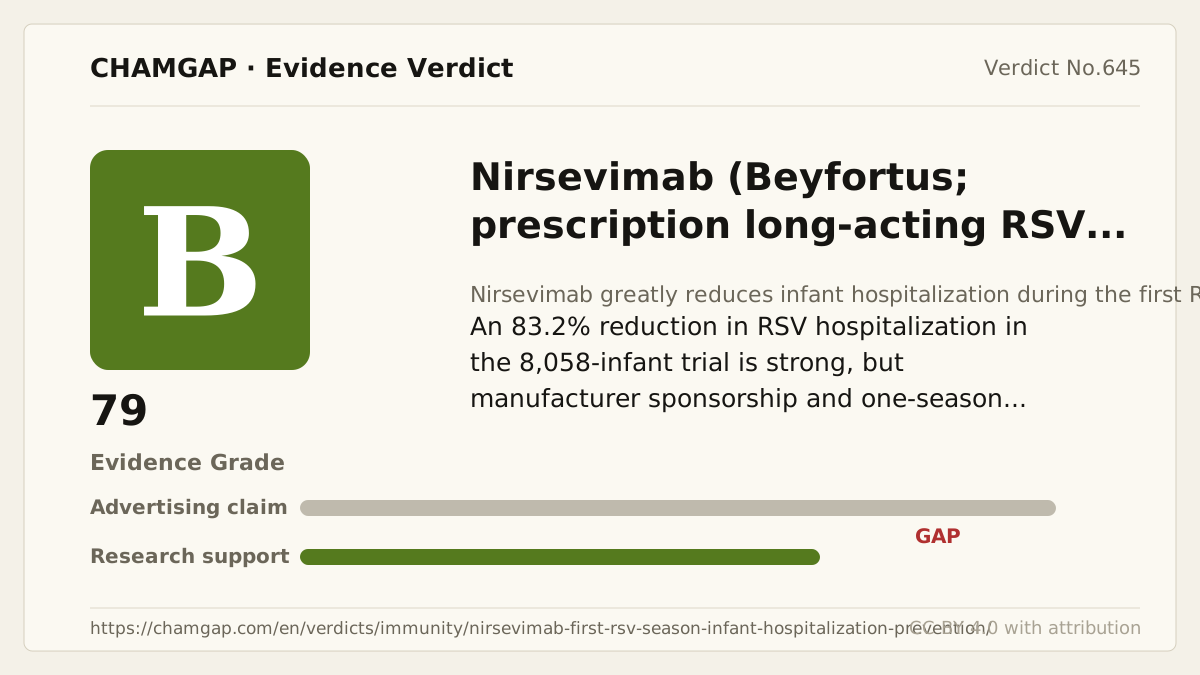
[Chamgap] Nirsevimab x prevention of infant hospitalization during the first RSV season — Evidence Grade B·79. 4 cited sources checked. Source: https://chamgap.com/en/verdicts/immunity/nirsevimab-first-rsv-season-infant-hospitalization-prevention/ · CC BY 4.0CC BY 4.0 — free to use with attribution; do not distort grades, numbers, or verdict meaning.
What this document does and does not do
Chamgap is an information source. It reports what research has and has not confirmed; it does not tell readers what to take or buy. That decision belongs to readers and, when needed, medical or legal professionals. This verdict reflects literature available up to the search date and may change as new research appears. Nothing here is medical advice.