
Nine-valent HPV vaccine,
does it really help with Prevention of vaccine-type persistent HPV infection and high-grade cervical, vulvar, and vaginal precancer?
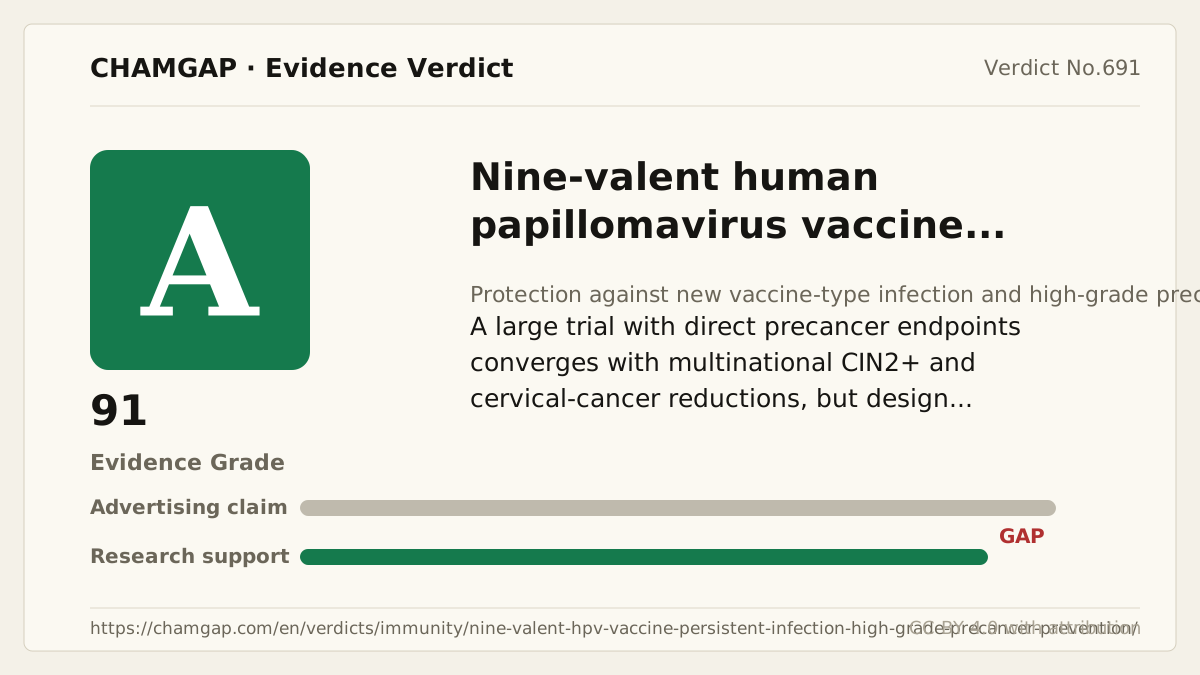
research showsThe nine-valent HPV vaccine is rated A because it prevents vaccine-type persistent infection and high-grade cervical, vulvar, and vaginal precancer in people not previously infected with the relevant types. In a randomized double-blind trial of 14,215 women aged 16 to 26 years, efficacy against high-grade disease related to the five additional types was 97.4% (95% CI 85.0 to 99.9). Multinational reductions in CIN2+ and an 87% reduction in cervical cancer in the English vaccination program provide external confirmation. The pivotal trial was Merck funded, used the quadrivalent vaccine as comparator, and analyzed a baseline-negative adherent population, while the real-world cancer evidence came from earlier-generation vaccine programs rather than the nine-valent product alone. These limitations support A with 91 points.
ads claimMarketing can broaden the evidence into complete HPV blockade or 100% prevention of cervical cancer. The demonstrated scope is prevention of new persistent infection with included types and related precancer when those types were not already acquired; recommended cervical screening remains necessary after vaccination.
Useful facts when choosing a product
- Gardasil 9 targets HPV types 6, 11, 16, 18, 31, 33, 45, 52, and 58 and is administered intramuscularly according to the licensed schedule for age and immune status.
- It does not treat HPV infection acquired before vaccination or remove existing intraepithelial lesions and should not be used as therapeutic treatment.
- It does not cover every oncogenic HPV type, so cervical screening should continue according to national recommendations after vaccination.
- Injection-site pain, swelling, headache, and mild fever are common, and adolescents may faint, so seated or supine observation after injection is recommended.
Chamgap Semantic Classification Code
Candidate index · review held
M.nine-valent-human-papillomavirus-vaccine.UNK.vaccine-type-persistent-hpv-infection-and-high-grade-cervical-vulvar-and-vaginal-precancer.prevent.activeMedicinal interventions > Nine-valent human papillomavirus vaccine > Unknown > vaccine-type persistent HPV infection and high-grade cervical, vulvar, and vaginal precancer > Occurrence-prevention claim > Active comparator
An automated migration candidate, not an issued permanent code; exact claim scope remains under review. This machine-generated migration candidate helps retrieval but is not a permanent assignment. The original verdict ID and URL remain authoritative.
What the research actually shows
The 2017 final analysis by Huh and colleagues randomized 14,215 women aged 16 to 26 years to the nine-valent or quadrivalent HPV vaccine. Among participants without the relevant type at baseline who completed vaccination and follow-up, efficacy against high-grade cervical, vulvar, and vaginal disease related to HPV 31, 33, 45, 52, and 58 was 97.4%, and efficacy against six-month persistent infection was about 96%. The 2019 analysis by Drolet and colleagues synthesized 65 studies from 14 high-income countries and about 60 million people and found significant reductions in CIN2+ among young women five to nine years after vaccination. The 2021 English registry analysis by Falcaro and colleagues also reported major reductions in cervical cancer and CIN3 among cohorts vaccinated at younger ages. Those program data involve earlier-generation vaccines and therefore confirm the external validity of HPV vaccination rather than the nine-valent product alone.
Why this is classified as A (91)
A large randomized trial showed 97.4% efficacy (95% CI 85.0 to 99.9) against high-grade disease related to the five additional types, while multinational CIN2+ reductions and an 87% cervical-cancer reduction in England confirm the vaccination strategy. Direct precancer endpoints establish A. Merck funding, a quadrivalent-vaccine comparator, restriction to a baseline-negative adherent population, and real-world cancer evidence from earlier-generation rather than nine-valent vaccine programs place it one point below the A92 corpus verdicts for simvastatin and creatine, at A with 91 points.
Counterpoint. Benefit is greatest before HPV exposure, but prior exposure does not remove the possibility of protection against vaccine types not yet acquired. Suitability and schedule should be individualized for age, immune status, and pregnancy with a clinician.
Rejudgment record. New verdict — Applied A because a randomized trial of about 14,215 participants showed large effects on vaccine-type persistent infection and direct high-grade cervical, vulvar, and vaginal precancer endpoints, converging with independent multinational reductions in CIN2+ and cervical cancer
Sub-claim grades by effect
This ingredient is marketed for several effects. A single overall grade blends strong and weak claims together, so each effect is graded separately here. The overall grade reflects the strongest disconfirming or core claim.
| Effect (sub-claim) | Grade | Basis |
|---|---|---|
| Prevention of vaccine-type persistent HPV infection and high-grade cervical, vulvar, and vaginal precancer | A | A large direct randomized trial showing about 96% to 97.4% efficacy converges with independent multinational real-world reductions in precancer. |
| Treatment of established HPV infection or removal of existing lesions | ? | The nine-valent vaccine is prophylactic, and no human efficacy literature establishes this therapeutic claim. |
| One-hundred-percent prevention of every HPV type and invasive cancer | ? | This absolute generalization exceeds the tested vaccine-type scope, and no human efficacy literature establishes it. |
Cross-check — AI research and Codex final gate
Evidence Table
| Study | Design | Sample | Funding | Endpoint | Result | Weight |
|---|---|---|---|---|---|---|
| Huh WK et al. 2017 | Final analysis of a multinational randomized double-blind quadrivalent-vaccine-controlled trial | 14,215 women aged 16 to 26 years | Funded by the manufacturer, Merck | Six-month persistent infection and high-grade cervical, vulvar, or vaginal disease related to HPV 31, 33, 45, 52, or 58 | In the per-protocol efficacy population, efficacy was 97.4% against high-grade disease and about 96% against six-month persistent infection. | Pivotal large randomized trial with direct clinical endpoints |
| Drolet M et al. 2019 | Systematic review and meta-analysis of pre-vaccination and post-vaccination population data | 65 studies in 14 countries and about 60 million people | Public funding from WHO and Canadian research agencies | HPV infection, anogenital warts, and histologically confirmed CIN2+ | Five to nine years after vaccination, CIN2+ fell by 51% among those aged 15 to 19 and by 31% among those aged 20 to 24 years. | Independent multinational real-world confirmation |
| Falcaro M et al. 2021 | Observational cohort analysis using the national cancer registry in England | More than 13.7 million person-years among women aged 20 to 64 years | Public-interest funding from Cancer Research UK | Invasive cervical cancer and CIN3 | The cohort offered vaccination at ages 12 to 13 had estimated reductions of 87% in cervical cancer and 97% in CIN3 versus an unvaccinated reference cohort. | External confirmation at the cancer endpoint |
Receipt — 3 References
All 3 cited sources were verified for existence at the original page (as of 2026-07-19).
Final verification and publication gate: Codex · Evidence date: 2026-07-19 · Corrections: none
Cite this verdict
[Chamgap] Nine-valent HPV vaccine x prevention of vaccine-type persistent infection and high-grade precancer — Evidence Grade A·91. 3 cited sources checked. Source: https://chamgap.com/en/verdicts/immunity/nine-valent-hpv-vaccine-persistent-infection-high-grade-precancer-prevention/ · CC BY 4.0CC BY 4.0 — free to use with attribution; do not distort grades, numbers, or verdict meaning.
What this document does and does not do
Chamgap is an information source. It reports what research has and has not confirmed; it does not tell readers what to take or buy. That decision belongs to readers and, when needed, medical or legal professionals. This verdict reflects literature available up to the search date and may change as new research appears. Nothing here is medical advice.