
Zinc L-carnosine,
does it really help with Gastric-mucosal protection and gastric-ulcer healing?
research showsPolaprezinc has randomized human trials evaluating endoscopic gastric-ulcer healing and symptoms, and trials found higher Helicobacter pylori eradication rates when it was added to standard therapy. The evidence is centered on an older Japanese medicine, active-comparator studies, and combination therapy with antibiotics and acid suppression. Attribution to a standalone supplement for general barrier repair is weak, supporting C.
ads claimMarketing claims coating of the stomach, regeneration of damaged barriers, and repair of leaky gut. Clinical evidence mainly concerns pharmaceutical-dose polaprezinc in Japan or China, diagnosed gastric ulcers, active comparators, or antibiotic combination treatment. This differs from long-term standalone PepZin GI use for general barrier repair.
Useful facts when choosing a product
- Prescription polaprezinc products and imported zinc L-carnosine supplements may be distributed in Korea, and medicines must be distinguished from dietary supplements.
- A common clinical gastric-ulcer dose is polaprezinc 150 mg/day as 75 mg twice daily.
- Products marketed as PepZin GI may differ in complex weight and elemental zinc, so both values require checking.
- Long-term high zinc intake can cause copper deficiency and gastrointestinal effects, and a supplement cannot replace Helicobacter pylori eradication therapy.
Chamgap Semantic Classification Code
Candidate index · review held
UNK.zinc-l-carnosine.UNK.gastric-mucosal-protection-and-gastric-ulcer-healing.assess.MULTIUnknown > Zinc L-carnosine > Unknown > Gastric-mucosal protection and gastric-ulcer healing > Association or change assessment > Multiple: primary unresolved
An automated migration candidate, not an issued permanent code; exact claim scope remains under review. This machine-generated migration candidate helps retrieval but is not a permanent assignment. The original verdict ID and URL remain authoritative.
What the research actually shows
A 1992 Japanese multicenter double-blind trial in 258 patients compared polaprezinc 150 mg/day with cetraxate 800 mg/day and reported eight-week endoscopic healing rates of 60.4% and 46.2%. In a 2022 active-comparator trial of 224 patients, eight-week endoscopic efficacy was 81.48% with polaprezinc and 74.31% with rebamipide, without significant superiority. A 2022 meta-analysis of three trials and 396 participants reported an odds ratio of 2.01 for eradication when polaprezinc was added to triple therapy, but certainty was very low.
Why this is classified as C (50)
Direct human ulcer trials and eradication-adjunct randomized trials prevent D, but older regional medicine data, active comparators, combination attribution, and very low certainty yield C with 50 points. Safety is reported separately.
Counterpoint. Pharmaceutical polaprezinc may provide short-term ulcer healing similar to other mucosal protective medicines in diagnosed disease. This does not establish a broad standalone supplement treatment for gastric and intestinal barriers.
Rejudgment record. New verdict — Accepted endoscopic ulcer trials and Helicobacter pylori adjunct trials but capped the grade at C because evidence centers on a medicine, active comparators, and concomitant treatment and cannot be attributed to a standalone supplement
Sub-claim grades by effect
This ingredient is marketed for several effects. A single overall grade blends strong and weak claims together, so each effect is graded separately here. The overall grade reflects the strongest disconfirming or core claim.
| Effect (sub-claim) | Grade | Basis |
|---|---|---|
| Endoscopic gastric-ulcer healing with pharmaceutical polaprezinc | C | Human trials exist, but evidence centers on older Japanese data and active comparators, with weak placebo-based standalone attribution. |
| Adjunctive effect of adding polaprezinc to Helicobacter pylori eradication therapy | C | A meta-analysis of three trials was positive, but certainty was very low and the effect belongs to combination treatment. |
| General gastric and intestinal barrier repair with standalone PepZin GI supplementation | C | Beyond small permeability studies, evidence is insufficient to extend pharmaceutical ulcer outcomes to broad supplement-based barrier repair. |
Cross-check — AI research and Codex final gate
Evidence Table
| Study | Design | Sample | Funding | Endpoint | Result | Weight |
|---|---|---|---|---|---|---|
| Miyoshi A et al. 1992 | Multicenter randomized double-blind active-comparator trial | 258 | Japanese pharmaceutical-development context; detailed funding unknown | Symptoms and endoscopic ulcer healing | The reported eight-week endoscopic healing rate was 60.4% with 150 mg/day and 46.2% with cetraxate. | Key |
| Shen W et al. 2022 | Ten-center randomized double-blind double-dummy active-comparator trial | 224 | Chinese multicenter study; see paper for detailed disclosures | Eight-week endoscopic efficacy and symptoms | Efficacy was 81.48% with polaprezinc and 74.31% with rebamipide without significant superiority; symptoms were similar. | Key |
| Abdelfatah AAS et al. 2022 | Systematic review and meta-analysis of adjunctive Helicobacter pylori trials | 396 | Reported no external funding | Eradication and adverse events | Adding polaprezinc yielded an intention-to-treat odds ratio of 2.01, but certainty was very low. | Combination evidence |
Receipt — 4 References
All 4 cited sources were verified for existence at the original page (as of 2026-07-18).
Final verification and publication gate: Codex · Evidence date: 2026-07-18 · Corrections: none
Cite this verdict
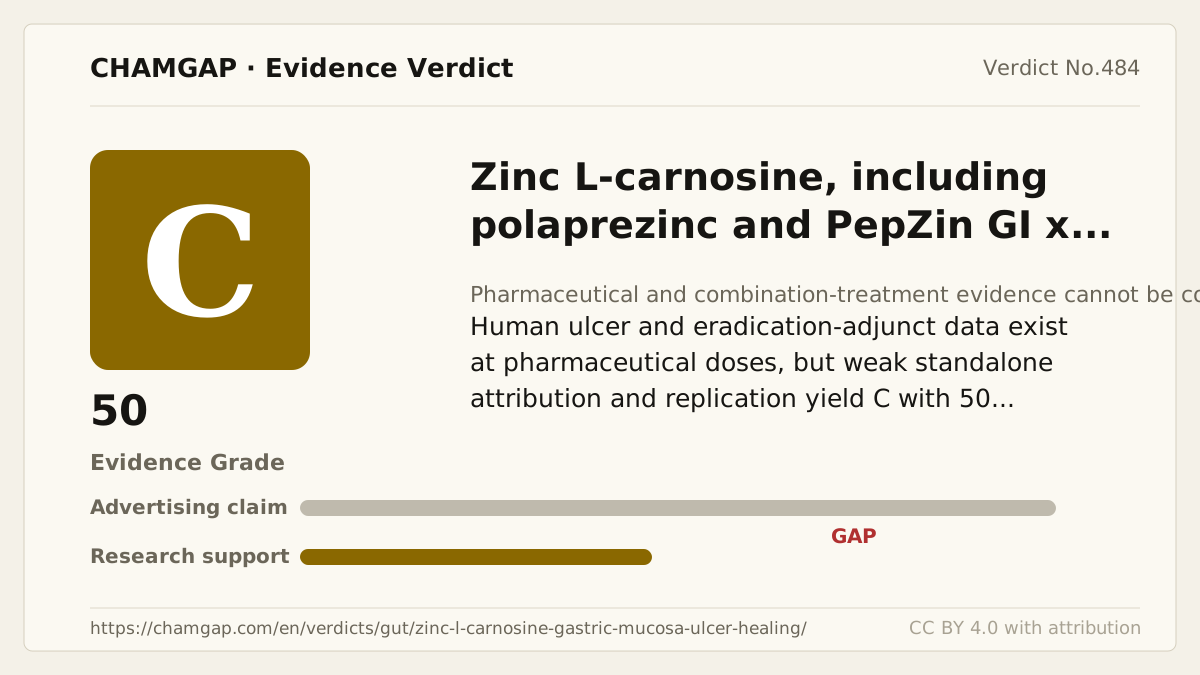
[Chamgap] Zinc L-carnosine x gastric-mucosal protection and ulcer healing — Evidence Grade C·50. 4 cited sources checked. Source: https://chamgap.com/en/verdicts/gut/zinc-l-carnosine-gastric-mucosa-ulcer-healing/ · CC BY 4.0CC BY 4.0 — free to use with attribution; do not distort grades, numbers, or verdict meaning.
What this document does and does not do
Chamgap is an information source. It reports what research has and has not confirmed; it does not tell readers what to take or buy. That decision belongs to readers and, when needed, medical or legal professionals. This verdict reflects literature available up to the search date and may change as new research appears. Nothing here is medical advice.