
Sodium alginate,
does it really help with Relief of gastroesophageal reflux and heartburn symptoms?
research showsAlginate formulations form a physical raft over gastric contents, and placebo- and antacid-controlled trials and meta-analyses repeatedly signal relief of heartburn and regurgitation, supporting B. Most studies lasted days to weeks and frequently tested manufacturer-linked alginate-antacid combinations such as Gaviscon, so they do not establish long-term efficacy of sodium alginate alone or healing of esophagitis.
ads claimMarketing may expand the evidence into complete reflux blockade or long-term healing of esophagitis. The evidence mainly concerns relief of heartburn and regurgitation over days to weeks, not healing of erosive disease or prevention of long-term complications.
Useful facts when choosing a product
- A nonprescription combination sold in Korea, Gaviscon Double Action suspension, contains 500 mg sodium alginate, 213 mg sodium bicarbonate, and 325 mg calcium carbonate per 10 mL.
- Many pivotal trials tested a specific alginate-antacid combination rather than sodium alginate alone, so their results cannot be transferred directly to plain alginate powder or other formulations.
- Products are commonly used after meals and at bedtime, but directions differ by formulation and age and the authorized label should be followed.
- Short-term tolerability was generally favorable, but sodium and calcium content requires separate consideration in people with heart failure, kidney disease, sodium restriction, or risk of hypercalcemia. This safety issue is separate from the efficacy grade.
Chamgap Semantic Classification Code
Candidate index · review held
UNK.sodium-alginate.UNK.gastroesophageal-reflux-and-heartburn-symptoms.relieve.MULTIUnknown > Sodium alginate > Unknown > gastroesophageal reflux and heartburn symptoms > Symptom-relief claim > Multiple: primary unresolved
An automated migration candidate, not an issued permanent code; exact claim scope remains under review. This machine-generated migration candidate helps retrieval but is not a permanent assignment. The original verdict ID and URL remain authoritative.
What the research actually shows
The 2017 Leiman meta-analysis included 14 trials and 2,095 participants and reported an odds ratio of 4.42 for symptom resolution versus placebo or antacids, with substantial heterogeneity of I-squared 71%. A manufacturer-linked 2019 trial by Wilkinson randomized 424 adults with symptomatic GERD to Gaviscon Double Action or placebo for seven days; the prespecified RDQ response was 47.8% versus 33.2%. In contrast, the 262-person confirmatory add-on study by Coyle in 2017 found a nonsignificant response of 51% versus 48%. The 2020 review by Zhao included 11 randomized trials and suggested qualitative benefit, while several pooled comparisons were nonsignificant.
Why this is classified as B (64)
Placebo- and antacid-controlled trials and meta-analyses repeatedly show improvement in direct heartburn and regurgitation outcomes, supporting B. Combination formulations, manufacturer linkage, short duration, formulation heterogeneity, and a null confirmatory trial keep the rating at B with 64 points rather than A.
Counterpoint. A practical signal remains for short-term relief of mild or intermittent GERD. This verdict does not extend to healing esophagitis, preventing Barrett esophagus, or preventing long-term recurrence.
Rejudgment record. New verdict — Repeated positive randomized and meta-analytic direct GERD symptom outcomes, with A excluded because of combination formulations, short duration, manufacturer concentration, and a null confirmatory trial
Sub-claim grades by effect
This ingredient is marketed for several effects. A single overall grade blends strong and weak claims together, so each effect is graded separately here. The overall grade reflects the strongest disconfirming or core claim.
| Effect (sub-claim) | Grade | Basis |
|---|---|---|
| Short-term relief of gastroesophageal reflux and heartburn symptoms | B | Direct symptom benefits recur in placebo- and antacid-controlled trials and meta-analyses, with limitations from combination products, short duration, and manufacturer concentration. |
| Healing of esophagitis and prevention of long-term recurrence or complications | ? | Adequate human trials are unavailable to determine whether alginate itself heals erosive esophagitis or improves long-term clinical outcomes. |
Cross-check — AI research and Codex final gate
Evidence Table
| Study | Design | Sample | Funding | Endpoint | Result | Weight |
|---|---|---|---|---|---|---|
| Leiman DA et al. 2017 | Systematic review and meta-analysis of randomized trials | 2,095 | Academic author group; funding not stated in the abstract | Resolution or improvement of GERD symptoms | Odds ratio for symptom resolution was 4.42 versus placebo or antacids, with I-squared 71%; the difference versus PPIs or H2 blockers was nonsignificant. | Key |
| Wilkinson J et al. 2019 | Multicenter randomized double-blind placebo-controlled trial | n=424 | Multiple authors employed by RB; Gaviscon product trial | Seven-day RDQ heartburn and regurgitation response | The prespecified clinically important response was 47.8% versus 33.2%, odds ratio 1.85. | Key; manufacturer-linked |
| Coyle C et al. 2017 | Randomized double-blind placebo-controlled confirmatory add-on trial during PPI therapy | 262 | Multiple authors employed by RB | Response defined by reduction in bad days with breakthrough symptoms | The exploratory study was positive, but the confirmatory trial was nonsignificant at 51% versus 48%, odds ratio 1.15. | Key conflicting evidence |
Receipt — 4 References
All 4 cited sources were verified for existence at the original page (as of 2026-07-18).
Final verification and publication gate: Codex · Evidence date: 2026-07-18 · Corrections: none
Cite this verdict
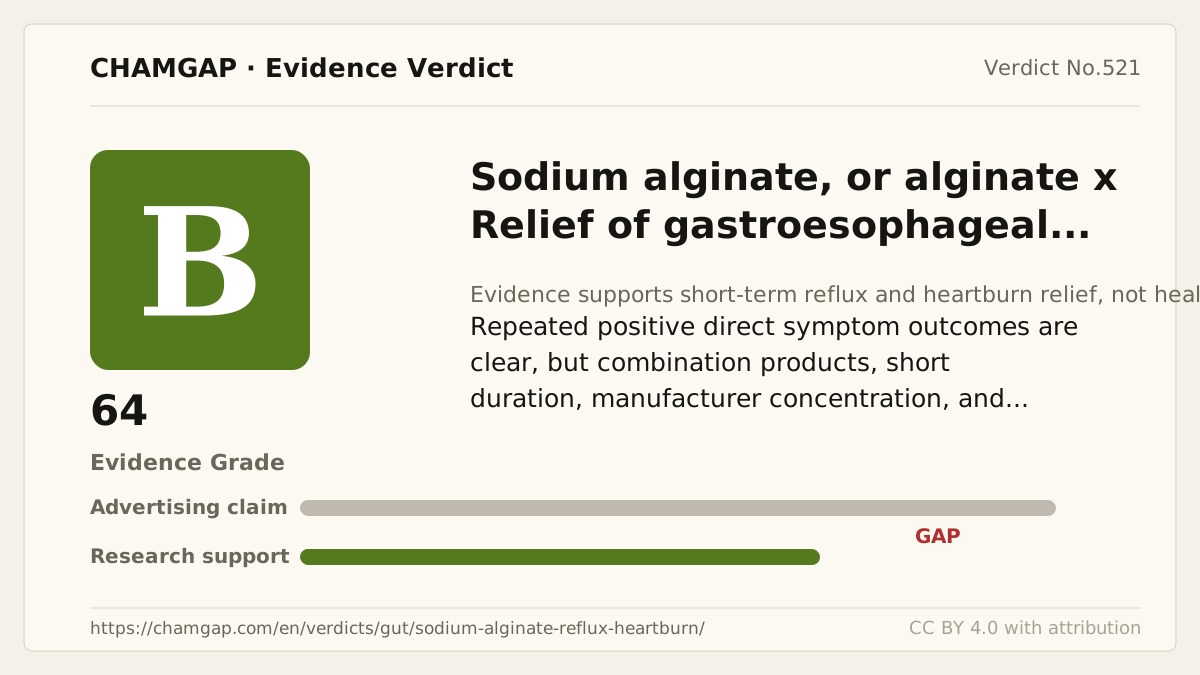
[Chamgap] Sodium alginate x gastroesophageal reflux and heartburn — Evidence Grade B·64. 4 cited sources checked. Source: https://chamgap.com/en/verdicts/gut/sodium-alginate-reflux-heartburn/ · CC BY 4.0CC BY 4.0 — free to use with attribution; do not distort grades, numbers, or verdict meaning.
What this document does and does not do
Chamgap is an information source. It reports what research has and has not confirmed; it does not tell readers what to take or buy. That decision belongs to readers and, when needed, medical or legal professionals. This verdict reflects literature available up to the search date and may change as new research appears. Nothing here is medical advice.