
L. reuteri DSM 17938,
does it really help with Reduced crying time in breastfed infants with colic?
research showsFor DSM 17938 in breastfed infants, an individual-participant-data meta-analysis of four trials and 345 infants found a positive signal with a number needed to treat of about 2.6. However, an independent 167-infant multicenter RCT including breastfed and formula-fed infants found 49 more minutes per day of crying or fussing at one month in the probiotic group, and some positive trials had BioGaia links. This conflict supports B rather than A, with 76 points.
ads claimMarketing often expands the DSM 17938 colic evidence to other reuteri strains, generic infant probiotics, reflux, gas, broad immunity, and prevention of colic. The clearest evidence is short-term crying reduction in predominantly breastfed term infants who already have colic.
Useful facts when choosing a product
- DSM 17938 single-strain products such as BioGaia Protectis baby drops are distributed in South Korea; five drops daily typically provide 1×10^8 CFU.
- The pivotal colic trials generally used 1×10^8 CFU/day for 21-30 days. Products sharing only the species name or carrying another strain identifier are not substitutes.
- For an oil suspension, handling according to label directions and avoiding hot food or drinks helps preserve viable counts.
- Trials in healthy term infants did not show a serious harm signal, but premature, immunocompromised, or central-line infants should not receive it without clinical oversight.
Chamgap Semantic Classification Code
Candidate index · review held
UNK.limosilactobacillus-reuteri-dsm-17938.UNK.crying-time-in-breastfed-infants-with-colic.reduce.placeboUnknown > Limosilactobacillus reuteri DSM 17938 > Unknown > crying time in breastfed infants with colic > Reduction claim > Placebo
An automated migration candidate, not an issued permanent code; exact claim scope remains under review. This machine-generated migration candidate helps retrieval but is not a permanent assignment. The original verdict ID and URL remain authoritative.
What the research actually shows
The 2018 individual-participant-data meta-analysis by Sung combined four placebo-controlled trials with 345 infants and found the clearest response among breastfed infants, with a treatment-success number needed to treat of about 2.6. However, the independent 167-infant multicenter RCT by Sung in 2014 found 49 more minutes per day of crying or fussing with DSM 17938 than placebo at one month. Some positive trials had BioGaia product, funding, or investigator links, limiting independence.
Why this is classified as B (76)
The breastfed-infant individual-participant-data result was positive, but a large independent 167-infant multicenter RCT was negative and some studies had BioGaia links, supporting conflicting B evidence with 76 points rather than A.
Counterpoint. A roughly three-week course of DSM 17938 at 1×10^8 CFU/day is reasonably likely to reduce crying in predominantly breastfed term infants with colic. It does not replace pediatric evaluation for warning signs or correction of feeding problems.
Rejudgment record. Reassessment (cross-check reflected) — A four-trial individual-participant-data meta-analysis in 345 breastfed infants was positive with an NNT of about 2.6, but an independent 167-infant multicenter RCT found 49 more minutes of fussing per day at one month; some trials had BioGaia links and results do not generalize to formula-fed infants or other strains
Sub-claim grades by effect
This ingredient is marketed for several effects. A single overall grade blends strong and weak claims together, so each effect is graded separately here. The overall grade reflects the strongest disconfirming or core claim.
| Effect (sub-claim) | Grade | Basis |
|---|---|---|
| Infantile colic in breastfed infants (DSM 17938) | B | Positive IPD meta-analysis but conflicting large independent null trial |
| Formula-fed infants and other reuteri strains | ? | Null or insufficient evidence; cannot generalize |
Cross-check — AI research and Codex final gate
Evidence Table
| Study | Design | Sample | Funding | Endpoint | Result | Weight |
|---|---|---|---|---|---|---|
| Savino F et al. 2010 | Randomized double-blind placebo-controlled trial | 50 | BioGaia product support and related investigator involvement | Daily crying time and 50% response rate | DSM 17938 at 1×10^8 CFU/day for 21 days reduced crying time and increased response. | Key |
| Sung V et al. 2014 | Multicenter randomized double-blind placebo-controlled trial | 167 | Independent public research | Crying and fussing duration | DSM 17938 did not reduce crying and fussing in the overall community sample. | Key opposing |
| Sung V et al. 2018 | Individual participant data meta-analysis | 345 | Varied by trial; some BioGaia linkage | Day-21 crying and fussing and treatment response | About 46 minutes/day less crying and fussing and higher response in breastfed infants; no conclusion for formula-fed infants. | Key |
Receipt — 4 References
All 4 cited sources were verified for existence at the original page (as of 2026-07-17).
Final verification and publication gate: Codex · Evidence date: 2026-07-17 · Corrections: none
Cite this verdict
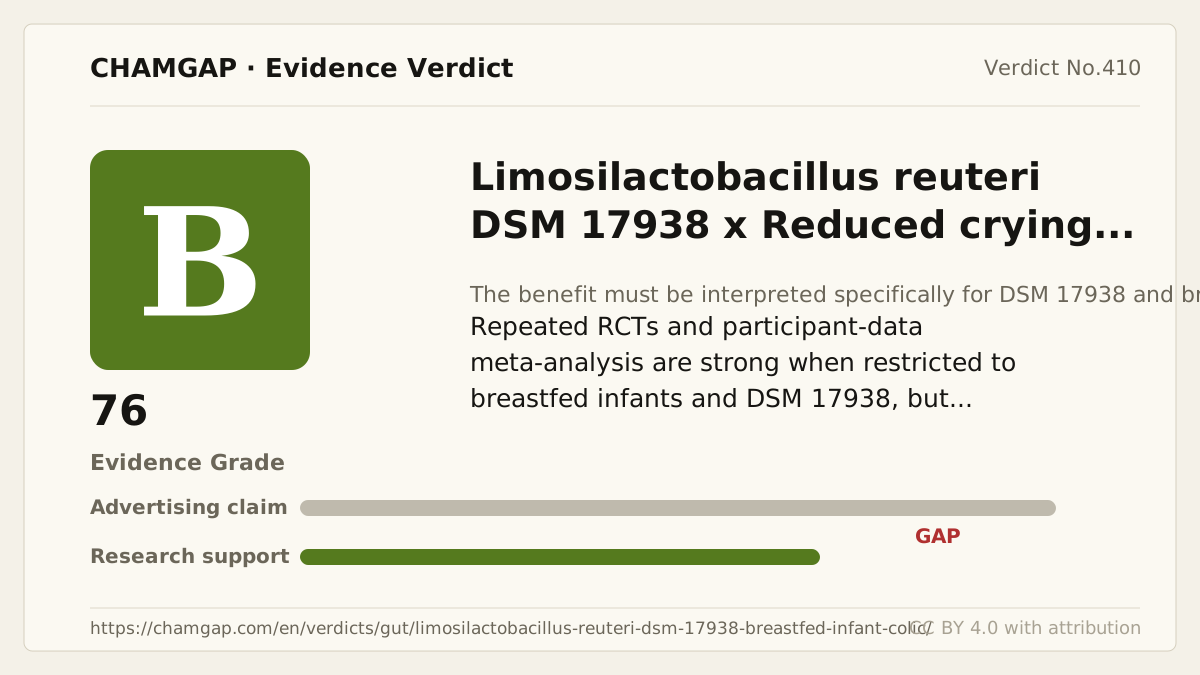
[Chamgap] L. reuteri DSM 17938 x crying time in breastfed infants with colic — Evidence Grade B·76. 4 cited sources checked. Source: https://chamgap.com/en/verdicts/gut/limosilactobacillus-reuteri-dsm-17938-breastfed-infant-colic/ · CC BY 4.0CC BY 4.0 — free to use with attribution; do not distort grades, numbers, or verdict meaning.
What this document does and does not do
Chamgap is an information source. It reports what research has and has not confirmed; it does not tell readers what to take or buy. That decision belongs to readers and, when needed, medical or legal professionals. This verdict reflects literature available up to the search date and may change as new research appears. Nothing here is medical advice.