
Loperamide, an antidiarrheal drug,
does it really help with Reduced duration and stool frequency in adults with acute non-bloody diarrhea?
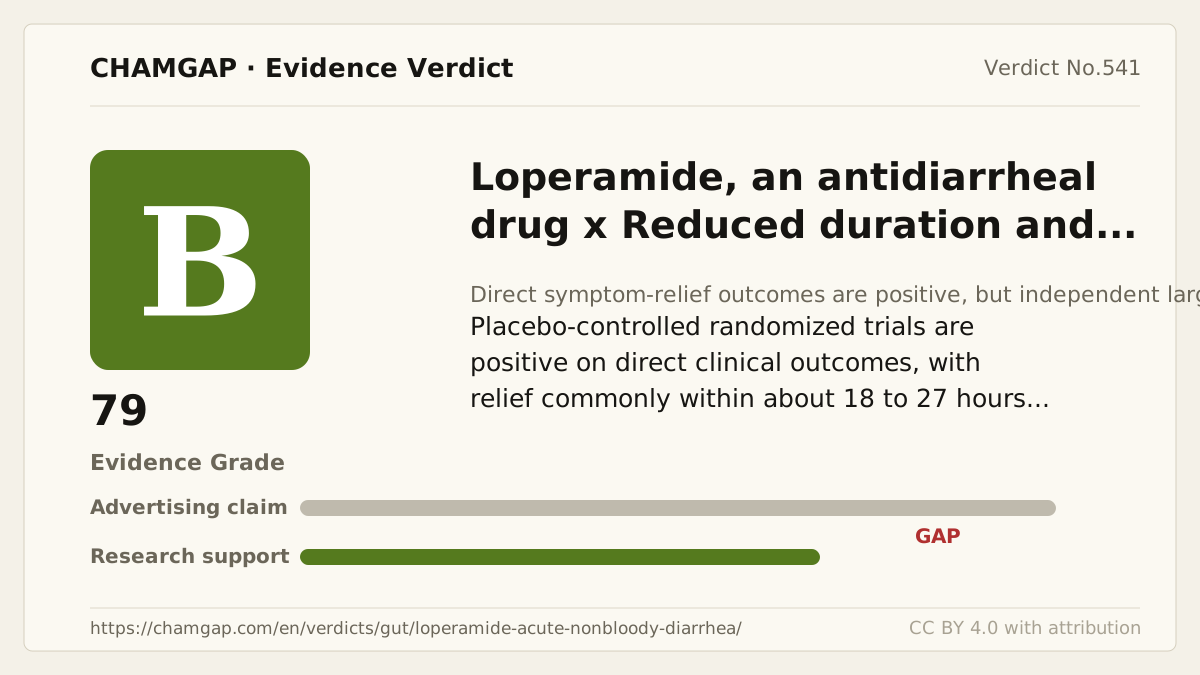
research showsGenerally, yes. With rehydration, it reduces loose-stool frequency and symptom duration in adults with acute non-bloody, non-febrile diarrhea. Confirmation from independent large randomized trials is limited, however, and it does not eradicate an infectious cause.
ads claimClaims that stopping diarrhea treats an intestinal infection, or that the drug is suitable for every diarrhea episode, are misleading. Loperamide slows intestinal motility; it is not an antimicrobial.
Useful facts when choosing a product
- Single-ingredient loperamide hydrochloride 2 mg over-the-counter medicines are distributed through pharmacies in South Korea.
- A common adult label regimen for acute diarrhea is 4 mg initially and 2 mg after each subsequent loose stool, but the product-specific daily maximum and age limits govern use.
- Users should stop self-treatment and seek care if symptoms fail to improve within 48 hours or if dehydration, blood, high fever, or severe abdominal pain occurs.
Chamgap Semantic Classification Code
Candidate index · review held
M.loperamide.UNK.duration-and-stool-frequency-with-acute-non-bloody-diarrhea.reduce.placeboMedicinal interventions > Loperamide > Unknown > duration and stool frequency with acute non-bloody diarrhea > Reduction claim > Placebo
An automated migration candidate, not an issued permanent code; exact claim scope remains under review. This machine-generated migration candidate helps retrieval but is not a permanent assignment. The original verdict ID and URL remain authoritative.
What the research actually shows
The evidence supports short-term symptom relief in immunocompetent adults with acute watery or nondysenteric diarrhea. Fluid and electrolyte replacement remains primary care, and bloody, febrile, inflammatory, or suspected invasive diarrhea is outside this use case.
Why this is classified as B (79)
Duration and stool frequency are patient-relevant clinical outcomes, and several placebo-controlled trials are generally positive. Limited confirmation from independent large randomized trials and an adult meta-analysis supports a high B; contraindications and overdose risk were graded separately.
Counterpoint. Established efficacy does not make the drug safe in bloody or febrile diarrhea or when invasive infection is suspected.
Rejudgment record. Adjusted by final editorial verdict — Positive direct clinical outcomes, tempered by limited confirmation from an adult meta-analysis and independent large randomized trials
Sub-claim grades by effect
This ingredient is marketed for several effects. A single overall grade blends strong and weak claims together, so each effect is graded separately here. The overall grade reflects the strongest disconfirming or core claim.
| Effect (sub-claim) | Grade | Basis |
|---|---|---|
| Reduced duration and stool frequency in adults with acute non-bloody diarrhea | B | Multiple placebo-controlled trials improved direct clinical outcomes, but confirmation from independent large randomized trials is limited. |
| Eradication of intestinal pathogens or etiologic treatment of infection | D | It relieves symptoms by slowing motility and is not an antimicrobial or pathogen-eradicating treatment. |
Cross-check — AI research and Codex final gate
Evidence Table
| Study | Design | Sample | Funding | Endpoint | Result | Weight |
|---|---|---|---|---|---|---|
| Hughes 1995 | Multicenter double-blind randomized placebo-controlled trial | 409 | Funding was not reported in the abstract | Time to complete relief of diarrheal symptoms | Median time to complete relief was about 27 hours with loperamide versus about 45 hours with placebo, a significant difference. | High weight as a relatively large short-term trial of a direct clinical outcome |
| van Loon et al. 1989 | Double-blind randomized placebo-controlled trial | 50 | No explicit commercial funding was reported in the article | Stool frequency during the first two treatment days and illness duration | Mean stool counts were 2.6 versus 4.0 on day one and 1.3 versus 3.4 on day two, significantly favoring loperamide. | Moderate weight because the direction was independently replicated but the sample was small |
| BMJ Clinical Evidence 2011 | Systematic evidence review of treatments for acute diarrhea in adults | 670 | BMJ Clinical Evidence editorial review | Time to relief and clinical resolution | It judged there to be moderate-quality evidence that loperamide hastens relief versus placebo in adults with acute diarrhea in resource-rich settings. | Key synthesis combining multiple randomized trials |
| Bergström et al. 1986 | Double-blind randomized placebo-controlled trial | 82 | Funding was not reported in the abstract | Total loose stools and duration of diarrhea | Total loose stools fell from seven to five, but diarrhea duration did not differ significantly. | Counterevidence that limits certainty about effect size and every endpoint |
Receipt — 4 References
All 4 cited sources were verified for existence at the original page (as of 2026-07-18).
Final verification and publication gate: Codex · Evidence date: 2026-07-18 · Corrections: none
Cite this verdict
[Chamgap] Does loperamide shorten acute non-bloody diarrhea in adults? — Evidence Grade B·79. 4 cited sources checked. Source: https://chamgap.com/en/verdicts/gut/loperamide-acute-nonbloody-diarrhea/ · CC BY 4.0CC BY 4.0 — free to use with attribution; do not distort grades, numbers, or verdict meaning.
What this document does and does not do
Chamgap is an information source. It reports what research has and has not confirmed; it does not tell readers what to take or buy. That decision belongs to readers and, when needed, medical or legal professionals. This verdict reflects literature available up to the search date and may change as new research appears. Nothing here is medical advice.