
Docusate sodium,
does it really help with Softening stool to improve constipation?
research showsDocusate sodium has long been used as a stool softener that lowers stool surface tension, but placebo-controlled human trials show little or no improvement in bowel-movement frequency, stool consistency, or difficulty with defecation. Null findings recur particularly in opioid-treated and palliative-care populations, and an updated review did not establish efficacy; the verdict is F.
ads claimMechanistic language such as 'draws water into stool' or 'gentle relief without straining' is easily presented as proven clinical improvement. Comparative trials did not confirm the expected improvement in consistency or frequency.
Useful facts when choosing a product
- In South Korea, docusate sodium is more readily found in multi-ingredient over-the-counter laxatives than as a stand-alone product.
- A Korean combination-product example contains 16.75 mg per tablet; this is not interchangeable with overseas 100-mg single-ingredient products or study dosing.
- The pivotal hospice trial used 100 mg twice daily, with senna in both arms.
- Abdominal pain, nausea, or diarrhea may occur; suspected obstruction, unexplained abdominal pain, and concomitant mineral oil warrant professional review. Safety is separate from the F efficacy verdict.
Chamgap Semantic Classification Code
Candidate index · review held
UNK.docusate-sodium.UNK.softening-stool-to-improve-constipation.improve.placeboUnknown > Docusate sodium > Unknown > Softening stool to improve constipation > Improvement claim > Placebo
An automated migration candidate, not an issued permanent code; exact claim scope remains under review. This machine-generated migration candidate helps retrieval but is not a permanent assignment. The original verdict ID and URL remain authoritative.
What the research actually shows
The Tarumi 2013 double-blind RCT assigned 74 hospice patients to docusate 100 mg twice daily or placebo for 10 days, with senna in both groups. There were no significant differences in stool frequency, volume, consistency, difficulty, complete evacuation, or rescue interventions. The 1976 double-blind trial by Hyland and Foran also found no prophylactic benefit in older inpatients. The 2014 CADTH review concluded that docusate was no better than placebo or senna alone in opioid-treated populations, and the 2021 review by Rao and Brenner found no high-quality evidence supporting docusate.
Why this is classified as F (12)
Direct placebo-controlled studies repeatedly found null results on core frequency and consistency endpoints, and systematic reviews do not support clinical efficacy. This is a customary claim directly contradicted by trials, so the rating is F with 12 points.
Counterpoint. Much evidence concerns opioid-treated, hospice, or inpatient populations, and a definitive large community trial is lacking. That uncertainty is not evidence of benefit.
Rejudgment record. New verdict — Repeatedly null core bowel outcomes in placebo-controlled RCTs and systematic reviews
Cross-check — AI research and Codex final gate
Evidence Table
| Study | Design | Sample | Funding | Endpoint | Result | Weight |
|---|---|---|---|---|---|---|
| Tarumi Y et al. 2013 | Randomized double-blind placebo-controlled trial | 74 | Canadian palliative-care research support; no commercial sponsor reported | Stool frequency, volume, consistency, difficulty, and complete evacuation | With senna in both arms, 100 mg twice daily did not significantly improve any core bowel outcome over placebo. | Key repeated null evidence |
| Rao SSC, Brenner DM. 2021 | Systematic review of over-the-counter therapies | Author conflicts disclosed; not sponsored by a docusate manufacturer | Spontaneous bowel movements, stool consistency, and constipation symptoms | No high-quality evidence supported docusate; old trials finding no advantage over placebo formed the evidence base. | Key synthesis | |
| CADTH 2014 | Rapid systematic review | 2 | Canadian public health-technology assessment | Frequency, consistency, and evacuation in opioid-related constipation | Docusate did not improve bowel frequency or consistency over placebo or senna alone. | Confirms repeated null findings |
Receipt — 4 References
All 4 cited sources were verified for existence at the original page (as of 2026-07-18).
Final verification and publication gate: Codex · Evidence date: 2026-07-18 · Corrections: none
Cite this verdict
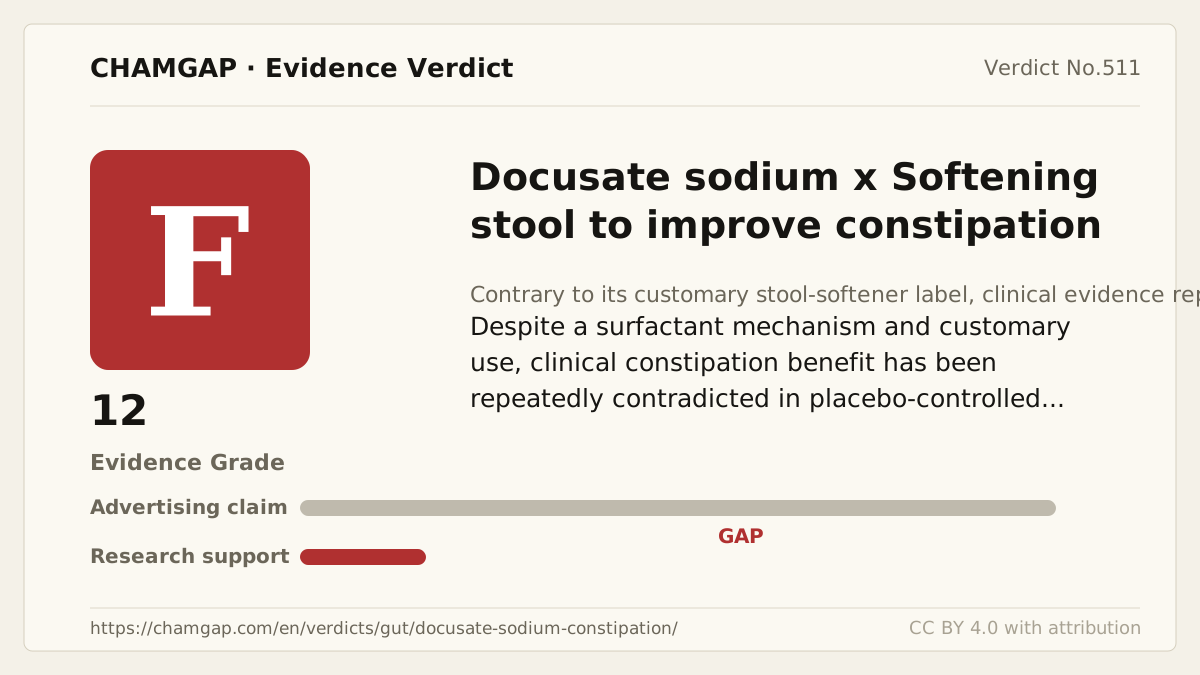
[Chamgap] Docusate sodium x constipation relief — Evidence Grade F·12. 4 cited sources checked. Source: https://chamgap.com/en/verdicts/gut/docusate-sodium-constipation/ · CC BY 4.0CC BY 4.0 — free to use with attribution; do not distort grades, numbers, or verdict meaning.
What this document does and does not do
Chamgap is an information source. It reports what research has and has not confirmed; it does not tell readers what to take or buy. That decision belongs to readers and, when needed, medical or legal professionals. This verdict reflects literature available up to the search date and may change as new research appears. Nothing here is medical advice.