
Bisacodyl,
does it really help with Improvement of bowel-movement frequency and symptoms in adults with chronic functional constipation?
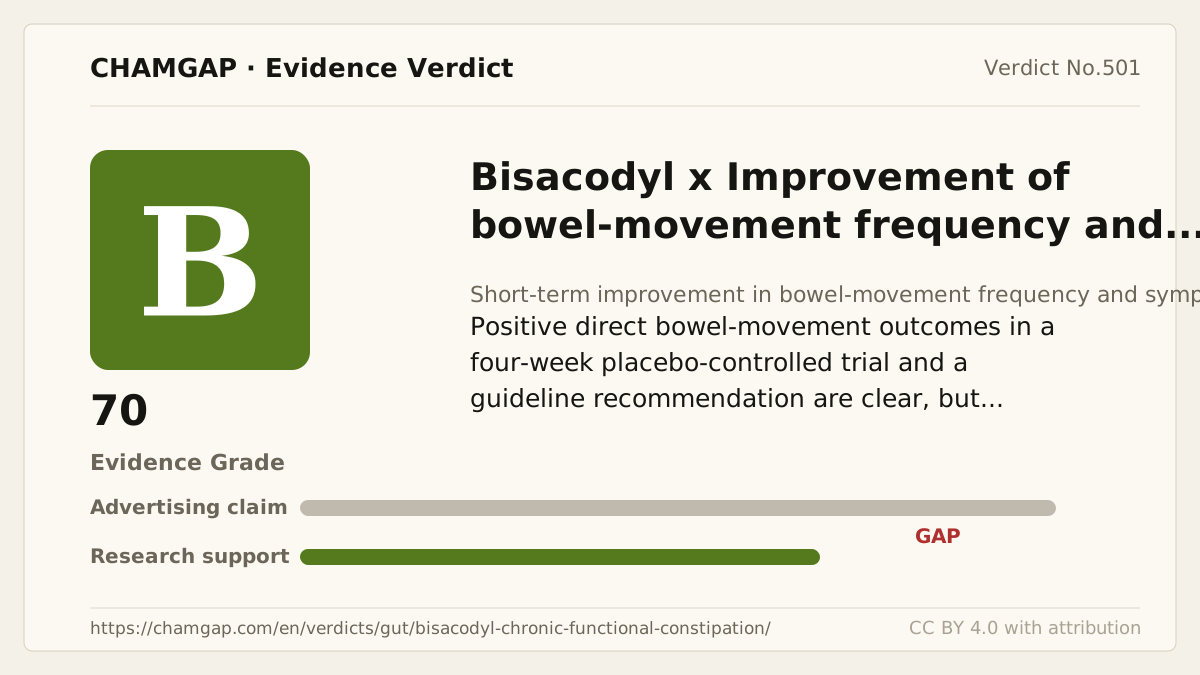
research showsBisacodyl is rated B because a large four-week randomized trial in adults with chronic functional constipation showed improvement over placebo in complete spontaneous bowel movement frequency and symptoms such as straining and stool consistency, and the 2023 AGA-ACG guideline strongly recommends it for short-term or rescue therapy. Evidence for efficacy and safety with continuous daily use over several months or longer remains limited.
ads claimMarketing and user testimonials may portray it as a bowel cleanser suitable for daily indefinite use. The pivotal evidence concerns four weeks of treatment in patients with chronic constipation, not weight loss, detoxification, or unlimited continuous use.
Useful facts when choosing a product
- Enteric-coated products containing bisacodyl 5 mg and bisacodyl 10 mg suppositories are sold as nonprescription medicines in Korea.
- The pivotal chronic-constipation trial used oral bisacodyl 10 mg/day for four weeks, whereas ordinary product labeling generally describes short-term relief of occasional constipation.
- Abdominal pain, cramping, and diarrhea may be common; it should not be used in intestinal obstruction, severe dehydration, or unexplained acute abdominal pain.
- Prolonged excessive use or misuse can cause fluid and electrolyte imbalance and hypokalemia, so a need for daily use warrants medical assessment.
Chamgap Semantic Classification Code
Candidate index · review held
M.bisacodyl.oral.chronic-constipation-relief.improve.placeboMedicinal interventions > Bisacodyl > Oral > Bowel function and symptoms in chronic constipation > Improvement claim > Placebo
An automated migration candidate, not an issued permanent code; exact claim scope remains under review. This machine-generated migration candidate helps retrieval but is not a permanent assignment. The original verdict ID and URL remain authoritative.
What the research actually shows
The Kamm 2011 double-blind randomized trial assigned 368 adults with Rome III chronic constipation to bisacodyl 10 mg or placebo for four weeks. Weekly complete spontaneous bowel movements and defecation-related symptoms improved significantly, while diarrhea and abdominal pain were more common than with placebo. The 2023 AGA-ACG guideline strongly recommended bisacodyl or sodium picosulfate for use of four weeks or less or as rescue therapy and rated the certainty of evidence as moderate. The guideline noted that longer use may be reasonable but that long-term data on tolerance and adverse effects are needed.
Why this is classified as B (70)
A placebo-controlled trial of 368 participants showed clear improvement in direct outcomes of complete spontaneous bowel movements and constipation symptoms, and a professional guideline issued a strong recommendation with moderate certainty, supporting B. The evidence is concentrated in four weeks and lacks multiple independent large long-term trials, so the rating is B with 70 points rather than A.
Counterpoint. Efficacy for short-term or rescue therapy is reproducible. This judgment does not call bisacodyl ineffective; it limits extrapolation to continuous long-term use.
Rejudgment record. New verdict — Direct improvement in complete spontaneous bowel movements and symptoms in a large four-week placebo-controlled trial plus guideline support, with A excluded because evidence for use over several months is limited
Sub-claim grades by effect
This ingredient is marketed for several effects. A single overall grade blends strong and weak claims together, so each effect is graded separately here. The overall grade reflects the strongest disconfirming or core claim.
| Effect (sub-claim) | Grade | Basis |
|---|---|---|
| Improvement in bowel-movement frequency and constipation symptoms for up to four weeks | B | A 368-person placebo-controlled trial showed direct improvement in complete spontaneous bowel movements and several constipation symptoms. |
| Efficacy of continuous daily use for several months or longer | ? | The pivotal trial lasted four weeks, and adequate large controlled trials for long-term efficacy are unavailable. |
Cross-check — AI research and Codex final gate
Evidence Table
| Study | Design | Sample | Funding | Endpoint | Result | Weight |
|---|---|---|---|---|---|---|
| Kamm MA et al. 2011 | Multicenter randomized double-blind placebo-controlled trial | 121 | Linked to Boehringer Ingelheim | Weekly complete spontaneous bowel movements, constipation-related symptoms, and adverse events | Over four weeks, complete spontaneous bowel movements increased from 1.1 to 5.2 per week versus 1.1 to 1.9 with placebo; diarrhea and abdominal pain were more common. | Key |
| Chang L et al. 2023 | AGA-ACG clinical practice guideline and evidence review | Professional-society guideline | Complete and spontaneous bowel movements, global symptoms, and adverse events | Strongly recommended bisacodyl or sodium picosulfate for use up to four weeks or as rescue therapy, with moderate certainty of evidence. | Key |
Receipt — 2 References
All 2 cited sources were verified for existence at the original page (as of 2026-07-18).
Final verification and publication gate: Codex · Evidence date: 2026-07-18 · Corrections: none
Cite this verdict
[Chamgap] Bisacodyl x chronic functional constipation in adults — Evidence Grade B·70. 2 cited sources checked. Source: https://chamgap.com/en/verdicts/gut/bisacodyl-chronic-functional-constipation/ · CC BY 4.0CC BY 4.0 — free to use with attribution; do not distort grades, numbers, or verdict meaning.
What this document does and does not do
Chamgap is an information source. It reports what research has and has not confirmed; it does not tell readers what to take or buy. That decision belongs to readers and, when needed, medical or legal professionals. This verdict reflects literature available up to the search date and may change as new research appears. Nothing here is medical advice.