
Betaine hydrochloride,
does it really help with Correction of hypochlorhydria and improvement of impaired protein digestion?
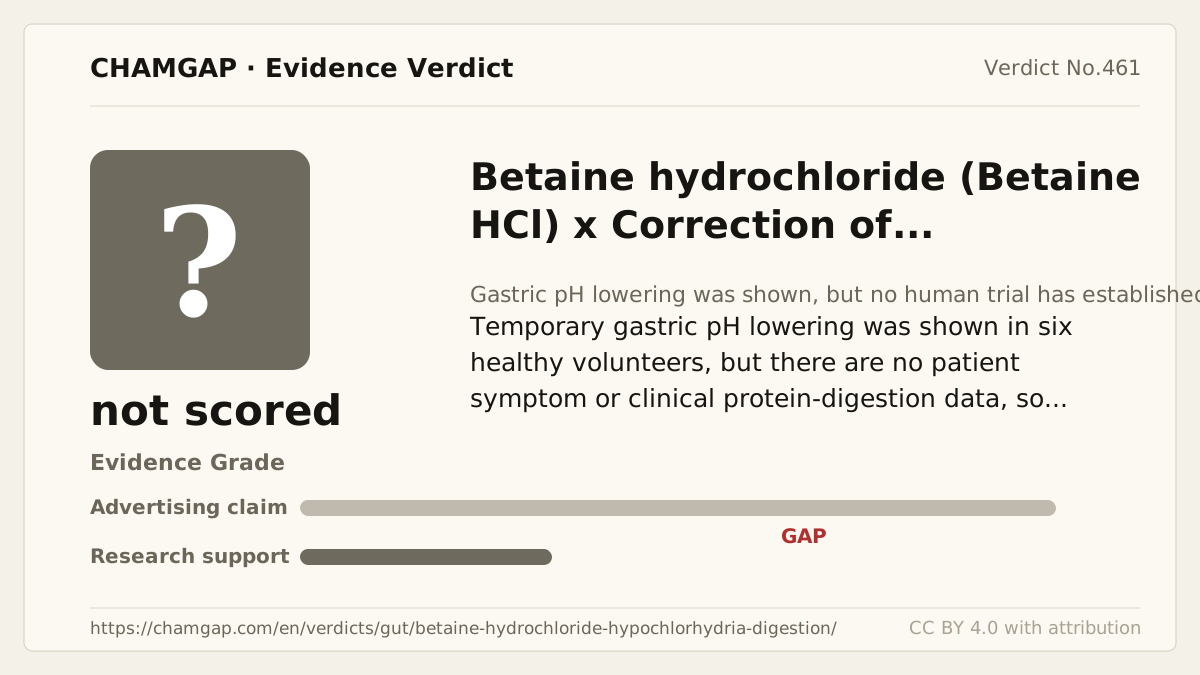
research showsBetaine hydrochloride temporarily lowered intragastric pH in six healthy volunteers with drug-induced hypochlorhydria, but no human efficacy literature was identified that tested symptoms or clinical protein-digestion outcomes in patients with hypochlorhydria. The verdict is therefore undetermined (?). A short-term change in a gastric-acidity marker does not establish relief of indigestion.
ads claimMarketing often bundles together 'acid replacement,' 'complete protein digestion,' and 'relief of bloating.' The human evidence currently centers on a short-term intragastric pH change and cannot be extended to clinical symptom or digestion efficacy.
Useful facts when choosing a product
- Products shipped through Korean online retailers include 650 mg betaine hydrochloride capsules and combinations with pepsin or digestive enzymes.
- The key physiologic study used a single 1,500 mg dose, not a typical one-capsule marketed dose.
- Anhydrous betaine, often called TMG, differs from betaine hydrochloride in chemical form and intended use; exercise, liver, and homocysteine evidence cannot be transferred.
- Perceived effects of products containing pepsin, gentian, or digestive enzymes cannot be assigned to betaine hydrochloride alone.
- Because it can increase gastric acidity, people with gastric or duodenal ulcers, gastritis or reflux symptoms, or use of mucosa-damaging medicines should avoid unsupervised use and consult a clinician.
Chamgap Semantic Classification Code
Candidate index · review held
UNK.betaine-hydrochloride.UNK.correction-of-hypochlorhydria-and-improvement-of-impaired-protein-digestion.improve.placeboUnknown > Betaine hydrochloride > Unknown > Correction of hypochlorhydria and improvement of impaired protein digestion > Improvement claim > Placebo
An automated migration candidate, not an issued permanent code; exact claim scope remains under review. This machine-generated migration candidate helps retrieval but is not a permanent assignment. The original verdict ID and URL remain authoritative.
What the research actually shows
Yago and colleagues gave 1,500 mg of betaine hydrochloride to six healthy volunteers after inducing hypochlorhydria with rabeprazole. Mean intragastric pH fell from 5.2 before dosing to 0.6 at 30 minutes, and the effect was temporary. A 2020 review summarized this study and drug-absorption experiments, illustrating how limited the evidence for clinical digestive outcomes remains. A 2022 review of autoimmune gastritis likewise found no randomized placebo-controlled symptom trial of acid replacement.
Why this is classified as ?
A physiologic change in intragastric pH was observed, but the population consisted of six healthy volunteers with drug-induced hypochlorhydria and the claimed clinical outcomes of symptoms and protein digestion were not directly assessed. Under the no-human-efficacy-literature rule, the grade is ? with no score.
Counterpoint. Short-lived gastric re-acidification remains biologically plausible and may matter in research on pH-dependent drug absorption. This verdict does not deny that physiologic action; it withholds judgment on clinical digestive efficacy.
Rejudgment record. New verdict — No direct human efficacy trial of hypochlorhydria symptoms or protein digestion beyond a temporary intragastric pH change in six healthy volunteers
Sub-claim grades by effect
This ingredient is marketed for several effects. A single overall grade blends strong and weak claims together, so each effect is graded separately here. The overall grade reflects the strongest disconfirming or core claim.
| Effect (sub-claim) | Grade | Basis |
|---|---|---|
| Clinical correction of hypochlorhydria in patients | ? | Beyond a drug-induced pH change in six healthy volunteers, no efficacy trial assessed patient symptoms or function. |
| Improvement of impaired protein digestion | ? | No human betaine hydrochloride trial directly measuring protein digestion or related clinical outcomes was identified. |
Cross-check — AI research and Codex final gate
Evidence Table
| Study | Design | Sample | Funding | Endpoint | Result | Weight |
|---|---|---|---|---|---|---|
| Yago MAR et al. 2013 | Open-label single-dose physiologic and pharmacokinetic study | 6 | Mixed academic and industry affiliations | Intragastric pH during rabeprazole-induced hypochlorhydria | Mean pH fell from 5.2 to 0.6 at 30 minutes after 1,500 mg of betaine hydrochloride, but the change was temporary and symptoms and protein digestion were not measured. | Key but indirect |
| Guilliams TG, Drake LE 2020 | Narrative evidence review | Affiliated with the Point Institute | Gastric acidity, drug absorption, and digestion-related evidence | Confirmed that betaine hydrochloride research centers on intragastric pH and pH-dependent drug absorption, with insufficient clinical digestive efficacy data. | Key evidence-gap source | |
| Gomez Cifuentes JD et al. 2022 | Clinical review of autoimmune gastritis | Academic and public support | Management of upper gastrointestinal symptoms in hypo- or achlorhydria | Acid replacement has historical use, but randomized placebo-controlled symptom trials and evidence-based recommendations are lacking. | Supportive evidence-gap source |
Receipt — 3 References
All 3 cited sources were verified for existence at the original page (as of 2026-07-18).
Final verification and publication gate: Codex · Evidence date: 2026-07-18 · Corrections: none
Cite this verdict
[Chamgap] Betaine hydrochloride x hypochlorhydria and protein digestion — Evidence Grade ?. 3 cited sources checked. Source: https://chamgap.com/en/verdicts/gut/betaine-hydrochloride-hypochlorhydria-digestion/ · CC BY 4.0CC BY 4.0 — free to use with attribution; do not distort grades, numbers, or verdict meaning.
What this document does and does not do
Chamgap is an information source. It reports what research has and has not confirmed; it does not tell readers what to take or buy. That decision belongs to readers and, when needed, medical or legal professionals. This verdict reflects literature available up to the search date and may change as new research appears. Nothing here is medical advice.