
Alpha-galactosidase,
does it really help with Reduction of gas and bloating after beans or high-FODMAP meals?
research showsAlpha-galactosidase may reduce acute gas, flatulence, and bloating when taken with meals rich in beans or galacto-oligosaccharides (GOS). However, the adult evidence mainly consists of brief challenge-meal studies in 8 or 19 participants or in 21 GOS-sensitive patients with irritable bowel syndrome, and outcomes rely on breath hydrogen and subjective symptoms. It cannot be generalized to chronic bloating overall or to every high-FODMAP food, supporting C.
ads claimMarketing can expand the evidence into claims that the enzyme makes all beans, vegetables, or high-FODMAP foods easy to digest or solves chronic bloating. The actual evidence is limited to short-term symptoms after meals containing galacto-oligosaccharides that this enzyme can hydrolyze.
Useful facts when choosing a product
- In Korea, alpha-galactosidase is distributed in imported single-ingredient or multi-enzyme digestive products. Labels use GaIU, GALU, or milligrams, which are not directly interchangeable.
- Key adult trials used 300 to 1,200 GalU or eight drops of liquid Beano with the meal. A product taken well after eating or labeled in a different activity unit cannot be assumed equivalent.
- This verdict concerns the specific alpha-galactosidase-by-GOS gas axis, not mixed digestive-enzyme products as a class.
- Serious harm was not apparent in short trials, but allergy to mold-derived enzymes and the lack of long-term continuous-use data warrant caution. Carbohydrate-splitting enzyme preparations may reduce the action of acarbose, so concomitant use requires professional advice.
Chamgap Semantic Classification Code
Candidate index · review held
UNK.alpha-galactosidase.UNK.gas-and-bloating-after-beans-or-high-fodmap-meals.reduce.placeboUnknown > Alpha-galactosidase > Unknown > gas and bloating after beans or high-FODMAP meals > Reduction claim > Placebo
An automated migration candidate, not an issued permanent code; exact claim scope remains under review. This machine-generated migration candidate helps retrieval but is not a permanent assignment. The original verdict ID and URL remain authoritative.
What the research actually shows
Ganiats 1994 used a meatless chili challenge in 19 participants and reported fewer flatus events over six hours with eight drops of Beano than with placebo. Di Stefano 2007 found that 1,200 GalU reduced breath hydrogen and flatulence severity in eight healthy volunteers consuming 420 g of cooked beans. Tuck 2018 gave 31 patients with IBS a high-GOS diet for three days after a low-FODMAP run-in; among the 21 GOS-sensitive participants, 300 GALU reduced overall symptoms and bloating, while breath hydrogen did not differ. A two-week trial in 52 children also found signals for less global distress and fewer bloating days, but it is not direct evidence of chronic efficacy in adults.
Why this is classified as C (54)
Positive signals recurred in several small double-blind studies of specific bean or GOS meals, so D is not appropriate. The evidence nevertheless consists of one-meal to three-day challenges, small samples, subjective symptoms, and breath hydrogen, without long-term data for chronic bloating, supporting C with 54 points.
Counterpoint. A short-term adjunctive effect remains plausible when a person is demonstrably sensitive to GOS and takes the enzyme with the meal. This verdict does not extend to every FODMAP or unexplained chronic bloating.
Rejudgment record. New verdict — Accepted repeated small positive studies of specific GOS challenge meals but capped the grade at C for single-meal or brief designs, subjective outcomes, and extrapolation to chronic bloating
Sub-claim grades by effect
This ingredient is marketed for several effects. A single overall grade blends strong and weak claims together, so each effect is graded separately here. The overall grade reflects the strongest disconfirming or core claim.
| Effect (sub-claim) | Grade | Basis |
|---|---|---|
| Reduction of acute gas and bloating after bean or GOS challenge meals | C | Small double-blind trials show repeated signals, but outcomes cover only one meal to three days. |
| Improvement of chronic bloating or IBS overall | D | Adequate large long-term trials are absent, and results cannot be extrapolated to other FODMAPs or causes. |
Cross-check — AI research and Codex final gate
Evidence Table
| Study | Design | Sample | Funding | Endpoint | Result | Weight |
|---|---|---|---|---|---|---|
| Ganiats TG et al. 1994 | Randomized double-blind crossover challenge-meal study | 19 | Unknown | Flatus events and gastrointestinal symptoms over six hours | Eight drops of Beano with the chili challenge reduced flatus events per hour versus placebo (P=0.016). | Key |
| Di Stefano M et al. 2007 | Randomized double-blind placebo-controlled crossover trial | 8 | Unknown | Breath hydrogen and gas-related symptoms | With 420 g of cooked beans, 1,200 GalU reduced breath hydrogen and flatulence severity. | Key |
| Tuck CJ et al. 2018 | Randomized double-blind placebo-controlled crossover dietary trial | 21 | Monash University and research support; commercial product used | Overall gastrointestinal symptoms, bloating, and breath hydrogen | In GOS-sensitive participants, 300 GALU reduced overall symptoms and bloating during a three-day high-GOS diet, but breath hydrogen did not differ. | Key |
| Di Nardo G et al. 2013 | Two-week randomized double-blind placebo-controlled trial | 52 | Reported no support from the product manufacturer | Global distress, bloating days, and flatulence | Global distress, days with moderate-to-severe bloating, and the proportion with flatulence decreased, but this was a small brief pediatric trial. | Supportive |
Receipt — 4 References
All 4 cited sources were verified for existence at the original page (as of 2026-07-18).
Final verification and publication gate: Codex · Evidence date: 2026-07-18 · Corrections: none
Cite this verdict
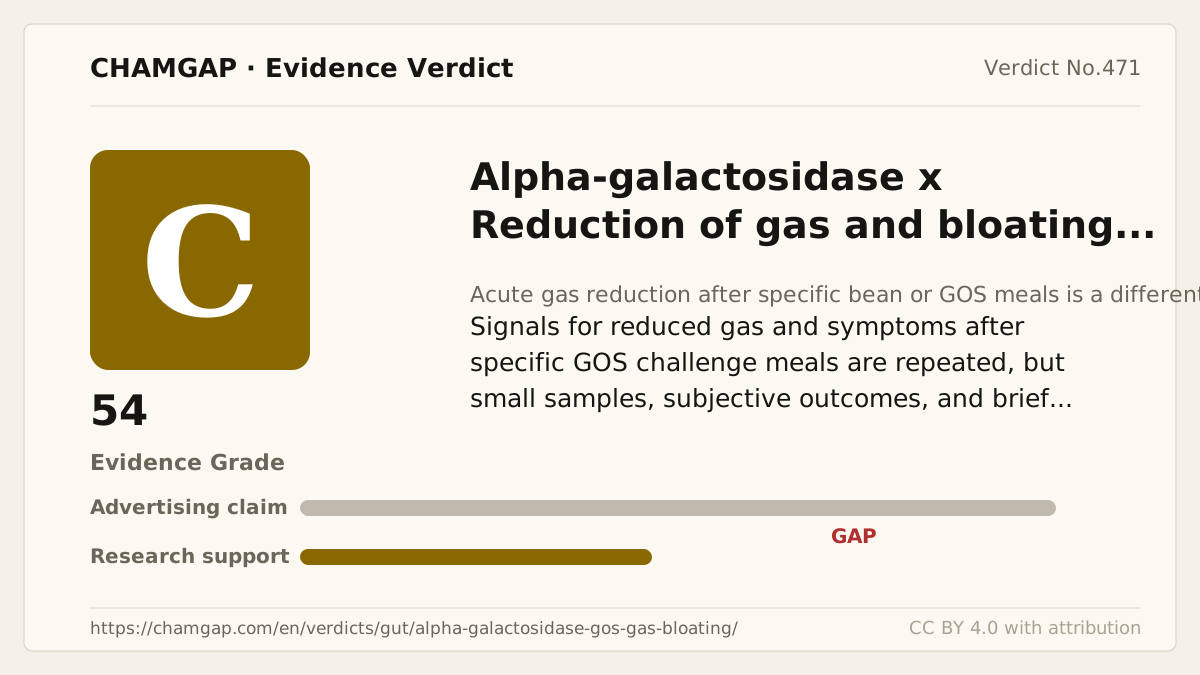
[Chamgap] Alpha-galactosidase x reduction of gas and bloating after beans or high-FODMAP meals — Evidence Grade C·54. 4 cited sources checked. Source: https://chamgap.com/en/verdicts/gut/alpha-galactosidase-gos-gas-bloating/ · CC BY 4.0CC BY 4.0 — free to use with attribution; do not distort grades, numbers, or verdict meaning.
What this document does and does not do
Chamgap is an information source. It reports what research has and has not confirmed; it does not tell readers what to take or buy. That decision belongs to readers and, when needed, medical or legal professionals. This verdict reflects literature available up to the search date and may change as new research appears. Nothing here is medical advice.