
2′-Fucosyllactose,
does it really help with Improved adult gut microbiota and irritable bowel syndrome symptoms?
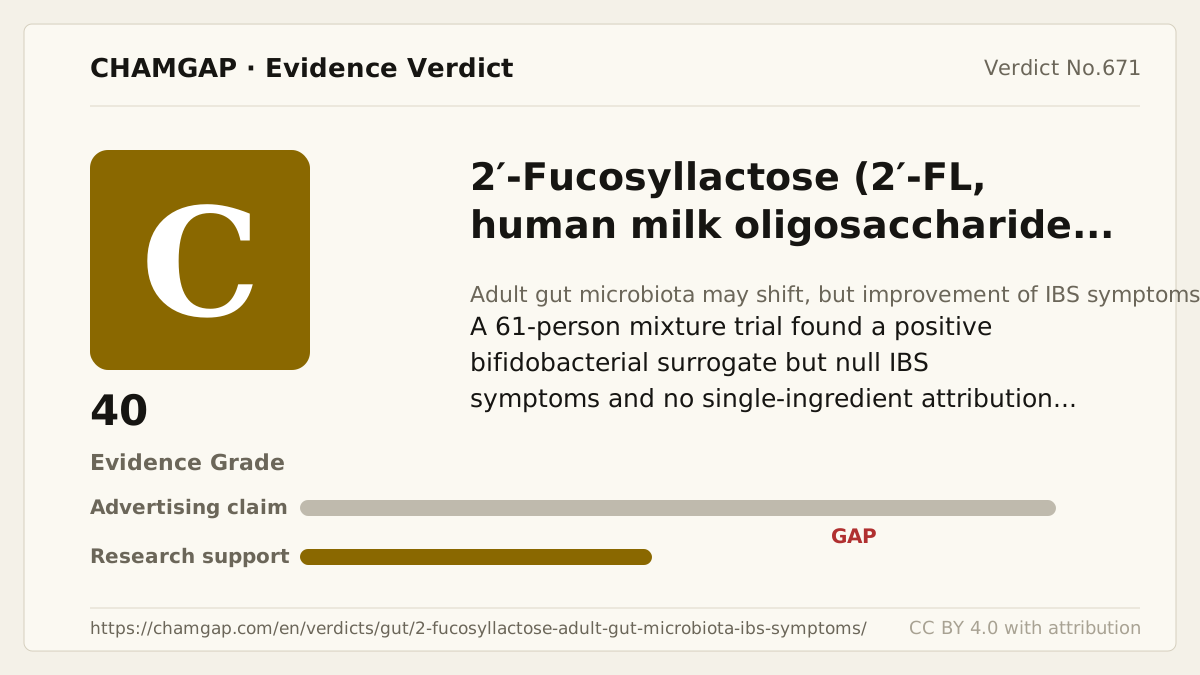
research showsClaims that 2′-FL changes adult gut microbiota and improves IBS symptoms are rated C. In a four-week randomized double-blind trial of 61 patients with IBS, 10 g of a 4:1 mixture of 2′-FL and LNnT increased fecal bifidobacteria, but overall and individual gastrointestinal symptoms did not differ from placebo. The positive surrogate means this is not a wholesale null result from a large independent trial, but the small industry-linked study tested a mixture and leaves clinical efficacy and attribution to 2′-FL alone uncertain.
ads claimMarketing translates increased bifidobacteria directly into normalized gut health and IBS relief. What has been demonstrated is a short-term microbial surrogate under specific doses and formulations, not improved pain, bloating, bowel habits, or efficacy of 2′-FL alone.
Useful facts when choosing a product
- 2′-FL is a human milk oligosaccharide manufactured as a prebiotic supplement ingredient and is not an approved medicine for treating adult IBS.
- The pivotal IBS randomized trial used a 4:1 mixture of 2′-FL and lacto-N-neotetraose rather than 2′-FL alone, so its findings cannot be attributed to one ingredient.
- Adult studies generally found acceptable tolerability, but mild gastrointestinal effects such as gas, bloating, and abdominal discomfort can occur, and doses and co-ingredients vary by product.
Chamgap Semantic Classification Code
Candidate index · review held
S.2-fucosyllactose.UNK.adult-gut-microbiota-and-irritable-bowel-syndrome-symptoms.improve.placeboSupplements and nutraceuticals > 2′-Fucosyllactose > Unknown > adult gut microbiota and irritable bowel syndrome symptoms > Improvement claim > Placebo
An automated migration candidate, not an issued permanent code; exact claim scope remains under review. This machine-generated migration candidate helps retrieval but is not a permanent assignment. The original verdict ID and URL remain authoritative.
What the research actually shows
Iribarren 2020 assigned 61 Rome IV IBS patients to placebo or 5 g or 10 g of a 4:1 2′-FL/LNnT mixture. Bifidobacteria increased at week 4 in the 10-g group but not at week 8, while overall and individual gastrointestinal symptoms did not differ between groups at either time point. Elison 2016 gave 2′-FL, LNnT, or mixtures to 100 healthy adults for two weeks and assessed microbiota shifts and tolerability rather than clinical efficacy. Carter 2025 likewise found increased bifidobacteria in 89 healthy older adults, but the primary immune endpoint of change in cytokine response was not met. These findings separate biological activity from IBS symptom efficacy.
Why this is classified as C (40)
C. The four-week industry-linked trial in 61 patients found increased bifidobacteria with a 4:1 2′-FL/LNnT mixture but no improvement over placebo in overall or individual IBS symptoms. Accepting the positive surrogate while recognizing uncertain clinical efficacy and impossible attribution to 2′-FL alone yields a bottom-of-band C with 40 points. Mild gas and bloating remain independent safety issues.
Counterpoint. There is a signal for use as an investigational microbiota-targeted prebiotic, but present evidence does not support replacing standard IBS evaluation or treatment with it.
Rejudgment record. Reassessment (cross-check reflected) — Accepted the positive bifidobacterial surrogate in the four-week industry-linked trial of 61 patients, but applied a bottom-of-band C because overall and individual IBS symptoms did not improve over placebo and the 4:1 2′-FL/LNnT mixture prevents attribution to 2′-FL alone
Sub-claim grades by effect
This ingredient is marketed for several effects. A single overall grade blends strong and weak claims together, so each effect is graded separately here. The overall grade reflects the strongest disconfirming or core claim.
| Effect (sub-claim) | Grade | Basis |
|---|---|---|
| Change in adult gut microbiota composition | C | Surrogates such as increased bifidobacteria were positive, but clinical efficacy remains uncertain. |
| Improvement of overall IBS symptoms | D | The randomized trial did not demonstrate improvement over placebo. |
| Efficacy of 2′-FL alone and attribution from mixtures | ? | The trial tested a 2′-FL/LNnT mixture, so efficacy cannot be attributed to 2′-FL alone. |
Cross-check — AI research and Codex final gate
Evidence Table
| Study | Design | Sample | Funding | Endpoint | Result | Weight |
|---|---|---|---|---|---|---|
| Iribarren C et al. 2020 | Randomized double-blind placebo-controlled dose trial | 61 patients with Rome IV IBS | Four Glycom employees were coauthors, creating commercial involvement | GSRS-IBS symptoms and fecal microbiota composition | The 10-g 2′-FL/LNnT group had increased bifidobacteria at week 4, but overall and individual gastrointestinal symptoms did not differ between groups at weeks 4 or 8. | Key negative direct clinical endpoint with a mixture |
| Elison E et al. 2016 | Parallel double-blind randomized placebo-controlled trial | 100 healthy adults | Multiple Glycom employees were coauthors | Two-week tolerability, GSRS, and 16S gut microbiota | Doses up to 20 g were generally tolerated and microbiota composition shifted, but IBS clinical efficacy was not assessed. | Microbial surrogate and indirect healthy-volunteer evidence |
| Carter MM et al. 2025 | Six-week randomized controlled trial | 89 healthy older adults | Abbott employees were coauthors and a product-related patent was filed | Primary cytokine-response endpoint, microbiota, and metabolites | The primary cytokine-response endpoint was not met, although bifidobacteria increased. | Not independent clinical efficacy; confirms a surrogate |
Receipt — 3 References
All 3 cited sources were verified for existence at the original page (as of 2026-07-19).
Final verification and publication gate: Codex · Evidence date: 2026-07-19 · Corrections: none
Cite this verdict
[Chamgap] 2′-Fucosyllactose x improved adult gut microbiota and IBS symptoms — Evidence Grade C·40. 3 cited sources checked. Source: https://chamgap.com/en/verdicts/gut/2-fucosyllactose-adult-gut-microbiota-ibs-symptoms/ · CC BY 4.0CC BY 4.0 — free to use with attribution; do not distort grades, numbers, or verdict meaning.
What this document does and does not do
Chamgap is an information source. It reports what research has and has not confirmed; it does not tell readers what to take or buy. That decision belongs to readers and, when needed, medical or legal professionals. This verdict reflects literature available up to the search date and may change as new research appears. Nothing here is medical advice.