
Oral phenylephrine,
does it really help with Relief of nasal congestion from a cold or allergic rhinitis?
research showsRecommended-dose oral phenylephrine is rated F with 8 points for nasal congestion. In a 539-person dose-ranging trial, none of the 10-to-40-mg doses outperformed placebo, and a 575-person modified-release trial was negative on its primary congestion score and most secondary outcomes. After combining three consistently negative modern trials, major design and analysis problems in the historical studies, and inadequate oral exposure to active parent drug, FDA proposed deleting oral phenylephrine from the nonprescription monograph. This verdict concerns swallowed phenylephrine only; it is not a verdict on intranasal spray, injected phenylephrine, or pseudoephedrine.
ads claimCombination cold-product packaging places phenylephrine beside analgesic, antihistamine, and cough ingredients, so overall symptom relief can feel like a phenylephrine decongestant effect. A label stating that a decongestant ingredient is present is not modern evidence that oral phenylephrine beats placebo for congestion.
Useful facts when choosing a product
- This verdict is limited to the decongestant efficacy of swallowed phenylephrine in tablets, capsules, or liquids. Intranasal sprays and hospital injections used to raise blood pressure have different routes and evidence.
- Pseudoephedrine has a similar name and use but is a different ingredient. The F rating for oral phenylephrine cannot be transferred to pseudoephedrine.
- Changes in fever, pain, runny nose, or cough from a combination cold medicine may come from other active ingredients. Overall product experience should not be attributed to phenylephrine's nasal effect alone.
- FDA found no new safety signal at allowed doses, but increasing the dose in pursuit of efficacy can increase blood-pressure, heart-rate, and other cardiovascular risks. People with hypertension, heart or thyroid disease, or interacting medicines should not self-escalate.
Chamgap Semantic Classification Code
Candidate index · review held
M.phenylephrine.oral.nasal-congestion-from-a-cold-or-allergic-rhinitis.relieve.placeboMedicinal interventions > phenylephrine > Oral > nasal congestion from a cold or allergic rhinitis > Symptom-relief claim > Placebo
An automated migration candidate, not an issued permanent code; exact claim scope remains under review. This machine-generated migration candidate helps retrieval but is not a permanent assignment. The original verdict ID and URL remain authoritative.
What the research actually shows
The immediate-release dose-ranging study assigned 539 adults with seasonal allergic rhinitis to 10 through 40 mg or placebo for seven days and found neither dose response nor superiority on reflective congestion scores. The modified-release study assigned 575 adults to 30 mg every 12 hours or placebo, with a negative primary endpoint at P=.2655. FDA reviewed historical common-cold and allergic-rhinitis data, modern trials, and pharmacokinetics together and concluded that allowed oral doses are ineffective and that doses high enough to matter could raise cardiovascular safety concerns. The regulatory action remains a proposal, but the efficacy conclusion is explicit.
Why this is classified as F (8)
Modern placebo-controlled trials, including a 539-person immediate-release dose-ranging trial and a 575-person modified-release trial, were consistently negative, and FDA's full review concluded there is no efficacy at allowed oral doses. Historical positive data had major methodological and reliability problems, yielding repeated-refutation F with 8 points. Cardiovascular concern at higher doses is a separate safety issue.
Counterpoint. This is not an emergency safety warning requiring abrupt product discontinuation. FDA found no new safety signal at allowed doses when proposing the change, but an ineffective ingredient still wastes money and can delay more effective care.
Rejudgment record. New verdict — Applied repeated-refutation F because adequately sized modern placebo-controlled trials repeatedly found immediate-release 10 to 40 mg and modified-release 30 mg ineffective, while FDA's comprehensive review found historical evidence unreliable and no congestion efficacy at allowed oral doses
Sub-claim grades by effect
This ingredient is marketed for several effects. A single overall grade blends strong and weak claims together, so each effect is graded separately here. The overall grade reflects the strongest disconfirming or core claim.
| Effect (sub-claim) | Grade | Basis |
|---|---|---|
| Relief of congestion with oral phenylephrine | F | Modern large placebo-controlled trials and FDA review repeatedly refuted efficacy at recommended doses. |
| Relief of congestion with intranasal phenylephrine | ? | The route, exposure, and evidence differ, so intranasal use is outside this oral verdict. |
| Effects of pseudoephedrine or the full combination product | ? | Other ingredients and combination products are separate evidence tracks and cannot be attributed to oral phenylephrine alone. |
Cross-check — AI research and Codex final gate
Evidence Table
| Study | Design | Sample | Funding | Endpoint | Result | Weight |
|---|---|---|---|---|---|---|
| Meltzer EO et al. 2015 | Multicenter randomized placebo-controlled immediate-release dose-ranging trial | 539 adults with seasonal allergic rhinitis | Manufacturer-led by Merck | Seven-day reflective nasal-congestion symptom score | None of the 10-, 20-, 30-, or 40-mg doses was significantly better than placebo. | Modern direct negative trial |
| Meltzer EO et al. 2016 | Multicenter randomized double-blind placebo-controlled modified-release trial | 575 adults with allergic rhinitis | Manufacturer-led by Merck | Mean seven-day reflective nasal-congestion score | Thirty milligrams every 12 hours did not outperform placebo on the primary endpoint (P=.2655). | Large direct negative trial |
| U.S. FDA Scientific Review 2024 | Comprehensive regulatory review of historical and modern trials and pharmacology | Three pivotal modern trials plus the historical evidence base | U.S. Food and Drug Administration | Decongestant efficacy and active-parent exposure at allowed oral doses | All three modern trials were negative, and oral phenylephrine was judged ineffective at allowed doses. | Regulatory synthesis finding no efficacy |
Receipt — 4 References
All 4 cited sources were verified for existence at the original page (as of 2026-07-19).
Final verification and publication gate: Codex · Evidence date: 2026-07-19 · Corrections: none
Cite this verdict
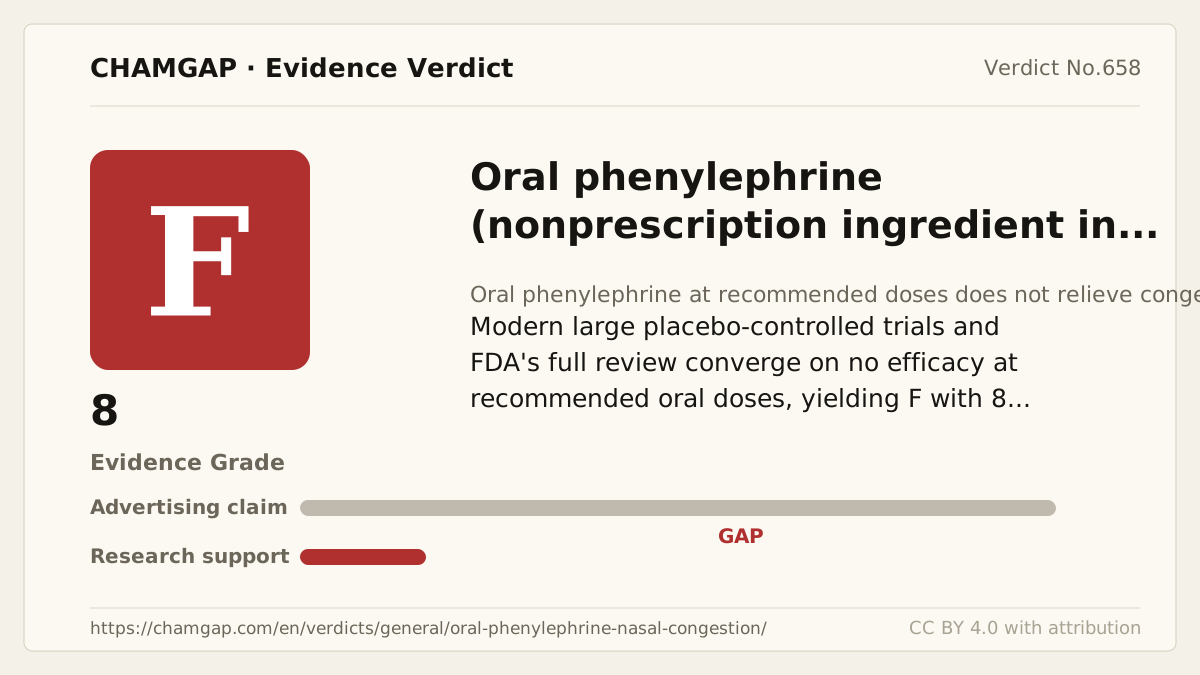
[Chamgap] Oral phenylephrine x relief of nasal congestion from a cold or allergic rhinitis — Evidence Grade F·8. 4 cited sources checked. Source: https://chamgap.com/en/verdicts/general/oral-phenylephrine-nasal-congestion/ · CC BY 4.0CC BY 4.0 — free to use with attribution; do not distort grades, numbers, or verdict meaning.
What this document does and does not do
Chamgap is an information source. It reports what research has and has not confirmed; it does not tell readers what to take or buy. That decision belongs to readers and, when needed, medical or legal professionals. This verdict reflects literature available up to the search date and may change as new research appears. Nothing here is medical advice.