
Magnesium,
does it really help with Prevention of nocturnal idiopathic leg muscle cramps in older adults?
research showsMagnesium is rated F for preventing nocturnal idiopathic leg cramps in older adults. A Cochrane review pooled five reasonably reliable trials and concluded with moderate certainty that magnesium is unlikely to produce a clinically meaningful reduction in cramp frequency or severity. A 94-person placebo-controlled trial also found no difference in frequency, severity, sleep, or quality of life.
ads claimMarketing often interprets leg cramps as proof of magnesium deficiency. Most nocturnal cramps in older adults are idiopathic, and supplementation in people without documented deficiency was not better than placebo.
Useful facts when choosing a product
- Magnesium products containing oxide, citrate, glycinate, and other salts, alone or in combinations, are widely sold in Korea; the elemental magnesium amount should be checked.
- Cramp trials used different forms and doses, and differences in absorption among salts have not established prevention of cramps in the general older population.
- Supplements can cause diarrhea and abdominal discomfort, and impaired kidney function increases the risk of hypermagnesemia.
- New unilateral leg pain or swelling, weakness, cramps after starting a medicine, or severe recurrent cramps warrant evaluation for an underlying cause.
Chamgap Semantic Classification Code
Candidate index · review held
S.magnesium.UNK.nocturnal-idiopathic-leg-muscle-cramps.prevent.placeboSupplements and nutraceuticals > Magnesium > Unknown > nocturnal idiopathic leg muscle cramps > Occurrence-prevention claim > Placebo
An automated migration candidate, not an issued permanent code; exact claim scope remains under review. This machine-generated migration candidate helps retrieval but is not a permanent assignment. The original verdict ID and URL remain authoritative.
What the research actually shows
The Frusso 1999 crossover trial found no difference in nocturnal cramp counts, with 11.8 on magnesium and 11.1 on placebo, and no benefit in severity, duration, or sleep disruption. The Roffe 2002 crossover trial found a frequency trend with P=.07 and a subjective-help signal, but a large period effect and no difference in severity or duration. The Roguin Maor 2017 trial of 94 people found large reductions in both magnesium and placebo groups without a between-group difference. The 2020 Cochrane review concluded with moderate certainty that clinically meaningful prophylaxis is unlikely for idiopathic cramps, largely in older adults. Pregnancy-associated cramps are a different population with conflicting results.
Why this is classified as F (12)
Several placebo-controlled trials measured actual cramp frequency, severity, and sleep outcomes and repeatedly found no benefit, while Cochrane judged clinically meaningful benefit unlikely with moderate certainty. One later positive proprietary-formulation trial does not change the overall direction, supporting F with 12 points.
Counterpoint. Treatment of confirmed magnesium deficiency and pregnancy-associated leg cramps are separate claims outside this judgment.
Rejudgment record. New verdict — Repeated null results for direct frequency and severity outcomes across placebo-controlled trials and a moderate-certainty Cochrane synthesis in older adults with idiopathic cramps
Sub-claim grades by effect
This ingredient is marketed for several effects. A single overall grade blends strong and weak claims together, so each effect is graded separately here. The overall grade reflects the strongest disconfirming or core claim.
| Effect (sub-claim) | Grade | Basis |
|---|---|---|
| Reduction of nocturnal idiopathic leg-cramp frequency in older adults | F | Several placebo-controlled trials and the Cochrane synthesis repeatedly rejected a clinically meaningful reduction in frequency. |
| Improvement in cramp severity, duration, and sleep disruption | F | Direct randomized trials found no consistent difference versus placebo. |
Cross-check — AI research and Codex final gate
Evidence Table
| Study | Design | Sample | Funding | Endpoint | Result | Weight |
|---|---|---|---|---|---|---|
| Garrison SR et al. 2020 | Cochrane systematic review and meta-analysis | 5 | Independent systematic review | Cramp frequency, severity, duration, and adverse events | With moderate certainty, magnesium was judged unlikely to reduce cramp frequency or severity to a clinically meaningful extent in older adults. | Key |
| Roguin Maor N et al. 2017 | Randomized double-blind placebo-controlled trial | n=94 | Manufacturer supplied product and contracted research support; analysis was performed by a third party | Change in weekly nocturnal cramps, severity, duration, sleep, and quality of life | The between-group difference in weekly cramp change was 0.38 with P=.67, and all secondary outcomes were also null. | Key |
| Frusso R et al. 1999 | Randomized double-blind crossover placebo-controlled trial | 42 | Non-United States governmental research support | Number, duration, and severity of nocturnal cramps and sleep disruption | Cramp counts were 11.1 with placebo and 11.8 with magnesium, with P=.59, and other outcomes were not significant. | Supportive |
Receipt — 3 References
All 3 cited sources were verified for existence at the original page (as of 2026-07-18).
Final verification and publication gate: Codex · Evidence date: 2026-07-18 · Corrections: none
Cite this verdict
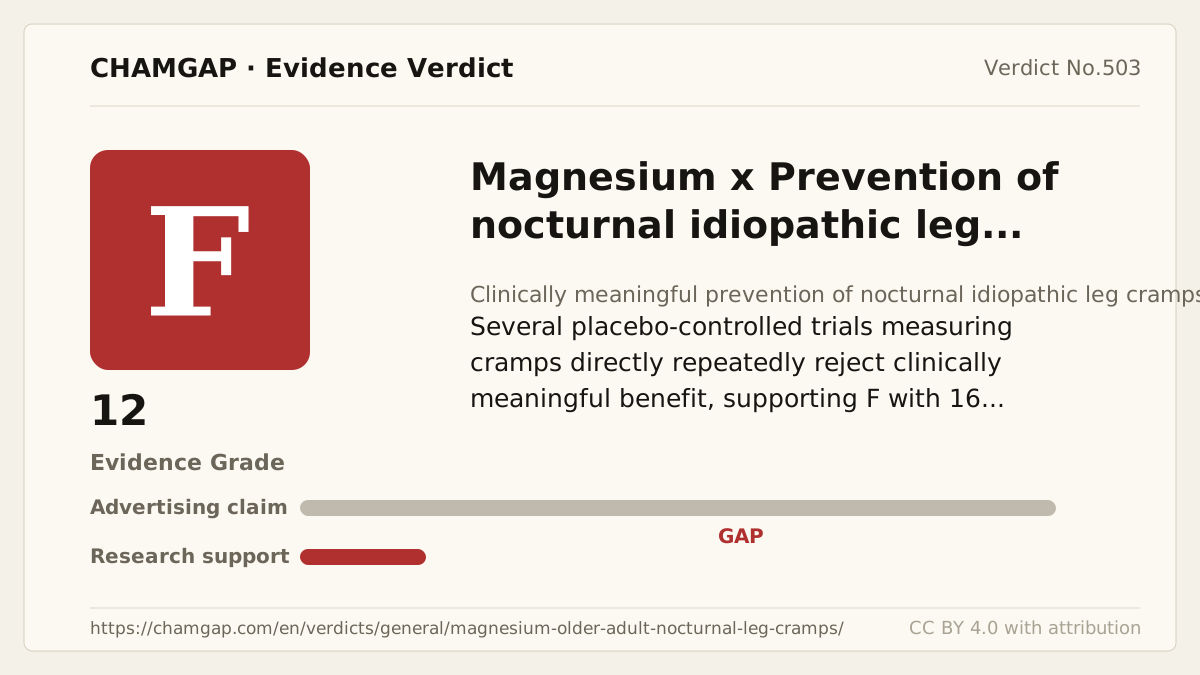
[Chamgap] Magnesium x prevention of nocturnal leg cramps in older adults — Evidence Grade F·12. 3 cited sources checked. Source: https://chamgap.com/en/verdicts/general/magnesium-older-adult-nocturnal-leg-cramps/ · CC BY 4.0CC BY 4.0 — free to use with attribution; do not distort grades, numbers, or verdict meaning.
What this document does and does not do
Chamgap is an information source. It reports what research has and has not confirmed; it does not tell readers what to take or buy. That decision belongs to readers and, when needed, medical or legal professionals. This verdict reflects literature available up to the search date and may change as new research appears. Nothing here is medical advice.