
Benfotiamine, also called S-benzoylthiamine,
does it really help with Improved pain and nerve function in diabetic peripheral neuropathy?
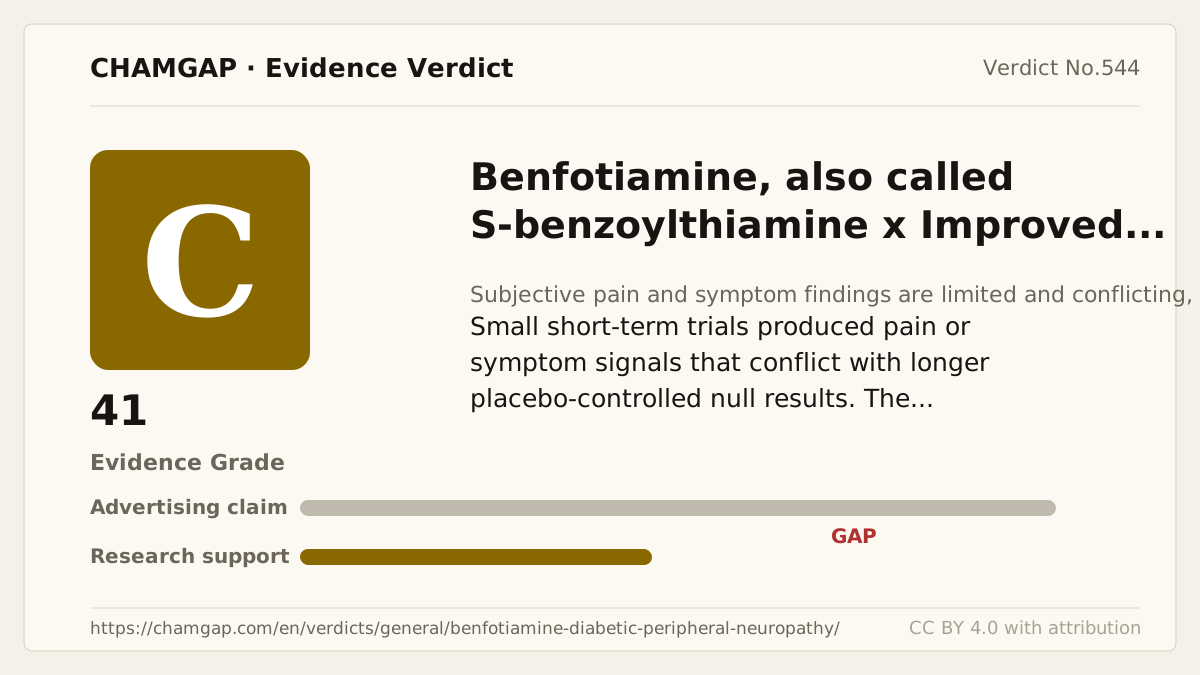
research showsPain and subjective symptoms are limited and conflicting, supporting an overall grade C. The six-week BENDIP primary symptom score was borderline in the intention-to-treat analysis, while a 24-month trial and the 12-month BOND trial found no benefit on objective nerve function or morphology.
ads claimThe claim that a lipid-soluble thiamine derivative must repair damaged nerves because it is better absorbed jumps from pharmacokinetics to clinical outcomes. Correcting documented thiamine deficiency is a different question from treating diabetic neuropathy without established deficiency.
Useful facts when choosing a product
- Tablets containing 300 mg of benfotiamine are distributed in South Korea, and some high-dose products combine it with pyridoxine or other vitamins.
- Clinical trials generally used 300 to 600 mg daily, but a domestic combination tablet is not equivalent to the single-ingredient research product.
- When high-dose vitamin B6 is included, excessive long-term intake can itself cause sensory neuropathy, so the full ingredient list and total exposure matter.
Chamgap Semantic Classification Code
Candidate index · review held
UNK.benfotiamine.UNK.pain-and-nerve-function-in-diabetic-peripheral-neuropathy.improve.placeboUnknown > Benfotiamine > Unknown > pain and nerve function in diabetic peripheral neuropathy > Improvement claim > Placebo
An automated migration candidate, not an issued permanent code; exact claim scope remains under review. This machine-generated migration candidate helps retrieval but is not a permanent assignment. The original verdict ID and URL remain authoritative.
What the research actually shows
Randomized trials using 300 to 600 mg daily produced mixed short-term subjective symptoms, while nerve conduction, vibration perception, corneal nerve fibers, and related objective measures were null in longer studies. BOND had only 57 participants and was not a large trial, but its broad null pattern is informative.
Why this is classified as C (41)
Small positive or borderline pain and symptom findings form a C axis, while repeated null objective nerve-function results form a D axis. With no single large placebo-controlled null trial, the combined representative grade is C.
Counterpoint. Reported tolerability or higher blood thiamine levels do not establish improvement in pain or nerve function.
Rejudgment record. Adjusted by final editorial verdict — Separate assessment of subjective symptom signals and null objective nerve-function results, accounting for the absence of a large placebo-controlled null trial
Sub-claim grades by effect
This ingredient is marketed for several effects. A single overall grade blends strong and weak claims together, so each effect is graded separately here. The overall grade reflects the strongest disconfirming or core claim.
| Effect (sub-claim) | Grade | Basis |
|---|---|---|
| Improved pain and subjective symptoms in diabetic neuropathy | C | The high-dose per-protocol analysis was positive at six weeks, but the primary intention-to-treat analysis missed significance and longer trials did not replicate it. |
| Improved objective peripheral nerve function or nerve regeneration | D | The 24-month trial and 12-month BOND trial were repeatedly null across nerve conduction, sensation, corneal nerve morphology, and related measures. |
Cross-check — AI research and Codex final gate
Evidence Table
| Study | Design | Sample | Funding | Endpoint | Result | Weight |
|---|---|---|---|---|---|---|
| Stracke et al. 2008 (BENDIP) | Six-week multicenter double-blind randomized placebo-controlled dose trial | 133 | Product interests and author links involving Wörwag Pharma | Primary Neuropathy Symptom Score and Total Symptom Score | NSS was significant per protocol but not by intention to treat at p=0.055; total TSS was not significant, with the pain subitem showing the largest response. | Low weight for efficacy because the primary intention-to-treat result failed and manufacturer interests were present |
| Fraser et al. 2012 | Twenty-four-month double-blind randomized placebo-controlled trial | 59 | Norwegian academic and public research setting | Peripheral nerve function and inflammatory markers | Benfotiamine 300 mg daily produced no significant benefit in nerve conduction, vibration perception, or related peripheral nerve measures after 24 months. | High weight as a small but long-term independent placebo-controlled trial |
| Ziegler et al. 2026 (BOND) | Twelve-month double-blind randomized placebo-controlled trial | 57 | Sponsored by Wörwag Pharma with employees and other interested authors involved | Primary corneal nerve fiber length plus nerve conduction, sensory, autonomic, and clinical measures | Benfotiamine 600 mg daily did not significantly improve the primary outcome or the broad objective and clinical secondary outcomes versus placebo. | High weight despite the small sample because a long, broad, manufacturer-sponsored trial was null |
Receipt — 3 References
All 3 cited sources were verified for existence at the original page (as of 2026-07-18).
Final verification and publication gate: Codex · Evidence date: 2026-07-18 · Corrections: none
Cite this verdict
[Chamgap] Does benfotiamine improve diabetic peripheral neuropathy? — Evidence Grade C·41. 3 cited sources checked. Source: https://chamgap.com/en/verdicts/general/benfotiamine-diabetic-peripheral-neuropathy/ · CC BY 4.0CC BY 4.0 — free to use with attribution; do not distort grades, numbers, or verdict meaning.
What this document does and does not do
Chamgap is an information source. It reports what research has and has not confirmed; it does not tell readers what to take or buy. That decision belongs to readers and, when needed, medical or legal professionals. This verdict reflects literature available up to the search date and may change as new research appears. Nothing here is medical advice.