
Acetazolamide,
does it really help with Prevention of acute mountain sickness in travelers ascending rapidly to high altitude?
research showsAcetazolamide is rated B because it reduces acute mountain sickness in travelers ascending rapidly to high altitude. A meta-analysis of randomized placebo-controlled trials found an approximately 48% relative-risk reduction, and a 2026 phase 3 trial in 288 participants reproduced the effect with event rates of 55.9% and 36.9%. Symptomatic acute mountain sickness is a direct prevention outcome, but subjectivity in the Lake Louise score and heterogeneity in ascent rate and dose remain, and the drug cannot replace gradual acclimatization. Paresthesia, diuresis, taste change, metabolic acidosis, and hypersensitivity remain separate safety issues.
ads claimPromotion or travel anecdotes can expand lower risk into complete protection or no need to acclimatize. Evidence supports risk reduction, while slow ascent, rest, stopping further ascent when symptomatic, and descent for worsening illness remain essential.
Useful facts when choosing a product
- Acetazolamide is a prescription carbonic anhydrase inhibitor, not an analgesic or oxygen supplement. Timing and dose should be prescribed for the itinerary, renal function, and medical history.
- The 2024 Wilderness Medical Society guideline commonly uses 125 mg every 12 hours in adults at risk, starting the day before ascent and continuing during the early ascent period. Current prescribing instructions and the product label take priority.
- Acetazolamide can accelerate acclimatization but does not replace slow ascent. A symptomatic traveler should stop ascending and seek descent and medical evaluation if symptoms worsen.
- Tingling of the hands, feet, or mouth, diuresis, and altered taste of carbonated drinks are common. Severe renal or hepatic disease, electrolyte abnormalities, metabolic acidosis, or a hypersensitivity history require specialist review.
Chamgap Semantic Classification Code
Candidate index · review held
M.acetazolamide.UNK.acute-mountain-sickness-in-travelers-ascending-rapidly-to-high-altitude.prevent.placeboMedicinal interventions > Acetazolamide > Unknown > acute mountain sickness in travelers ascending rapidly to high altitude > Occurrence-prevention claim > Placebo
An automated migration candidate, not an issued permanent code; exact claim scope remains under review. This machine-generated migration candidate helps retrieval but is not a permanent assignment. The original verdict ID and URL remain authoritative.
What the research actually shows
The 2012 meta-analysis searched MEDLINE, Embase, Cochrane, and ClinicalTrials.gov for randomized placebo-controlled prevention trials and pooled symptomatic acute mountain sickness as the primary outcome, finding a 48% relative-risk reduction. The 2024 Wilderness Medical Society guideline also recommends acetazolamide for ascent itineraries with moderate or high risk and gives 125 mg twice daily as a usual adult preventive dose. Carbonic anhydrase inhibition induces mild metabolic acidosis and stimulates ventilation, but it does not replace gradual ascent.
Why this is classified as B (76)
A meta-analysis of randomized placebo-controlled trials found an approximately 48% relative reduction in symptomatic acute mountain sickness, and a 2026 phase 3 trial in 288 participants reproduced the result with 55.9% versus 36.9%. This supports B with 76 points. Subjectivity in the Lake Louise score and heterogeneity in ascent rate and dose prevent A, and prophylaxis cannot replace gradual ascent. Paresthesia, diuresis, hypersensitivity, and metabolic acidosis remain separate safety issues.
Counterpoint. It is a useful preventive option when rapid ascent is unavoidable and risk is moderate or high. It should still accompany itinerary adjustment, gradual ascent, and symptom monitoring.
Rejudgment record. New verdict — Confirmed B because the approximately 48% relative reduction in randomized placebo-controlled trials was reproduced as 55.9% versus 36.9% in a 2026 phase 3 trial of 288 participants, while subjective Lake Louise scoring and heterogeneity in ascent rate and dose prevent A
Sub-claim grades by effect
This ingredient is marketed for several effects. A single overall grade blends strong and weak claims together, so each effect is graded separately here. The overall grade reflects the strongest disconfirming or core claim.
| Effect (sub-claim) | Grade | Basis |
|---|---|---|
| Prevention of acute mountain sickness during rapid ascent | B | A meta-analysis of randomized placebo-controlled trials found an approximately 48% relative-risk reduction. |
| Replacement for gradual acclimatization | ? | Medication lowers risk but does not replace slow ascent, rest, or stopping further ascent when symptoms occur. |
| Paresthesia, diuresis, and metabolic adverse effects | ? | This is a safety and tolerability issue requiring review of contraindications and medical history before prescribing. |
Cross-check — AI research and Codex final gate
Evidence Table
| Study | Design | Sample | Funding | Endpoint | Result | Weight |
|---|---|---|---|---|---|---|
| Ritchie ND et al. 2012 | Systematic review and meta-analysis of randomized placebo-controlled trials | Pooled randomized prevention trials in travelers to high altitude | Academic review with varied funding across component trials | Incidence of acute mountain sickness | Acetazolamide reduced the relative risk of acute mountain sickness by 48% versus placebo. | Key synthesis of direct preventive efficacy |
| Luks AM et al. 2024 WMS guideline | Updated evidence-based clinical practice guideline | Evidence base for prevention, diagnosis, and treatment of acute altitude illness | Wilderness Medical Society expert panel | Prevention of acute mountain sickness and safe ascent strategy | The guideline recommends acetazolamide for moderate- or high-risk ascent while retaining gradual ascent as the foundation. | Supporting scope and dosing evidence |
Receipt — 2 References
All 2 cited sources were verified for existence at the original page (as of 2026-07-19).
Final verification and publication gate: Codex · Evidence date: 2026-07-19 · Corrections: none
Cite this verdict
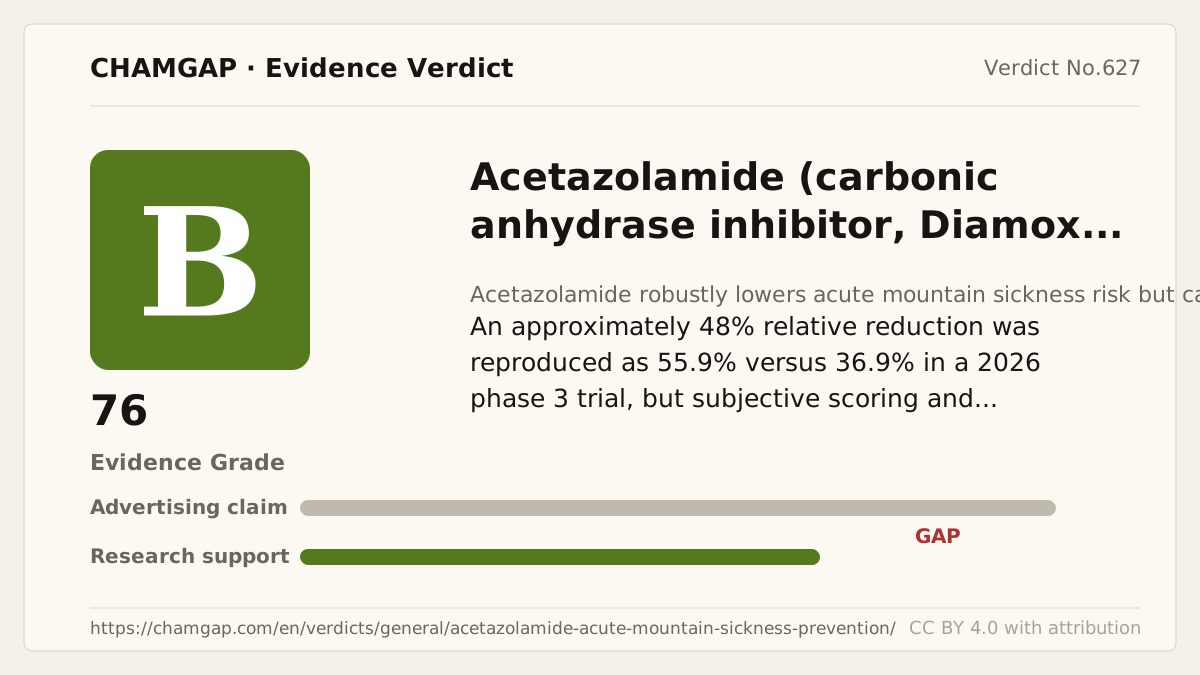
[Chamgap] Acetazolamide x prevention of acute mountain sickness — Evidence Grade B·76. 2 cited sources checked. Source: https://chamgap.com/en/verdicts/general/acetazolamide-acute-mountain-sickness-prevention/ · CC BY 4.0CC BY 4.0 — free to use with attribution; do not distort grades, numbers, or verdict meaning.
What this document does and does not do
Chamgap is an information source. It reports what research has and has not confirmed; it does not tell readers what to take or buy. That decision belongs to readers and, when needed, medical or legal professionals. This verdict reflects literature available up to the search date and may change as new research appears. Nothing here is medical advice.