
Bromelain,
does it really help with Reduction of vitreous floaters and opacities?
research showsThe verdict for oral bromelain alone reducing floaters is ?. The 224-person trial tested a combination of 190 mg bromelain, 95 mg papain, and 95 mg ficin, so its result cannot be attributed to bromelain alone. The uncontrolled 2019 pineapple pilot came from the same research line and could not separate bromelain from other pineapple constituents or natural history. No independent single-ingredient human efficacy trial exists; therefore D and the ingredient attribution are withdrawn and the claim is ungraded. This floater claim remains separate from the digestion and swelling claim in verdict 115.
ads claimThe story that an oral enzyme travels into the eye and selectively dissolves collagen clumps does not demonstrate absorption, ocular delivery, or selective action. Waiting on a supplement after new flashes, a curtain-like shadow, or a sudden shower of floaters can delay diagnosis of a retinal tear or detachment.
Useful facts when choosing a product
- Bromelain is a mixture of proteolytic enzymes derived from pineapple, and enzyme activity units, source tissue, and purification vary among products. Equal milligram amounts do not make products equivalent.
- The principal floater capsule studied was not bromelain alone; it also contained papain and ficin. Its result cannot be transferred directly to ordinary bromelain supplements.
- Oral bromelain can cause gastrointestinal upset or allergy, and caution is appropriate with medicines that increase bleeding risk. Anticoagulant or antiplatelet use, planned surgery, and pineapple allergy should be disclosed.
- A sudden increase in floaters, flashes, a curtain or shadow in vision, or reduced vision can signal a retinal tear or detachment requiring urgent eye evaluation. A supplement should not delay assessment.
Chamgap Semantic Classification Code
Candidate index · review held
S.bromelain.UNK.vitreous-floaters-and-opacities.reduce.placeboSupplements and nutraceuticals > Bromelain > Unknown > vitreous floaters and opacities > Reduction claim > Placebo
An automated migration candidate, not an issued permanent code; exact claim scope remains under review. This machine-generated migration candidate helps retrieval but is not a permanent assignment. The original verdict ID and URL remain authoritative.
What the research actually shows
Ma 2022 assigned 224 people with monocular symptomatic vitreous opacities to vitamin C or a bromelain-papain-ficin mixture for three months and reported a dose-dependent disappearance rate. There was no bromelain-only group, making ingredient attribution impossible. The Horng 2019 pineapple pilot was uncontrolled and came from the same research line, so it is not a separate single-ingredient trial. Hammer 2024 reported condition-dependent light-scatter changes in 57 porcine vitreous bodies; it is preclinical and does not supply human efficacy evidence for oral bromelain alone.
Why this is classified as ?
?. The 224-person positive trial evaluated a bromelain-papain-ficin mixture, and the 2019 pineapple pilot came from the same research line, so neither supports attribution to bromelain alone. With no independent single-ingredient human efficacy trial, D and the ingredient attribution are withdrawn and the claim is ungraded. This remains distinct from verdict 115 on digestion and swelling; bleeding, allergy, and delayed diagnosis are separate safety issues.
Counterpoint. A multicenter trial with standardized single-ingredient bromelain, an identical placebo, preregistration, independent image reading, symptoms, and safety could change the verdict.
Rejudgment record. Reassessment (cross-check reflected) — The 224-person trial tested a bromelain-papain-ficin mixture and overlaps the 2019 pineapple-pilot research line, preventing attribution to bromelain alone. With no independent single-ingredient human efficacy trial, D was withdrawn and the claim was left ungraded; this remains separate from verdict 115 on digestion and swelling
Sub-claim grades by effect
This ingredient is marketed for several effects. A single overall grade blends strong and weak claims together, so each effect is graded separately here. The overall grade reflects the strongest disconfirming or core claim.
| Effect (sub-claim) | Grade | Basis |
|---|---|---|
| Reduction of vitreous floaters and floater symptoms | ? | No human efficacy trial of bromelain alone; results from a mixed-enzyme product cannot be attributed to bromelain. |
| Changes in vitreous opacity or ocular structure | ? | No relevant human trial exists. |
Cross-check — AI research and Codex final gate
Evidence Table
| Study | Design | Sample | Funding | Endpoint | Result | Weight |
|---|---|---|---|---|---|---|
| Ma JW et al. 2022 | Reported double-blind randomized vitamin-C-controlled mixed-enzyme trial | 224 people with monocular symptomatic vitreous opacities treated for three months | A Unique Biotechnology employee was a coauthor; no explicit study funding was reported | Observed vitreous-opacity count, symptoms, satisfaction, and selected visual acuity | A dose-dependent disappearance rate was reported for mixed enzymes, but no bromelain-only group existed. | Only central human signal, without single-ingredient attribution |
| Horng CT et al. 2019 | Uncontrolled pineapple-intake pilot survey | Pineapple dose groups; reporting and follow-up completeness were unclear | Inadequately reported | Observer-assessed floater count | Reduction was reported after three months, but no randomized placebo control excluded natural history or bias. | Very-low-quality evidence from the same research line |
| Hammer M et al. 2024 | In-vitro enzymatic digestion experiment in porcine vitreous | 57 porcine vitreous bodies | Academic support including the Klaus Tschira Foundation | Forward light scatter | Bromelain increased scatter in juvenile vitreous and partly reduced it after hyaluronate depletion. | Condition-dependent preclinical evidence, not oral human efficacy |
Receipt — 3 References
All 3 cited sources were verified for existence at the original page (as of 2026-07-19).
Final verification and publication gate: Codex · Evidence date: 2026-07-19 · Corrections: none
Cite this verdict
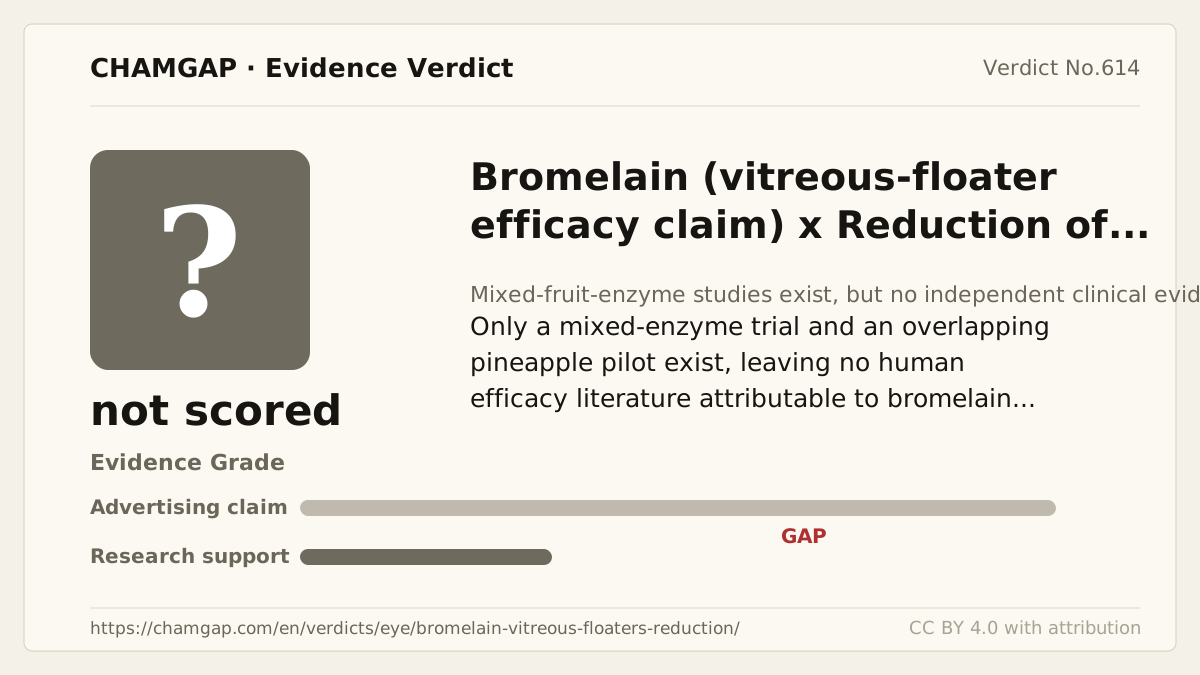
[Chamgap] Bromelain x reduction of vitreous floaters — Evidence Grade ?. 3 cited sources checked. Source: https://chamgap.com/en/verdicts/eye/bromelain-vitreous-floaters-reduction/ · CC BY 4.0CC BY 4.0 — free to use with attribution; do not distort grades, numbers, or verdict meaning.
What this document does and does not do
Chamgap is an information source. It reports what research has and has not confirmed; it does not tell readers what to take or buy. That decision belongs to readers and, when needed, medical or legal professionals. This verdict reflects literature available up to the search date and may change as new research appears. Nothing here is medical advice.