
C3G-rich black soybean seed-coat extract,
does it really help with Eye fatigue and accommodative function?
research showsA patent contains a 60-person study using 300 mg/day of black soybean hull extract for eight weeks, and a 48-person randomized trial of a multi-ingredient supplement containing 26.5 mg of black soybean hull extract reported improvement in near-point accommodation and some subjective symptoms. The direct study is patent evidence rather than a peer-reviewed paper, while the published trial also contained lutein, bilberry, astaxanthin, and DHA. The contribution of C3G or black soybean cannot be isolated, so the grade is C.
ads claimClaims that high C3G content restores focus, protects vision long term, or protects the macula exceed the data. Anthocyanin content and antioxidant capacity do not establish a long-term human visual benefit, and evidence for bilberry should not be reassigned to black soybean.
Useful facts when choosing a product
- The direct patent study used 300 mg/day of black soybean hull extract, while the published combination trial used 26.5 mg/day.
- The combination trial supplied 2.3 mg/day of C3G from bilberry and black soybean together, so the black-soybean-derived amount cannot be determined separately.
- Many products sold in Korea are conventional black-bean or anthocyanin foods or lutein combinations; their C3G standardization may not match the study ingredient.
- People with soy allergy should use caution, and long-term safety data for concentrated extracts are limited.
Chamgap Semantic Classification Code
Candidate index · review held
S.cyanidin-3-glucoside-rich-black-soybean-seed-coat-extract.UNK.eye-fatigue-and-accommodative-function.assess.placeboSupplements and nutraceuticals > Cyanidin-3-glucoside-rich black soybean seed-coat extract > Unknown > Eye fatigue and accommodative function > Association or change assessment > Placebo
An automated migration candidate, not an issued permanent code; exact claim scope remains under review. This machine-generated migration candidate helps retrieval but is not a permanent assignment. The original verdict ID and URL remain authoritative.
What the research actually shows
The black soybean hull extract patent describes 60 participants aged 7-28 years with myopia, divided into 30-person test and placebo groups and given 300 mg/day for eight weeks. It reports improvement in dryness, blurred vision, eye fatigue, and uncorrected distance vision, but no peer-reviewed publication, registration, or raw data were identified. The 2014 Kono trial gave 48 adults aged 45-64 years with eye strain a four-week combination containing 10 mg lutein, 20 mg bilberry extract, 26.5 mg black soybean hull extract, 4 mg astaxanthin, and 50 mg DHA, and reported improvement in near-point accommodation and some symptoms.
Why this is classified as C (40)
The direct 60-person evidence is disclosed in a patent, and the peer-reviewed 48-person randomized trial is a multi-ingredient combination that prevents ingredient attribution. Short-term subjective and accommodative surrogate endpoints yield C with 40 points.
Counterpoint. Exploratory human signals for eye fatigue and accommodation exist, so the human literature is not treated as entirely absent.
Rejudgment record. New verdict — Direct evidence is disclosed only in a patent, while the published randomized trial combined lutein, bilberry, astaxanthin, and DHA, preventing stand-alone attribution
Sub-claim grades by effect
This ingredient is marketed for several effects. A single overall grade blends strong and weak claims together, so each effect is graded separately here. The overall grade reflects the strongest disconfirming or core claim.
| Effect (sub-claim) | Grade | Basis |
|---|---|---|
| Improvement in eye fatigue and subjective symptoms | C | Patent and combination-trial signals exist, but there is no independent replication of the stand-alone ingredient. |
| Improvement in accommodative function | C | Near-point accommodation improved in a 48-person trial, but four other active ingredients were administered with black soybean hull extract. |
| Long-term protection of vision or the retina | ? | No long-term human efficacy trial evaluating this claim was identified. |
Cross-check — AI research and Codex final gate
Evidence Table
| Study | Design | Sample | Funding | Endpoint | Result | Weight |
|---|---|---|---|---|---|---|
| Dou X et al. black soybean hull extract patent | Patent disclosure of a placebo-controlled human study | 60 | Patent holder and ingredient developer | Dryness, blurred vision, eye fatigue, and uncorrected distance vision | Reported symptom and uncorrected visual-acuity improvement after 300 mg/day for eight weeks. | Supportive |
| Kono K et al. 2014 | Randomized double-blind placebo-controlled trial | 48 | Product-linked | Near-point accommodation and subjective symptoms | A multi-ingredient combination improved change in near-point accommodation and some symptoms including blurred vision. | Key |
| Jeon S et al. 2012 | Open-label repeated-dose pharmacokinetic and safety study | 12 | Collaboration with the Rural Development Administration | C3G pharmacokinetics and adverse events | Confirmed C3G absorption and short-term tolerability after 1 g/day for two weeks; eye efficacy was not measured. | Mechanistic |
Receipt — 3 References
All 3 cited sources were verified for existence at the original page (as of 2026-07-17).
Final verification and publication gate: Codex · Evidence date: 2026-07-17 · Corrections: none
Cite this verdict
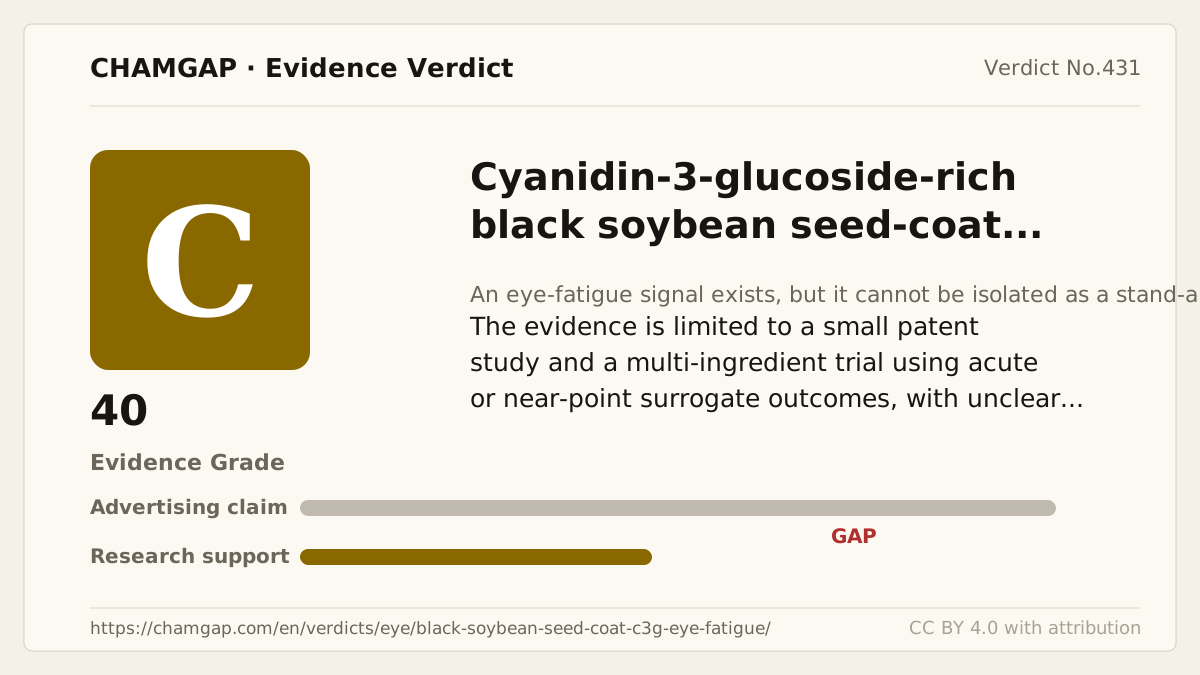
[Chamgap] C3G-rich black soybean seed-coat extract x eye fatigue and accommodation — Evidence Grade C·40. 3 cited sources checked. Source: https://chamgap.com/en/verdicts/eye/black-soybean-seed-coat-c3g-eye-fatigue/ · CC BY 4.0CC BY 4.0 — free to use with attribution; do not distort grades, numbers, or verdict meaning.
What this document does and does not do
Chamgap is an information source. It reports what research has and has not confirmed; it does not tell readers what to take or buy. That decision belongs to readers and, when needed, medical or legal professionals. This verdict reflects literature available up to the search date and may change as new research appears. Nothing here is medical advice.