
Vitamin C,
does it really help with Additional acceleration of hemoglobin recovery in iron-deficiency anemia by increasing iron absorption?
research showsRoutine vitamin C added to oral iron for iron-deficiency anemia is rated D because it did not accelerate hemoglobin recovery beyond iron alone. In a 440-participant randomized equivalence trial, two-week hemoglobin increases were 2.00 g/dL with iron plus vitamin C and 1.84 g/dL with iron alone; the between-group difference was 0.16 g/dL (95% CI -0.03 to 0.35), meeting clinical equivalence. Eight-week ferritin changes also did not differ significantly, and a later systematic review did not support routine coadministration. Increased nonheme-iron absorption in laboratory or meal studies is a surrogate and must be distinguished from the therapeutic effect of iron itself. Gastrointestinal effects and possible kidney stones at high doses are separated under safety.
ads claimMarketing converts vitamin C's ability to aid nonheme-iron absorption in laboratory and meal settings into a claim of reliably faster anemia recovery. Absorption is a surrogate and is not the same as incremental hemoglobin or ferritin recovery.
Useful facts when choosing a product
- The key trial administered oral iron 100 mg and vitamin C 200 mg every eight hours, and its result does not question the need for iron treatment itself.
- Vitamin C is water soluble, but high supplemental doses can cause nausea, abdominal discomfort, or diarrhea.
- People with kidney stones, hyperoxaluria, or kidney disease should review the possibility of increased urinary oxalate from high-dose vitamin C with a clinician.
- Elemental-iron content and formulation vary among products, and the cause of anemia and treatment response require blood testing and evaluation for blood loss.
Chamgap Semantic Classification Code
Candidate index · review held
S.vitamin-c.oral.iron-deficiency-anemia-hemoglobin-recovery.improve.addonSupplements and nutraceuticals > Vitamin C > Oral > Hemoglobin recovery in iron-deficiency anemia > Improvement claim > Added intervention on common background care
An automated migration candidate, not an issued permanent code; exact claim scope remains under review. This machine-generated migration candidate helps retrieval but is not a permanent assignment. The original verdict ID and URL remain authoritative.
What the research actually shows
The single-center open-label equivalence trial by Li et al. 2020 treated 440 adults for three months and used two-week hemoglobin change as the primary endpoint. Increases were clinically equivalent, and ferritin and adverse-event outcomes did not differ. Deng et al. 2024 synthesized studies comparing oral iron plus vitamin C with iron alone and concluded that any hemoglobin difference was small and clinically unimportant and that routine addition was unsupported. This does not mean iron treatment is ineffective; it means added vitamin C did not provide established incremental benefit.
Why this is classified as D (28)
A direct 440-participant randomized trial found two-week hemoglobin and eight-week ferritin recovery equivalent to iron alone, and later synthesis did not support routine coadministration. Laboratory absorption is a surrogate rather than incremental clinical recovery, supporting D with 28 points. Gastrointestinal effects and possible kidney stones at high doses remain separate safety concerns.
Counterpoint. A balanced diet containing fruit and vegetables and correction of confirmed vitamin C deficiency are separate nutritional issues. This verdict concerns only the incremental effect of routinely adding a vitamin C supplement to iron therapy for iron-deficiency anemia.
Rejudgment record. New verdict — Prioritized the direct 440-participant randomized equivalence trial showing clinically equivalent hemoglobin and ferritin recovery with iron plus vitamin C versus iron alone, reinforced by a later meta-analysis, over the surrogate absorption mechanism
Sub-claim grades by effect
This ingredient is marketed for several effects. A single overall grade blends strong and weak claims together, so each effect is graded separately here. The overall grade reflects the strongest disconfirming or core claim.
| Effect (sub-claim) | Grade | Basis |
|---|---|---|
| Additional acceleration of hemoglobin recovery beyond oral iron alone | D | Two-week increases of 2.00 and 1.84 g/dL were clinically equivalent. Laboratory or meal-level absorption is a surrogate, and the therapeutic effect of iron itself must be separated from any incremental vitamin C effect. |
| Additional improvement in iron-store recovery beyond oral iron alone | D | Eight-week ferritin change did not differ significantly between groups. |
Cross-check — AI research and Codex final gate
Evidence Table
| Study | Design | Sample | Funding | Endpoint | Result | Weight |
|---|---|---|---|---|---|---|
| Li N et al. 2020 | Single-center open-label randomized equivalence trial | 440 adults with iron-deficiency anemia | No conflict of interest reported; funding details not stated in the public abstract | Two-week hemoglobin change, eight-week ferritin change, and adverse events | Hemoglobin increases of 2.00 and 1.84 g/dL were equivalent, with no significant differences in ferritin or adverse events. | Decisive direct null comparison |
| Deng J et al. 2024 | Systematic review and meta-analysis | Studies comparing oral iron plus vitamin C with oral iron alone | Funding source not stated in the public abstract | Hemoglobin, ferritin, and transferrin saturation | The small hemoglobin difference was not clinically important, and routine vitamin C coadministration was not supported. | Confirmatory synthesis |
Receipt — 2 References
All 2 cited sources were verified for existence at the original page (as of 2026-07-20).
Final verification and publication gate: Codex · Evidence date: 2026-07-20 · Corrections: none
Cite this verdict
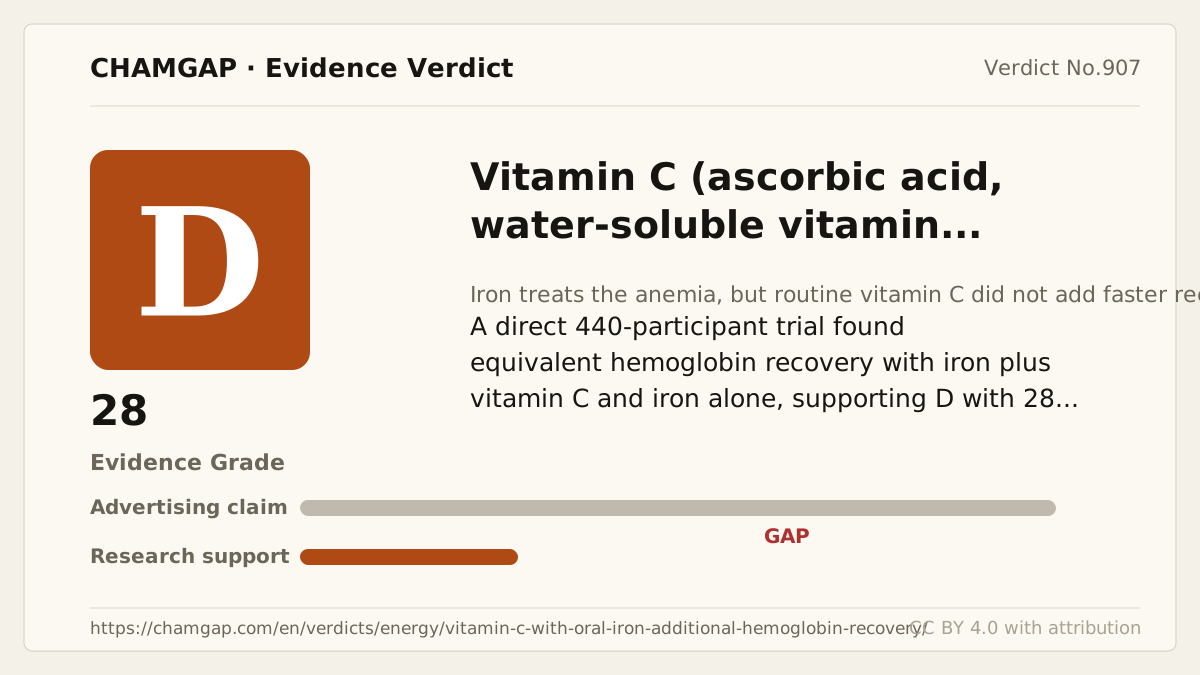
[Chamgap] Vitamin C x additional acceleration of hemoglobin recovery during oral iron therapy — Evidence Grade D·28. 2 cited sources checked. Source: https://chamgap.com/en/verdicts/energy/vitamin-c-with-oral-iron-additional-hemoglobin-recovery/ · CC BY 4.0CC BY 4.0 — free to use with attribution; do not distort grades, numbers, or verdict meaning.
What this document does and does not do
Chamgap is an information source. It reports what research has and has not confirmed; it does not tell readers what to take or buy. That decision belongs to readers and, when needed, medical or legal professionals. This verdict reflects literature available up to the search date and may change as new research appears. Nothing here is medical advice.