
Roxadustat, an oral prescription HIF prolyl-hydroxylase inhibitor,
does it really help with Noninferior hemoglobin change versus epoetin alfa in dialysis-dependent kidney anemia?
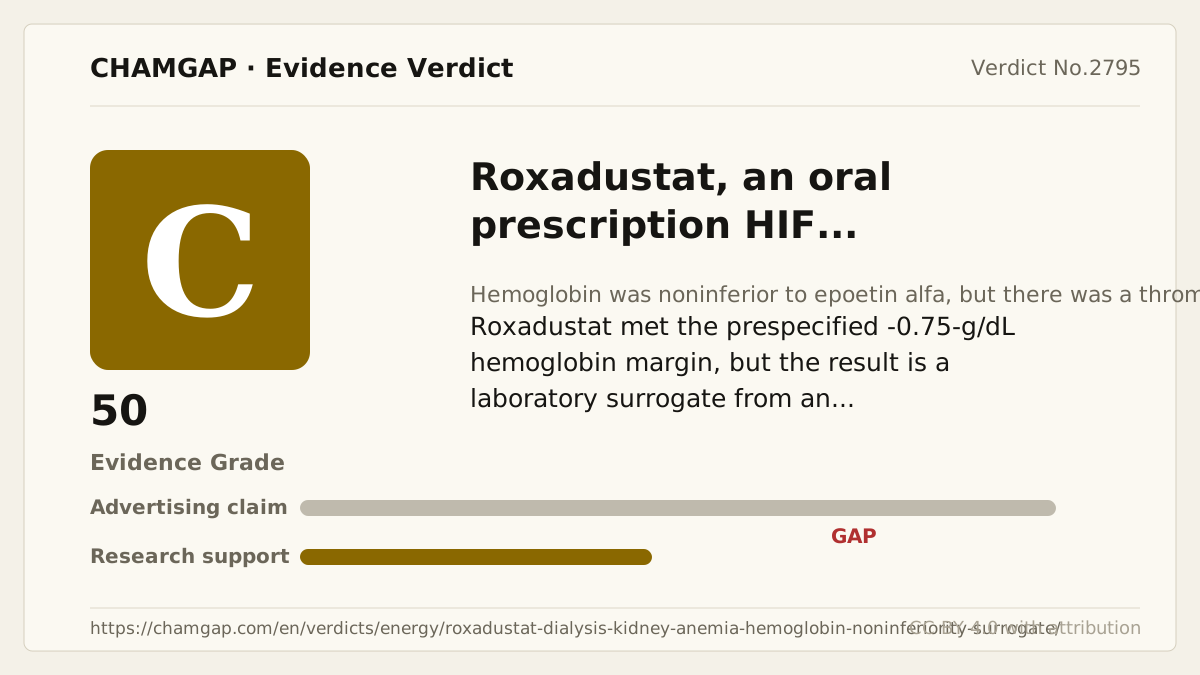
research showsThe grade is C with 50 points. In 2,133 ROCKIES participants, mean hemoglobin change averaged over weeks 28 to 52 was +0.77 g/dL (95% CI +0.69 to +0.85) with roxadustat and +0.68 (+0.60 to +0.76) with epoetin alfa. The least-squares mean difference was +0.09 g/dL (95% CI +0.01 to +0.18), P<.001 for noninferiority. The lower bound of +0.01 g/dL was above the prespecified -0.75-g/dL margin. Hemoglobin was noninferior to epoetin alfa, but there was a thrombotic signal. Hemoglobin is a laboratory surrogate for outcomes such as death, cardiovascular events, and transfusion, and this was one manufacturer-funded noninferiority trial, giving C.
ads claimA good hemoglobin result must not be rewritten as better cardiovascular safety or longer survival. This paper directly established noninferior hemoglobin change versus epoetin alfa.
Useful facts when choosing a product
- Roxadustat inhibits HIF prolyl hydroxylase and alters endogenous erythropoietic signaling and iron use.
- The trial dosed roxadustat three times weekly and adjusted epoetin alfa according to local dialysis practice and labeling.
- Hemoglobin and thrombotic or cardiovascular events are distinct outcomes.
Chamgap Semantic Classification Code
Candidate index · review held
M.roxadustat.oral.hemoglobin-change.noninferior.activeMedicinal interventions > Roxadustat > Oral > hemoglobin change > Noninferiority claim > Active comparator
An automated migration candidate, not an issued permanent code; exact claim scope remains under review. This machine-generated migration candidate helps retrieval but is not a permanent assignment. The original verdict ID and URL remain authoritative.
What the research actually shows
ROCKIES was an international open-label randomized phase 3 trial assigning 2,133 dialysis-dependent CKD patients with anemia to roxadustat, 1,068, or epoetin alfa, 1,065. Missing hemoglobin values were handled with multiple-imputation ANCOVA, and mean weeks-28-to-52 change was assessed regardless of rescue therapy. Any adverse event occurred in 85.0% versus 84.5%, an absolute difference of +0.5 points, and serious adverse events in 57.6% versus 57.5%, +0.1 points. Cardiovascular reporting in the paper was descriptive: cardiac adverse events occurred in 23.4% versus 26.3%, and serious cardiac adverse events in 14.6% versus 16.0%. An adjudicated MACE treatment-effect estimate could not be confirmed in this individual paper because those events were reserved for a separate pooled analysis, so this verdict does not claim cardiovascular noninferiority. The Funding section named AstraZeneca; company employment, shareholding, and extensive company relationships were disclosed, and roxadustat was co-developed by FibroGen, Astellas, and AstraZeneca. In the anemia corpus, verdict 2385 is F with 12 points and asks whether normalizing hemoglobin with an erythropoiesis-stimulating agent reduces cardiovascular events in nondialysis CKD; this verdict asks whether roxadustat can replace an ESA to maintain hemoglobin during dialysis.
Why this is classified as C (50)
A 2,133-participant trial met the prespecified hemoglobin margin, but the surrogate endpoint, manufacturer-only evidence, noninferiority design, and potential differential discontinuation and adverse-event reporting linked to the open-label design give C with 50 points.
Counterpoint. This is an ESA-replacement question about maintaining hemoglobin during dialysis, not the separate question of whether targeting higher hemoglobin improves clinical events.
Rejudgment record. Cross-check applied — The prespecified -0.75-g/dL hemoglobin margin was met, but the endpoint was a laboratory surrogate and the manufacturer-funded trial had a noninferiority design and potential differential discontinuation and adverse-event reporting linked to its open-label design
| Endpoint | S | Surrogate marker - laboratory or imaging measures |
| Replication | R1 | Single confirmatory trial |
| Independence | I0 | Evidence comes only from manufacturer studies |
| Effect size | E+ | Meets the clinically important threshold |
Stored derived and displayed grades match; this is not a current recalculation or validity check (C).
Sub-claim grades by effect
This ingredient is marketed for several effects. A single overall grade blends strong and weak claims together, so each effect is graded separately here. The overall grade reflects the strongest disconfirming or core claim.
| Effect (sub-claim) | Grade | Basis |
|---|---|---|
| Noninferior hemoglobin change versus epoetin alfa | C | The 95% CI lower bound of +0.01 g/dL was above the prespecified -0.75-g/dL margin. |
| Cardiovascular and thrombotic safety noninferiority in the individual trial | ? | The ROCKIES paper collected adjudicated events for a separate pooled analysis rather than establishing an individual-trial MACE treatment effect. |
Cross-check — AI research and Codex final gate
Evidence Table
| Study | Design | Sample | Funding | Endpoint | Result | Weight |
|---|---|---|---|---|---|---|
| Fishbane S et al. 2022 ROCKIES | International open-label randomized active-controlled phase 3 noninferiority trial | 2,133 randomized, 1,068 roxadustat and 1,065 epoetin alfa | AstraZeneca funding and involvement in design and analysis; co-development by FibroGen, Astellas, and AstraZeneca | Mean hemoglobin change from baseline averaged over weeks 28 to 52 | +0.77 g/dL (95% CI +0.69 to +0.85) versus +0.68 (+0.60 to +0.76); LS mean difference +0.09 g/dL (95% CI +0.01 to +0.18), P<.001 for the -0.75-g/dL margin. Any adverse events differed by +0.5 points and serious adverse events by +0.1 points. | Large but manufacturer-funded trial based on a hemoglobin surrogate |
Receipt — 2 References
Of 2 cited sources, 1 had limited original-page access (blocked or summary-only) and were verified via index/summary, marked partial; the rest were verified at the original page. As of 2026-08-18.
Final verification and publication gate: Codex · Evidence date: 2026-08-18 · Corrections: none
Cite this verdict
[Chamgap] Benefit of Roxadustat for Noninferior Hemoglobin in Dialysis-Dependent Kidney Anemia, a Surrogate Outcome — Evidence Grade C·50. 2 cited sources checked. Source: https://chamgap.com/en/verdicts/energy/roxadustat-dialysis-kidney-anemia-hemoglobin-noninferiority-surrogate/ · CC BY 4.0CC BY 4.0 — free to use with attribution; do not distort grades, numbers, or verdict meaning.
What this document does and does not do
Chamgap is an information source. It reports what research has and has not confirmed; it does not tell readers what to take or buy. That decision belongs to readers and, when needed, medical or legal professionals. This verdict reflects literature available up to the search date and may change as new research appears. Nothing here is medical advice.