
Routine parenteral hydration at 1 L/day,
does it really help with Improved fatigue, myoclonus, sedation, hallucinations, quality of life, and related dehydration symptoms?
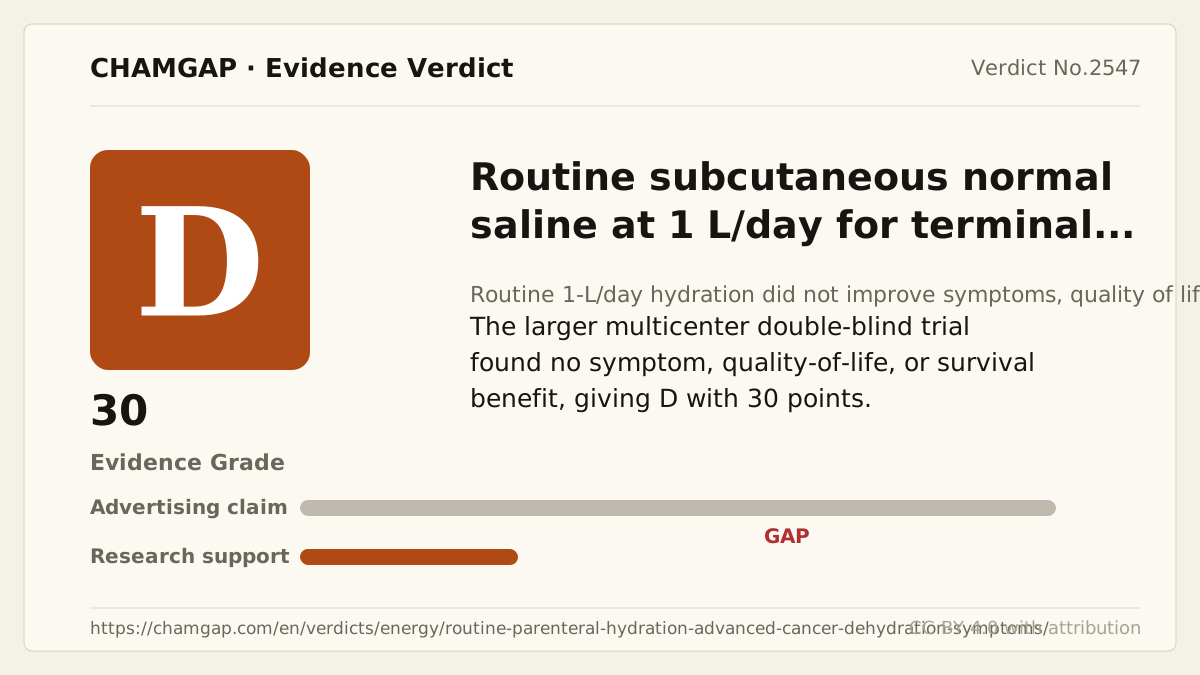
research showsThe grade is D. In a double-blind trial across six hospices, the four-symptom score changed by -3.3 with 1 L/day versus -2.8 with the 100-mL placebo at day four, P=0.77, among 129 randomized patients. Quality of life and survival also showed no between-group benefit. A 49-participant two-day preliminary trial reported improvement in some symptoms, but a larger follow-up from the same research program did not confirm the claim, giving D with 30 points.
ads claimDelivering water and sodium into the body is not the same as showing routine improvement in terminal fatigue, sedation, or hallucinations. Thirst, drug toxicity, hypercalcemia, infection, and other reversible causes require cause-specific decisions.
Useful facts when choosing a product
- The trial infused 1,000 mL/day of normal saline subcutaneously over four hours and used 100 mL/day as a placebo-like control.
- The 2013 population had oral intake no greater than 1,000 mL/day and mild-to-moderate dehydration in home hospice.
- Severe dehydration and major contraindications to fluids were excluded.
Chamgap Semantic Classification Code
Candidate index · review held
M.routine-subcutaneous-normal-saline-at.MULTI.fatigue-myoclonus-sedation-hallucinations-quality-of-life-and-related-dehydration-symptoms.improve.placeboMedicinal interventions > Routine subcutaneous normal saline at > Multiple: primary unresolved > fatigue, myoclonus, sedation, hallucinations, quality of life, and related dehydration symptoms > Improvement claim > Placebo
An automated migration candidate, not an issued permanent code; exact claim scope remains under review. This machine-generated migration candidate helps retrieval but is not a permanent assignment. The original verdict ID and URL remain authoritative.
What the research actually shows
Bruera's 2005 study was a 49-analyzed-participant, two-day preliminary double-blind trial; no registration number was confirmed. NCT00423722 randomized 129 participants, 63 versus 66, but the day-four table included 49 versus 51. It stopped before the planned 150 because of funding limitations, had fewer than 200 participants, and substantial early missingness. The follow-up program received NIH and MD Anderson support.
Why this is classified as D (30)
The larger multicenter trial from the same research program had a null prespecified symptom outcome and combined early termination, small size, and substantial day-four missingness, giving D with 30 points.
Counterpoint. D does not advise withholding fluids for every reversible dehydration state. It addresses routine 1-L/day treatment for all terminal cancer patients in this context.
Rejudgment record. Cross-check applied — We cross-checked populations, durations, analyzed denominators, primary outcomes, early termination, funding, and between-group results and did not label noncomparable preliminary findings as statistical conflict.
| Endpoint | P | Symptom or function itself is the target - including patient reports and performance tests |
| Replication | R1 | Single confirmatory trial |
| Independence | I2 | Decisive evidence is publicly or non-profit funded |
| Effect size | E0 | Null |
| Precision | CX | No pooled confidence interval could be confirmed |
Stored derived and displayed grades match; this is not a current recalculation or validity check (D).
Sub-claim grades by effect
This ingredient is marketed for several effects. A single overall grade blends strong and weak claims together, so each effect is graded separately here. The overall grade reflects the strongest disconfirming or core claim.
| Effect (sub-claim) | Grade | Basis |
|---|---|---|
| Routine 1-L/day hydration improves dehydration-related symptoms in terminal cancer. | D | The prespecified symptom composite was null in the larger multicenter trial. |
| The same hydration improves quality of life or survival. | D | The 2013 trial found no significant between-group difference. |
Cross-check — AI research and Codex final gate
Evidence Table
| Study | Design | Sample | Funding | Endpoint | Result | Weight |
|---|---|---|---|---|---|---|
| Bruera E et al., preliminary hydration trial 2005 | Multicenter double-blind randomized low-volume placebo-like controlled trial | 49 analyzed | Funding or acknowledgment text was not confirmed | Improvement in fatigue, myoclonus, sedation, and hallucinations over two days | Improvement in 53/73 (73%) versus 33/67 (49%) assessed symptom items, P=0.005 | Short, small preliminary positive signal |
| Bruera E et al., multicenter hospice trial 2013 | Double-blind randomized low-volume placebo-like controlled trial across six hospices | 129 randomized, 63 versus 66; 49 versus 51 in the day-four table | NIH and MD Anderson support; stopped before the planned 150 because of funding limitations | Primary: baseline-to-day-four change in the sum of four dehydration-related symptoms | -3.3 versus -2.8, between-group P=0.77; no between-group quality-of-life or survival benefit | Larger multicenter evidence with a null prespecified primary outcome |
Receipt — 2 References
All 2 cited sources were verified for existence at the original page (as of 2026-08-14).
Final verification and publication gate: Codex · Evidence date: 2026-08-14 · Corrections: none
Cite this verdict
[Chamgap] Routine parenteral hydration at 1 L/day x dehydration symptoms in terminal cancer — Evidence Grade D·30. 2 cited sources checked. Source: https://chamgap.com/en/verdicts/energy/routine-parenteral-hydration-advanced-cancer-dehydration-symptoms/ · CC BY 4.0CC BY 4.0 — free to use with attribution; do not distort grades, numbers, or verdict meaning.
What this document does and does not do
Chamgap is an information source. It reports what research has and has not confirmed; it does not tell readers what to take or buy. That decision belongs to readers and, when needed, medical or legal professionals. This verdict reflects literature available up to the search date and may change as new research appears. Nothing here is medical advice.