
Intravenous iron sucrose,
does it really help with Reduced composite risk of death, myocardial infarction, stroke, or heart-failure hospitalization with a proactive high-dose strategy up to 400 mg monthly in hemodialysis?
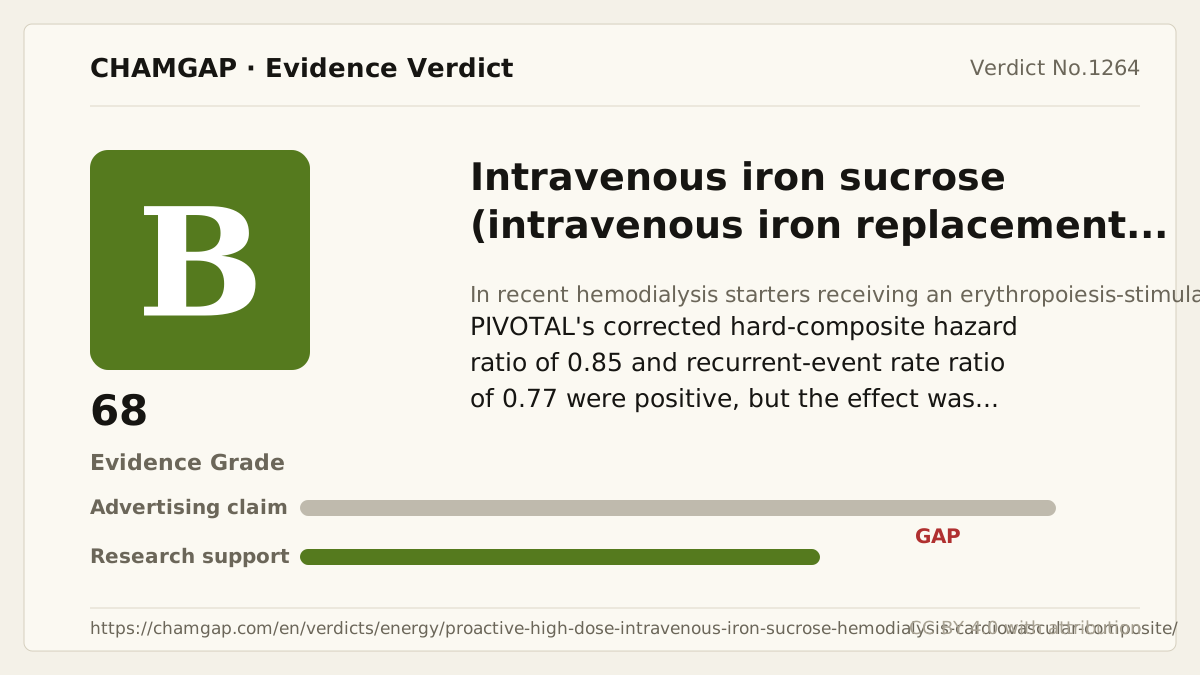
research showsA proactive high-dose intravenous iron-sucrose strategy is rated B because it reduced the composite risk of death, nonfatal myocardial infarction, nonfatal stroke, or heart-failure hospitalization in patients who had recently started hemodialysis and were receiving an erythropoiesis-stimulating agent. In 2,141 PIVOTAL participants, the corrected time-to-first-event hazard ratio for a strategy permitting up to 400 mg monthly was 0.85 (95% CI 0.73 to 1.00), with P=0.04 for superiority, and the recurrent-event rate ratio was 0.77. The trial was open label, the modest benefit rested on a borderline-significant composite, the comparator was reactive low-dose iron sucrose rather than no iron, and this remains one large trial in a specific dialysis population. The actual median monthly dose was 264 mg in the high-dose arm, so the result should not be interpreted as fixed 400-mg dosing every month.
ads claimPromotion may claim that fixed 400-mg monthly dosing reduces cardiovascular death in all dialysis patients. The tested strategy withheld iron at specified ferritin or transferrin-saturation thresholds, delivered a median of 264 mg monthly, and benefited a four-component composite rather than establishing a reduction in death alone.
Useful facts when choosing a product
- Iron sucrose is an intravenous iron preparation used to manage iron deficiency and dialysis-related anemia. Dialysis-unit dosing is guided by hemoglobin, ferritin, transferrin saturation, and erythropoiesis-stimulating-agent use.
- The PIVOTAL proactive strategy permitted up to 400 mg monthly but withheld dosing when ferritin exceeded 700 µg/L or transferrin saturation was at least 40%. The actual median monthly dose was 264 mg.
- The evidence population consisted of adults within 12 months of starting hemodialysis who were receiving an erythropoiesis-stimulating agent. The same hard-endpoint benefit is not established in nondialysis chronic kidney disease, peritoneal dialysis, or stable long-vintage hemodialysis.
- Infusion reactions, hypotension, nausea, headache, and injection-site reactions can occur, and iron indices are monitored to avoid excessive accumulation. PIVOTAL did not find more infection with the high-dose strategy, but active infection still requires individualized judgment.
Chamgap Semantic Classification Code
Candidate index · review held
M.iron-sucrose.intravenous.composite-risk-of-death-myocardial-infarction-stroke-or-heart-failure-hospitalization-with-a-proactive-high-dose-strategy-up-to-monthly-in-hemodialysis.reduce.UNKMedicinal interventions > iron sucrose > Intravenous > composite risk of death, myocardial infarction, stroke, or heart-failure hospitalization with a proactive high-dose strategy up to monthly in hemodialysis > Reduction claim > Unknown
An automated migration candidate, not an issued permanent code; exact claim scope remains under review. This machine-generated migration candidate helps retrieval but is not a permanent assignment. The original verdict ID and URL remain authoritative.
What the research actually shows
PIVOTAL was an open-label randomized trial with blinded endpoint adjudication at 50 United Kingdom sites. It followed 1,093 proactive-arm and 1,048 reactive-arm patients for a median of 2.1 years; actual median monthly iron doses were 264 mg and 145 mg. After correction, first primary events occurred in 320 patients (29.3%) versus 338 (32.3%), hazard ratio 0.85, and recurrent events numbered 429 versus 507, rate ratio 0.77. Median monthly erythropoiesis-stimulating-agent dose was also approximately 7,539 IU lower in the proactive arm. The initial online report had a programming error that used investigator judgments rather than adjudicated events for some cardiovascular outcomes, so this verdict uses the formal corrected analysis based on the blinded endpoint committee. A prespecified infection analysis found no difference in overall infection, infection hospitalization, or infection death.
Why this is classified as B (68)
In 2,141 PIVOTAL participants, the corrected primary-composite hazard ratio was 0.85 and the recurrent-event rate ratio was 0.77, providing a direct clinical-event benefit with lower erythropoiesis-stimulating-agent requirements. The modest effect with a confidence-interval upper bound of 1.00, open-label single trial, active same-ingredient comparison, and specific incident-hemodialysis population limit the verdict to B with 68 points. Kidney Research UK led the trial, but Vifor Fresenius provided unrestricted support and the study drug. This manufacturer support does not trigger criterion ②-b for a prescription hard-endpoint randomized trial, but it is noted as a potential source of bias. The verdict uses formally corrected blinded-adjudication values rather than the original erroneous numbers.
Counterpoint. Fixed high dosing without iron-index stopping rules is not the PIVOTAL strategy. Individual iron status, anemia, erythropoiesis-stimulating-agent response, infection, and infusion reactions still guide treatment.
Rejudgment record. Cross-check applied — PIVOTAL found a corrected hazard ratio of 0.85 for death, myocardial infarction, stroke, or heart-failure hospitalization and a recurrent-event rate ratio of 0.77 with proactive high-dose iron sucrose, but the modest effect had a confidence-interval upper bound of 1.00 and arose from one open-label same-ingredient active-strategy trial in a specific dialysis population, with potential bias from unrestricted manufacturer support and study-drug provision, supporting the lower end of B
Sub-claim grades by effect
This ingredient is marketed for several effects. A single overall grade blends strong and weak claims together, so each effect is graded separately here. The overall grade reflects the strongest disconfirming or core claim.
| Effect (sub-claim) | Grade | Basis |
|---|---|---|
| Reduced first composite event of death, myocardial infarction, stroke, or heart-failure hospitalization | B | The corrected hazard ratio was 0.85 (95% CI 0.73 to 1.00), with P=0.04 for superiority. |
| Reduced total recurrent composite clinical events | B | Recurrent events numbered 429 versus 507, rate ratio 0.77 (95% CI 0.66 to 0.92). |
| Reduced erythropoiesis-stimulating-agent use | B | Median monthly erythropoiesis-stimulating-agent dose was approximately 7,539 IU lower in the proactive high-dose group. |
Cross-check — AI research and Codex final gate
Evidence Table
| Study | Design | Sample | Funding | Endpoint | Result | Weight |
|---|---|---|---|---|---|---|
| Macdougall IC et al. 2019 PIVOTAL | Multicenter open-label randomized active-strategy trial with blinded endpoint adjudication | 2,141 adults within 12 months of starting hemodialysis | Led by Kidney Research UK, with unrestricted support and study drug supplied by Vifor Fresenius (manufacturer) | First and recurrent events of death, nonfatal myocardial infarction, nonfatal stroke, or heart-failure hospitalization | After formal correction, first events were 29.3% versus 32.3%, hazard ratio 0.85 (95% CI 0.73 to 1.00; superiority P=0.04); recurrent-event rate ratio was 0.77 (95% CI 0.66 to 0.92). | Pivotal single large hard-composite randomized trial |
| Macdougall IC et al. 2020 PIVOTAL infection analysis | Prespecified secondary safety analysis of a randomized trial | All 2,141 PIVOTAL participants | Led by Kidney Research UK, with unrestricted support and study drug supplied by Vifor Fresenius (manufacturer) | All infections, hospitalization for infection, and death from infection | No difference was found between proactive high-dose and reactive low-dose strategies in infection incidence, infection hospitalization, or infection death. | Key supportive infection-safety evidence |
Receipt — 3 References
All 3 cited sources were verified for existence at the original page (as of 2026-07-24).
Final verification and publication gate: Codex · Evidence date: 2026-07-24 · Corrections: none
Cite this verdict
[Chamgap] Intravenous iron sucrose x reduced cardiovascular composite risk with proactive high-dose hemodialysis dosing — Evidence Grade B·68. 3 cited sources checked. Source: https://chamgap.com/en/verdicts/energy/proactive-high-dose-intravenous-iron-sucrose-hemodialysis-cardiovascular-composite/ · CC BY 4.0CC BY 4.0 — free to use with attribution; do not distort grades, numbers, or verdict meaning.
What this document does and does not do
Chamgap is an information source. It reports what research has and has not confirmed; it does not tell readers what to take or buy. That decision belongs to readers and, when needed, medical or legal professionals. This verdict reflects literature available up to the search date and may change as new research appears. Nothing here is medical advice.