
Peppermint essential oil,
does it really help with Short-term alertness and relief of mental fatigue through aroma inhalation?
research showsPeppermint essential-oil aroma is rated D for short-term alertness and relief of mental fatigue. A trial randomizing 144 healthy adults to peppermint, ylang-ylang, or no aroma found higher subjective alertness and selected memory measures with peppermint, but the distinctive strong odor makes participant masking effectively impossible and the effect size and prespecified endpoint are unclear. The direct double-blind pilot on mental fatigue included only 14 people and used a mixture of peppermint, basil, and helichrysum, so peppermint's independent effect cannot be isolated. A 2025 human-evidence review also considered a firm conclusion premature because the eight included studies were heterogeneous in design, exposure, and endpoints.
ads claimMarketing converts a fresh cooling sensation and odor preference into claims that peppermint instantly awakens the brain, treats burnout, and improves concentration. The evidence is dominated by brief laboratory exposure and subjective scales, not treatment of fatigue caused by sleep loss, depression, anemia, or other conditions.
Useful facts when choosing a product
- Peppermint concentration and menthol content vary across diffusers and inhaler sticks, so trial exposure conditions cannot be assumed for ordinary products.
- Brief room diffusion is generally tolerated, but concentrated vapor can irritate the eyes, nose, or throat and can cause headache, cough, or allergic reactions; ventilation is prudent.
- Swallowing essential oil or placing drops inside the nose is a different exposure from aroma trials, and nonmedicinal products do not guarantee pharmaceutical purity or freedom from contamination.
- Menthol can impair breathing in infants and young children, so peppermint oil must not be inhaled by children under two or applied around their face or nostrils.
Chamgap Semantic Classification Code
Candidate index · review held
M.peppermint-essential-oil.inhaled.short-term-alertness-and-relief-of-mental-fatigue-through-aroma-inhalation.relieve.UNKMedicinal interventions > Peppermint essential oil > Inhaled > Short-term alertness and relief of mental fatigue through aroma inhalation > Symptom-relief claim > Unknown
An automated migration candidate, not an issued permanent code; exact claim scope remains under review. This machine-generated migration candidate helps retrieval but is not a permanent assignment. The original verdict ID and URL remain authoritative.
What the research actually shows
Moss and colleagues tested computerized cognition and mood in 144 healthy adults exposed to peppermint, ylang-ylang, or no aroma. Peppermint favored selected memory factors and subjective alertness, but participants could recognize the odor, leaving expectancy and masking bias. Norrish and Dwyer measured pupillary unrest during 11 minutes in a dark room and found that peppermint limited increasing sleepiness, but this was not an everyday mental-fatigue endpoint. Varney and Buckle tested a peppermint, basil, and helichrysum inhaler in 14 people with mental exhaustion and reported lower subjective fatigue, but the sample was tiny, the intervention was a blend, and the outcome was self-rated. Nishi 2025 reviewed eight human inhalation studies of peppermint cognition and attention and concluded that heterogeneous exposures and endpoints precluded a definitive conclusion.
Why this is classified as D (32)
The short-term alertness signal in a 144-person randomized study is acknowledged, but the strong odor impairs masking and the outcomes were acute and partly subjective. Direct mental-fatigue evidence is limited to a 14-person blended-oil pilot, while the latest review found eight heterogeneous studies and no definitive conclusion. No replicated clinical fatigue benefit or standardized effect size supports more than D with 32 points.
Counterpoint. People who enjoy the odor and do not experience irritation may use it briefly as an adjunct in a ventilated space, but it should not be relied on to prevent drowsy driving or replace sleep. Persistent fatigue warrants assessment of sleep, medicines, depression or anxiety, anemia, thyroid disease, and other causes.
Rejudgment record. Cross-check applied — Accepted the subjective alertness signal in a 144-person acute randomized experiment, but applied effective impossibility of masking an aroma condition, single-exposure laboratory outcomes, a 14-person blended-oil mental-fatigue pilot, and the 2025 review's heterogeneity and inability to draw a definitive conclusion
Sub-claim grades by effect
This ingredient is marketed for several effects. A single overall grade blends strong and weak claims together, so each effect is graded separately here. The overall grade reflects the strongest disconfirming or core claim.
| Effect (sub-claim) | Grade | Basis |
|---|---|---|
| Short-term improvement in subjective alertness | D | A positive signal exists in one 144-person acute study, but odor impairs masking and independent confirmation is absent. |
| Relief of mental fatigue | ? | The direct mental-fatigue study used a blend of essential oils, and no human efficacy trial of peppermint alone for mental fatigue was identified. |
| Improvement in cognitive performance | D | Selected memory signals exist, but results vary by test and have not been replicated for daily function or durability. |
Cross-check — AI research and Codex final gate
Evidence Table
| Study | Design | Sample | Funding | Endpoint | Result | Weight |
|---|---|---|---|---|---|---|
| Moss et al. 2008 | Randomized three-condition acute experiment of peppermint, ylang-ylang, and no aroma | 144 healthy volunteers | Funding incompletely reported in the accessible record; academic cognition experiment | Computerized cognitive testing and pre-post mood scales | Selected memory measures and subjective alertness improved with peppermint, but odor impaired masking and everyday fatigue was not measured. | Key positive signal with substantial masking bias |
| Varney and Buckle 2013 | Randomized controlled double-blind pilot for mental exhaustion | 14 participants | Inadequately reported | Zero-to-ten subjective mental-fatigue and burnout score | Subjective scores fell more with the oil intervention, but the peppermint, basil, and helichrysum blend prevents attribution to peppermint alone. | Direct mental-fatigue evidence but tiny and confounded by a mixture |
| Nishi et al. 2025 | Critical scoping review of inhaled peppermint for cognition and attention | Eight human studies included from 115 screened records | Academic review | Cognitive, attentional, psychological, physiological, and bias outcomes | Found substantial heterogeneity in designs and endpoints and considered a definitive conclusion premature. | Latest synthesis and boundary evidence |
Receipt — 5 References
All 5 cited sources were verified for existence at the original page (as of 2026-07-24).
Final verification and publication gate: Codex · Evidence date: 2026-07-24 · Corrections: none
Cite this verdict
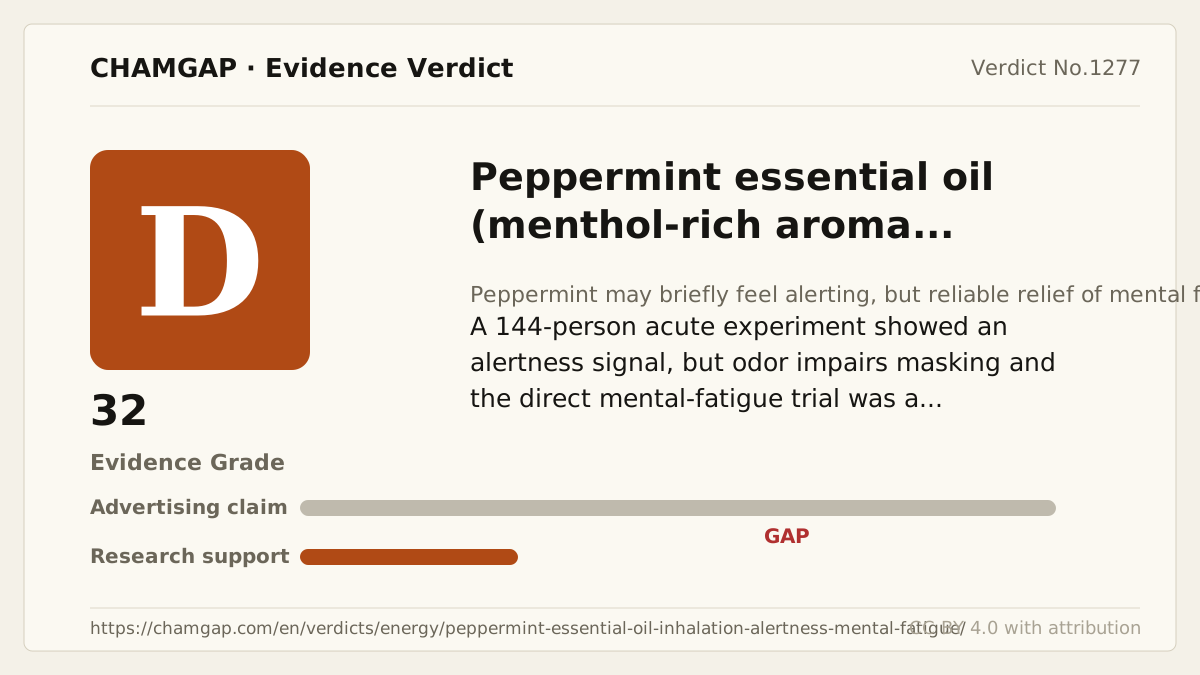
[Chamgap] Peppermint essential oil x short-term alertness and relief of mental fatigue through aroma inhalation — Evidence Grade D·32. 5 cited sources checked. Source: https://chamgap.com/en/verdicts/energy/peppermint-essential-oil-inhalation-alertness-mental-fatigue/ · CC BY 4.0CC BY 4.0 — free to use with attribution; do not distort grades, numbers, or verdict meaning.
What this document does and does not do
Chamgap is an information source. It reports what research has and has not confirmed; it does not tell readers what to take or buy. That decision belongs to readers and, when needed, medical or legal professionals. This verdict reflects literature available up to the search date and may change as new research appears. Nothing here is medical advice.