
Palliative oxygen,
does it really help with Relief of refractory dyspnea in patients without hypoxemia?
research showsPalliative oxygen is rated D for refractory dyspnea without hypoxemia. Abernethy randomized 239 participants to oxygen, 120, or room air, 119, and the longitudinal intention-to-treat analysis used all 239 randomized participants with baseline data; 211 completed day 7. Both groups improved, but oxygen provided no additional benefit, with morning change of -0.9 versus -0.7, P=.504. Uronis identified five trials but could pool only four trials and 134 participants because one dataset was incompatible; SMD was -0.09 (95% CI -0.22 to 0.04), P=.16. Repeated null results are established, but no between-group MCID is established, so the F precision requirement is not met.
ads claimMedical oxygen truly raises the oxygen fraction of inspired gas. Whether it relieves subjective breathlessness more than room-air flow in patients who are not hypoxemic is a separate claim, repeatedly refuted in controlled trials.
Useful facts when choosing a product
- verdict 1303, which is B with 78 points, concerns mortality reduction from long-term home oxygen in severe hypoxemic COPD, the opposite target population. This verdict does not reject oxygen therapy as a whole.
- verdict 1749, which is F with 8 points, concerns prophylactic oxygen in nonhypoxemic acute stroke; verdict 1780, which is D with 20 points, concerns routine oxygen in nonhypoxemic myocardial infarction. Their purposes and endpoints differ.
Chamgap Semantic Classification Code
Candidate index · review held
UNK.palliative-oxygen.intranasal.refractory-dyspnea-without-hypoxemia.relieve.UNKUnknown > Palliative oxygen > Intranasal > refractory dyspnea without hypoxemia > Symptom-relief claim > Unknown
An automated migration candidate, not an issued permanent code; exact claim scope remains under review. This machine-generated migration candidate helps retrieval but is not a permanent assignment. The original verdict ID and URL remain authoritative.
What the research actually shows
Abernethy and colleagues randomized 239 people with life-limiting illness, refractory dyspnea, and PaO2 above 7.3 kPa to oxygen or room air. The longitudinal intention-to-treat analysis used all 239 randomized participants with baseline data; 211 completed day 7. Morning NRS change was -0.9 with oxygen (95% CI -1.3 to -0.5) and -0.7 with air (-1.2 to -0.2), P=.504, and evening results also did not differ. Uronis identified five trials but excluded one from pooling because of incompatible data, giving four trials and 134 participants with SMD -0.09 (95% CI -0.22 to 0.04), P=.16. Abernethy's one-point responder analysis was post hoc, and Uronis only discussed one point as commonly considered meaningful. One NRS point is a within-person change threshold; no between-group MCID is established.
Why this is classified as D (30)
Repeated null results are established, but without an established between-group MCID the confidence interval cannot be said to exclude meaningful benefit; therefore the grade is D rather than F. P, RX, I2, E0, B1, and C0 give D with 30 points.
Counterpoint. Nasal room-air flow itself may relieve symptoms, while genuine hypoxemia remains a separate indication for oxygen.
Rejudgment record. Cross-check applied — Retained RX for repeated same-indication null results but changed precision to C0 because no between-group MCID is established
| Endpoint | P | Symptom or function itself is the target - including patient reports and performance tests |
| Replication | RX | Repeatedly refuted in the same indication |
| Independence | I2 | Decisive evidence is publicly or non-profit funded |
| Effect size | E0 | Null |
| Precision | C0 | The confidence interval leaves room for benefit |
Stored derived and displayed grades match; this is not a current recalculation or validity check (D).
Sub-claim grades by effect
This ingredient is marketed for several effects. A single overall grade blends strong and weak claims together, so each effect is graded separately here. The overall grade reflects the strongest disconfirming or core claim.
| Effect (sub-claim) | Grade | Basis |
|---|---|---|
| Morning relief of refractory dyspnea without hypoxemia | D | Oxygen did not differ from air, but no between-group MCID is established. |
| Evening relief of refractory dyspnea without hypoxemia | D | The coprimary endpoint was null, but precise exclusion is not established. |
| Relief of dyspnea in nonhypoxemic patients with cancer | D | Four pooled trials with 134 participants were null, but no between-group MCID is established. |
Cross-check — AI research and Codex final gate
Evidence Table
| Study | Design | Sample | Funding | Endpoint | Result | Weight |
|---|---|---|---|---|---|---|
| Abernethy AP et al. 2010 | Multicenter double-blind randomized oxygen-versus-room-air controlled trial | All 239 randomized (120/119) entered longitudinal intention-to-treat analysis; 211 (112/99) completed day 7 | Public and nonprofit funding including United States NIH, Australian government, and Flinders University | Coprimary daily morning and evening 0-to-10 dyspnea NRS | Both groups improved, but morning change was -0.9 versus -0.7, P=.504; no added oxygen effect and primary endpoint failed. | Pivotal confirmatory air-controlled trial |
| Uronis HE et al. 2008 | Systematic review and individual-patient-data meta-analysis | Five trials identified; four trials and 134 participants pooled after one incompatible dataset was excluded | Academic Duke and Flinders collaboration; no manufacturer-only sponsorship | Patient-reported dyspnea | Null at SMD -0.09 (95% CI -0.22 to 0.04), P=.16; no established between-group MCID. | Same-indication repeated null effect with uncertain precise exclusion |
Receipt — 2 References
All 2 cited sources were verified for existence at the original page (as of 2026-07-24).
Final verification and publication gate: Codex · Evidence date: 2026-07-24 · Corrections: none
Cite this verdict
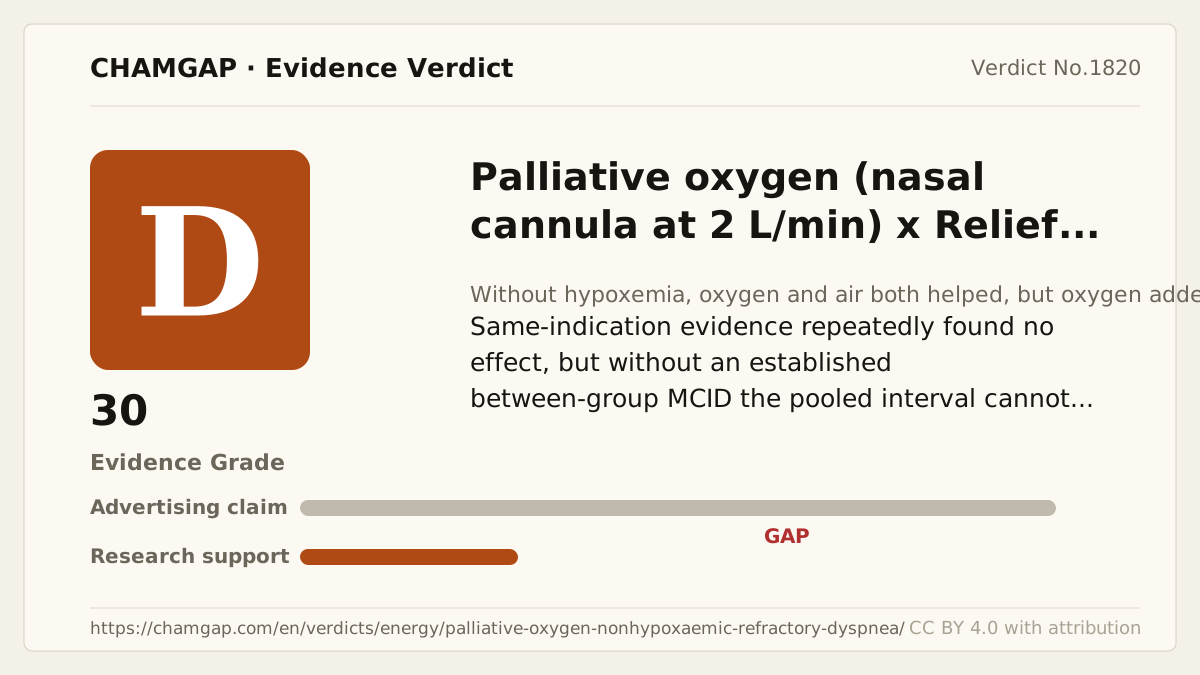
[Chamgap] Palliative oxygen x refractory dyspnea without hypoxemia — Evidence Grade D·30. 2 cited sources checked. Source: https://chamgap.com/en/verdicts/energy/palliative-oxygen-nonhypoxaemic-refractory-dyspnea/ · CC BY 4.0CC BY 4.0 — free to use with attribution; do not distort grades, numbers, or verdict meaning.
What this document does and does not do
Chamgap is an information source. It reports what research has and has not confirmed; it does not tell readers what to take or buy. That decision belongs to readers and, when needed, medical or legal professionals. This verdict reflects literature available up to the search date and may change as new research appears. Nothing here is medical advice.