
Oral methylene blue,
does it really help with Improved mental energy and focus through activation of brain mitochondria?
research showsOral methylene blue for mental energy and focus is rated D because evidence consists of a tiny human study and conflicting surrogate findings. In a single-dose randomized double-blind trial of 26 healthy adults, 280 mg oral methylene blue increased correct memory-retrieval responses by 7% and altered task fMRI signals, but no replicated trial established behavioral sustained attention or everyday mental energy. A separate intravenous study in eight healthy adults found reductions rather than increases in cerebral blood flow and oxygen metabolism, failing to support the brain-energy biomarker hypothesis. In vitro mitochondrial mechanisms are not clinical focus or energy outcomes, and self-dosing carries serotonin-syndrome and G6PD-related hemolysis risks.
ads claimBiohacking marketing converts in vitro electron-transport and mitochondrial hormesis hypotheses into immediate brain energy, focus, and productivity. The actual healthy-person oral evidence is one 26-person single-dose memory experiment and does not establish everyday mental energy or durable attention.
Useful facts when choosing a product
- Methylene blue is a medicine for indications such as methemoglobinemia, but oral nootropic or focus enhancement is not an approved indication. Industrial and aquarium products are not pharmaceutical quality for human ingestion.
- Methylene blue is a potent reversible MAO-A inhibitor. Combining it with SSRIs, SNRIs, MAOIs, certain opioids, dextromethorphan, or other serotonergic drugs can cause fatal serotonin syndrome.
- It should be avoided in G6PD deficiency because of hemolytic anemia and paradoxical methemoglobinemia risk. Pregnancy, kidney disease, and other conditions also require clinician assessment.
- Urine, stool, and the tongue can turn blue-green, and nausea, abdominal pain, dizziness, or headache can occur. Concentration and purity errors mean a drop count from an online product is not a safe dose measure.
Chamgap Semantic Classification Code
Candidate index · review held
UNK.methylene-blue.oral.mental-energy-and-focus-through-activation-of-brain-mitochondria.improve.placeboUnknown > methylene blue > Oral > mental energy and focus through activation of brain mitochondria > Improvement claim > Placebo
An automated migration candidate, not an issued permanent code; exact claim scope remains under review. This machine-generated migration candidate helps retrieval but is not a permanent assignment. The original verdict ID and URL remain authoritative.
What the research actually shows
Rodriguez 2016 gave a single 280-mg oral dose of USP methylene blue or placebo to 26 healthy adults and measured fMRI and performance during psychomotor-vigilance and delayed-match-to-sample memory tasks. Task-related activation and correct memory retrieval increased by 7%, but the sample was small, no replication or long-term follow-up existed, and subjective mental energy was not established. Singh 2023 used a randomized crossover in eight healthy women receiving placebo and intravenous methylene blue at 0.5 and 1 mg/kg, with quantitative MRI of cerebral blood flow, oxygen extraction, and oxygen metabolism. Both doses lowered cerebral blood flow by about 8%, and oxygen metabolism fell dose dependently, contrary to the prespecified energy-increase hypothesis.
Why this is classified as D (27)
Healthy-person oral efficacy is limited to a 7% memory-retrieval signal and fMRI surrogates in a 26-person single-dose study, with no replicated clinical evidence for everyday mental energy or focus. An eight-person intravenous study did not support increased cerebral blood flow or oxygen metabolism. Tiny, unreplicated, surrogate-heavy, mechanistically dependent evidence gives D with 27 points. Serotonin syndrome, G6PD-related hemolysis, and product purity are separate safety warnings.
Counterpoint. When methylene blue is medically indicated, clinician oversight of indication, product, dose, and interactions is essential. Poor focus or fatigue should first prompt assessment of sleep, depression or anxiety, anemia, thyroid disease, medicines, and other causes.
Rejudgment record. New verdict — Accepted a 7% memory-retrieval signal and fMRI surrogates in a 26-person single-dose oral trial, but applied no confirmatory sustained-attention or mental-energy outcome, no replication or long-term data, and failure of the energy-increase hypothesis in an eight-person healthy intravenous study showing reduced cerebral blood flow and oxygen metabolism
Sub-claim grades by effect
This ingredient is marketed for several effects. A single overall grade blends strong and weak claims together, so each effect is graded separately here. The overall grade reflects the strongest disconfirming or core claim.
| Effect (sub-claim) | Grade | Basis |
|---|---|---|
| Improved mental energy and focus | D | Only a small single-dose memory-task signal in 26 people exists, with no replicated direct trial of everyday focus or energy. |
| Activation of brain mitochondrial or energy surrogates | ? | No oral healthy-human efficacy study directly measured mitochondrial function, and intravenous neuroimaging was contrary to the hypothesis. |
| Acute memory-retrieval enhancement | D | A 7% signal appeared in one 26-person single-dose trial without independent replication. |
Cross-check — AI research and Codex final gate
Evidence Table
| Study | Design | Sample | Funding | Endpoint | Result | Weight |
|---|---|---|---|---|---|---|
| Rodriguez P et al. 2016 | Prospective randomized double-blind placebo-controlled single-dose fMRI trial | 26 healthy adults | See the article funding statement; no product-company sponsorship was identified | Psychomotor vigilance and short-term memory performance with task fMRI activation | Correct memory retrieval increased by 7% with altered task activation, but everyday mental energy and behavioral sustained-attention efficacy were not confirmed. | Only direct exploratory oral signal with a tiny sample |
| Singh N et al. 2023 | Randomized single-blind placebo-controlled crossover quantitative-neuroimaging study in healthy adults | Eight healthy women | See the article funding statement; no product-company sponsorship was identified | Cerebral blood flow, oxygen extraction fraction, and cerebral oxygen metabolic rate | After intravenous 0.5 and 1 mg/kg, cerebral blood flow fell about 8% and oxygen metabolism fell 7.9% to 11.8%, opposite the energy-increase hypothesis. | Contrary mechanistic surrogate evidence with route indirectness |
Receipt — 4 References
All 4 cited sources were verified for existence at the original page (as of 2026-07-19).
Final verification and publication gate: Codex · Evidence date: 2026-07-19 · Corrections: none
Cite this verdict
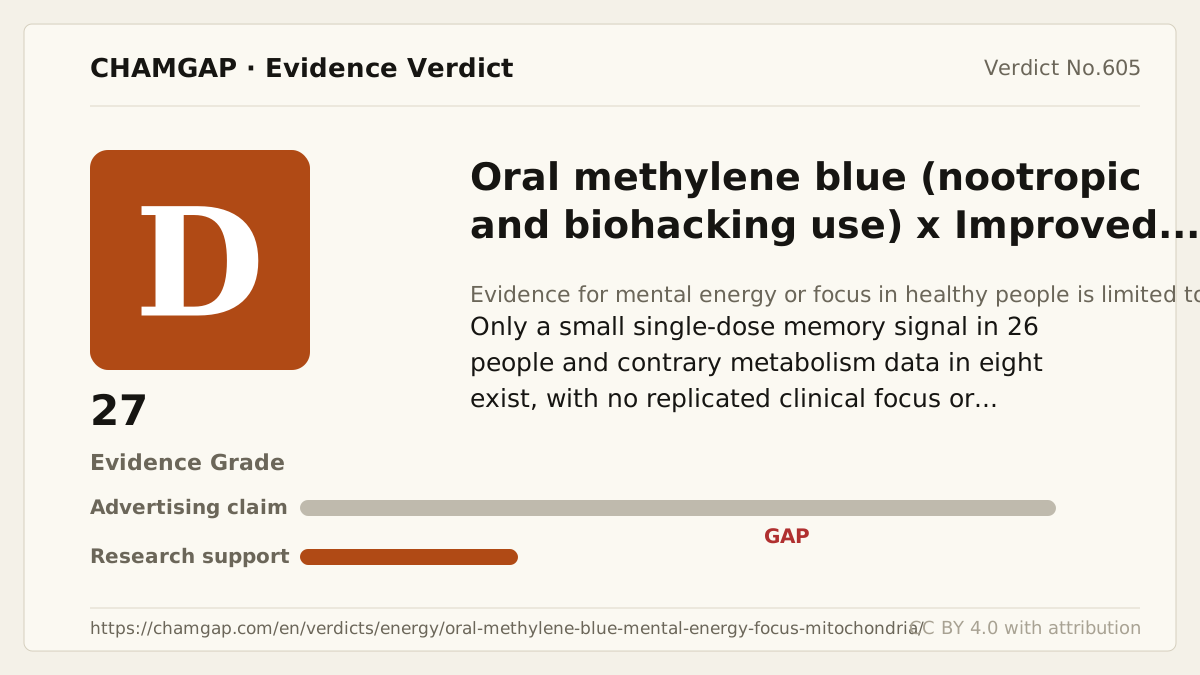
[Chamgap] Oral methylene blue x brain mitochondrial activation, mental energy, and focus — Evidence Grade D·27. 4 cited sources checked. Source: https://chamgap.com/en/verdicts/energy/oral-methylene-blue-mental-energy-focus-mitochondria/ · CC BY 4.0CC BY 4.0 — free to use with attribution; do not distort grades, numbers, or verdict meaning.
What this document does and does not do
Chamgap is an information source. It reports what research has and has not confirmed; it does not tell readers what to take or buy. That decision belongs to readers and, when needed, medical or legal professionals. This verdict reflects literature available up to the search date and may change as new research appears. Nothing here is medical advice.