
Nirmatrelvir-ritonavir,
does it really help with Reduced overall symptom burden, including fatigue and brain fog, in established long COVID?
research showsA fifteen-day Paxlovid regimen is rated D because it did not reduce overall symptom burden in established long COVID. STOP-PASC randomized 155 adults with moderate-to-severe postacute sequelae lasting at least three months, but the pooled week-10 primary outcome covering six core symptoms, including fatigue and brain fog, did not differ from placebo. PROMIS between-group coefficients were 0.38 for fatigue (95% CI -2.40 to 3.15; P=.79), 0.03 for cognitive function (-3.21 to 3.28; P=.98), and 0.57 for physical function (-1.96 to 3.10; P=.66). A separate 100-participant PAX LC trial also missed its day-28 PROMIS physical-health primary outcome, with an adjusted mean difference of -0.55 points (95% CI -2.32 to 1.21; P=.54). This claim is entirely different from the five-day indication for acute COVID-19 in high-risk outpatients. Repeated null pivotal human evidence supports D with 27 points.
ads claimAnecdotes may claim that Paxlovid clears a viral reservoir and cures fatigue or brain fog, or they may transfer its acute antiviral efficacy into a long-COVID treatment claim. Current randomized evidence does not support improvement in broad symptoms, fatigue, or cognition in established long COVID.
Useful facts when choosing a product
- The approved acute COVID-19 Paxlovid course is generally five days; a fifteen-day long-COVID regimen is not an established indication.
- Ritonavir strongly inhibits CYP3A and can cause serious interactions with antiarrhythmics, immunosuppressants, anticonvulsants, and some statins.
- Dysgeusia and diarrhea are common, dosing depends on kidney function, and product guidance is required for severe kidney or liver disease.
- People with long-COVID symptoms should not extend leftover acute-treatment tablets on their own; medication-interaction review and clinical evaluation are necessary.
Chamgap Semantic Classification Code
Candidate index · review held
UNK.nirmatrelvir-ritonavir.oral.overall-symptom-burden-including-fatigue-and-brain-fog-in-established-long-covid.reduce.placeboUnknown > Nirmatrelvir-ritonavir > Oral > overall symptom burden, including fatigue and brain fog, in established long COVID > Reduction claim > Placebo
An automated migration candidate, not an issued permanent code; exact claim scope remains under review. This machine-generated migration candidate helps retrieval but is not a permanent assignment. The original verdict ID and URL remain authoritative.
What the research actually shows
STOP-PASC assigned 155 adults with moderate-to-severe postacute sequelae a mean 17.5 months after infection in a 2:1 ratio to nirmatrelvir 300 mg plus ritonavir 100 mg or placebo plus ritonavir, twice daily for fifteen days. The pooled week-10 primary outcome across six core symptoms was null, as were PROMIS fatigue, cognitive function, physical function, dyspnea, and global ratings. A post hoc signal for the proportion of weeks with mild or no fatigue and brain fog favored placebo, but it does not establish consistent harm. The separate PAX LC trial assigned 100 participants equally to the same fifteen-day regimen or placebo plus ritonavir and found a null day-28 PROMIS-29 physical-health difference of -0.55 points. Both trials tested treatment of established long COVID, not acute COVID-19.
Why this is classified as D (27)
STOP-PASC missed its pooled core-symptom primary outcome and showed no benefit in PROMIS fatigue, cognition, or physical function. The independent PAX LC trial also missed its PROMIS physical-health primary outcome. Repeated null pivotal human evidence for treatment of established long COVID supports D with 27 points.
Counterpoint. This verdict does not negate the approved five-day use for acute COVID-19 in eligible high-risk patients. Established long COVID requires symptom-specific evaluation and individualized rehabilitation, sleep, autonomic, respiratory, or other management.
Rejudgment record. New verdict — Rule ② assigns D when an independent large randomized trial is null. STOP-PASC missed its pooled six-core-symptom primary outcome and PROMIS fatigue, cognition, and physical-function outcomes, while the separate PAX LC trial also missed its PROMIS physical-health primary outcome; D therefore applies specifically to treatment of established long COVID, distinct from the acute COVID-19 indication
Sub-claim grades by effect
This ingredient is marketed for several effects. A single overall grade blends strong and weak claims together, so each effect is graded separately here. The overall grade reflects the strongest disconfirming or core claim.
| Effect (sub-claim) | Grade | Basis |
|---|---|---|
| Reduced overall symptom burden in established long COVID | D | The pooled six-core-symptom primary outcome in STOP-PASC and the physical-health primary outcome in PAX LC were both null. |
| Reduced fatigue in established long COVID | D | The STOP-PASC between-group PROMIS fatigue coefficient was 0.38 (95% CI -2.40 to 3.15; P=.79), which was null. |
| Improved brain fog in established long COVID | D | The STOP-PASC between-group PROMIS cognitive-function coefficient was 0.03 (95% CI -3.21 to 3.28; P=.98), which was null. |
Cross-check — AI research and Codex final gate
Evidence Table
| Study | Design | Sample | Funding | Endpoint | Result | Weight |
|---|---|---|---|---|---|---|
| Geng LN et al. STOP-PASC. 2024 | Fifteen-week randomized double-blind placebo-plus-ritonavir-controlled trial | 155 participants; 102 assigned to nirmatrelvir-ritonavir and 53 to placebo-ritonavir | Pfizer investigator-initiated research grant, Stanford Innovative Medicines Accelerator, and other support | Week-10 pooled severity primary outcome across six core symptoms and PROMIS fatigue, cognition, and physical function | The pooled primary outcome did not differ from placebo. PROMIS coefficients were also null for fatigue at 0.38 (P=.79), cognitive function at 0.03 (P=.98), and physical function at 0.57 (P=.66). | Key direct null randomized trial |
| Sawano M et al. PAX LC. 2025 | Decentralized randomized double-blind placebo-plus-ritonavir-controlled phase 2 trial | 100 participants; 49 assigned to nirmatrelvir-ritonavir and 51 to placebo-ritonavir | Funded by Pfizer, Fred Cohen, and Carolyn Klebanoff; Pfizer employees were coauthors | Change in the PROMIS-29 Physical Health Summary Score at day 28 | The adjusted mean difference was -0.55 points (95% CI -2.32 to 1.21; P=.54), which was not significant. | Independent replication of a null randomized result |
Receipt — 2 References
All 2 cited sources were verified for existence at the original page (as of 2026-07-24).
Final verification and publication gate: Codex · Evidence date: 2026-07-24 · Corrections: none
Cite this verdict
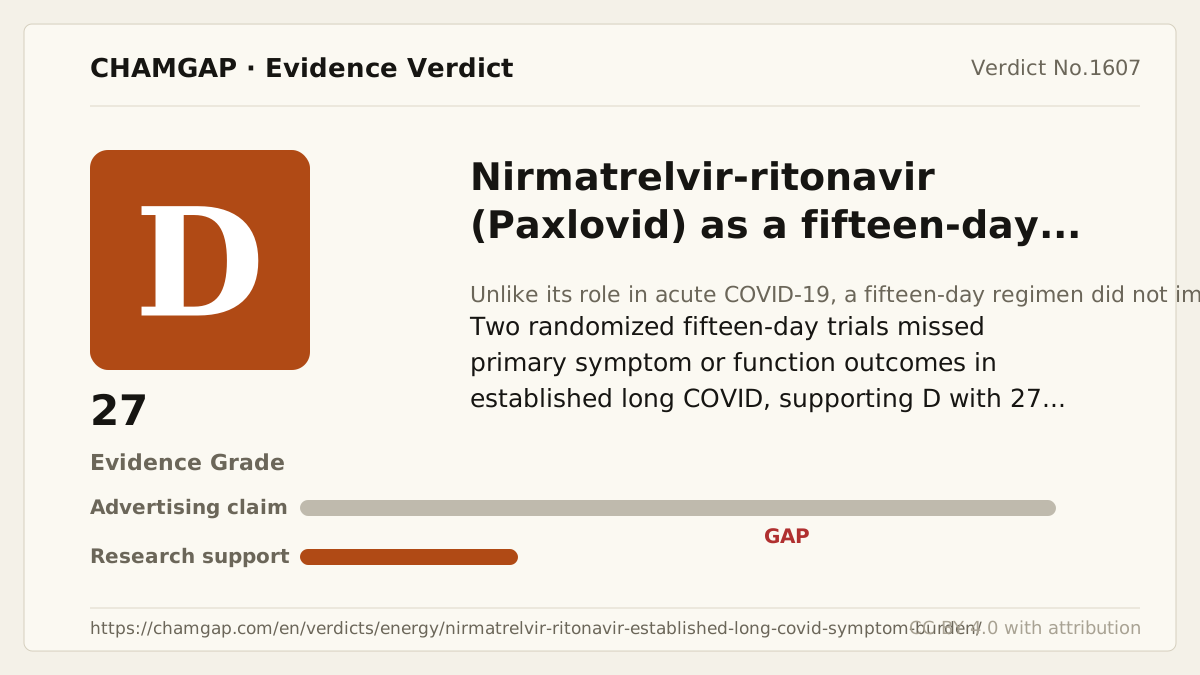
[Chamgap] Nirmatrelvir-ritonavir x reduced symptom burden in established long COVID — Evidence Grade D·27. 2 cited sources checked. Source: https://chamgap.com/en/verdicts/energy/nirmatrelvir-ritonavir-established-long-covid-symptom-burden/ · CC BY 4.0CC BY 4.0 — free to use with attribution; do not distort grades, numbers, or verdict meaning.
What this document does and does not do
Chamgap is an information source. It reports what research has and has not confirmed; it does not tell readers what to take or buy. That decision belongs to readers and, when needed, medical or legal professionals. This verdict reflects literature available up to the search date and may change as new research appears. Nothing here is medical advice.