
Mushroom coffee,
does it really help with More sustained everyday energy and less fatigue than regular coffee containing the same amount of caffeine?
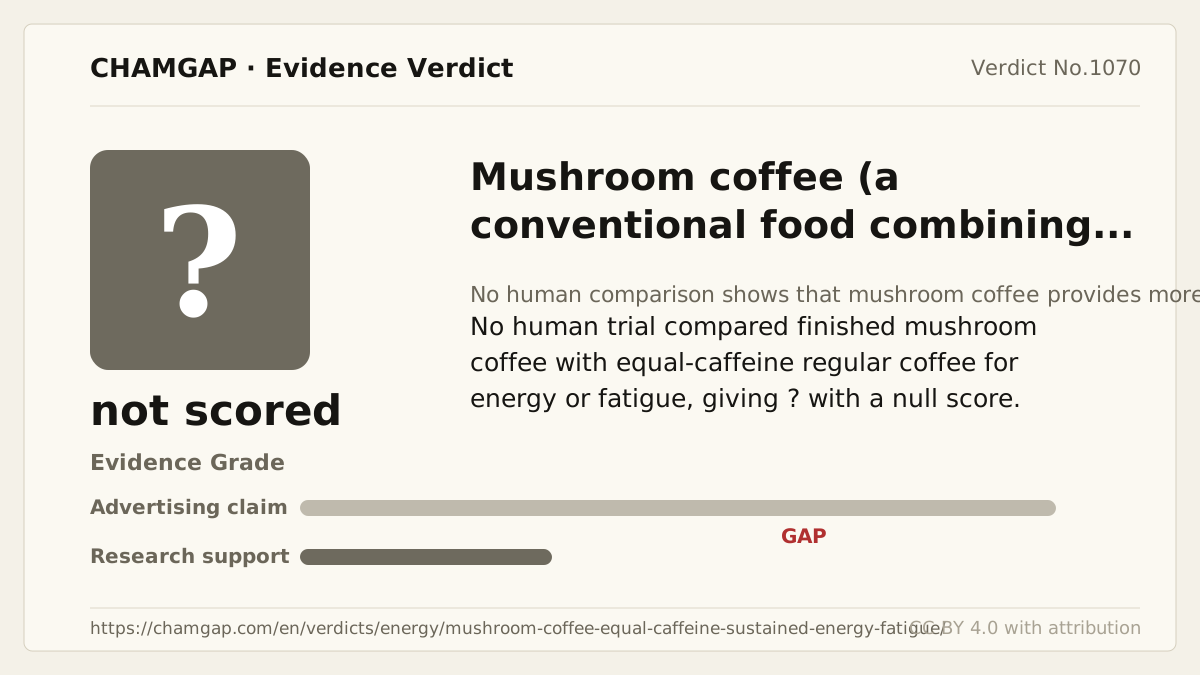
research showsThe claim that mushroom coffee provides more sustained everyday energy and less fatigue than regular coffee with the same caffeine content is rated ?. Through July 21, 2026, targeted searches of PubMed and trial registries using product, ingredient, coffee, caffeine, energy, and fatigue terms identified no human efficacy trial directly comparing finished mushroom coffee with equal-caffeine regular coffee. A 2026 trial of a mushroom-blend capsule in 50 participants reported lower fatigue, but it was neither coffee nor a caffeine-matched comparison and included authors affiliated with the product developer. A 2023 trial of a single lion's-mane capsule in 41 participants studied cognition and stress, not everyday energy, fatigue, or superiority of a finished coffee. Indirect ingredient research cannot establish finished-product comparative efficacy, so the absence-of-human-efficacy-literature grade is ?, with no score. Excess caffeine and mushroom allergy remain separate safety issues.
ads claimMarketing converts fewer jitters from a lower caffeine dose or personal testimonials into a claim that mushrooms slow caffeine release and provide all-day energy. Without an equal-caffeine control, differences caused by caffeine dose, sugar, creamer, L-theanine, and expectation cannot be separated from a mushroom effect.
Useful facts when choosing a product
- Mushroom coffees vary widely in coffee and caffeine content, mushroom species, fruiting body versus mycelium, extraction ratio, measured beta-glucan, and other additives, so they are not one standardized product.
- A lower-caffeine product may cause fewer jitters or afternoon symptoms than ordinary coffee, but without equal caffeine that difference cannot be attributed to an added functional-mushroom effect.
- Products containing sugar, creamer, collagen, L-theanine, or several mushrooms are complex foods, making the source of a perceived effect or adverse event difficult to isolate.
- People with caffeine sensitivity, pregnancy, a sleep disorder, or an arrhythmia should check total caffeine, and anyone developing mushroom-related allergy, gastrointestinal symptoms, or rash should stop use.
Chamgap Semantic Classification Code
Candidate index · review held
F.mushroom-coffee.food.more-sustained-everyday-energy-and-less-fatigue-than-regular-coffee-containing-the-same-amount-of-caffeine.assess.placeboFoods and beverages > Mushroom coffee > Food consumption > More sustained everyday energy and less fatigue than regular coffee containing the same amount of caffeine > Association or change assessment > Placebo
An automated migration candidate, not an issued permanent code; exact claim scope remains under review. This machine-generated migration candidate helps retrieval but is not a permanent assignment. The original verdict ID and URL remain authoritative.
What the research actually shows
Hisamuddin and colleagues randomized 50 participants to the branded mushroom and beta-glucan capsule Restake or placebo for 12 weeks and reported reductions in general, physical, and mental fatigue on the Multidimensional Fatigue Inventory. Authors affiliated with product-development companies were included, the intervention was not a beverage or coffee, and there was no equal-caffeine control. Docherty and colleagues gave 1.8 g of lion's mane or placebo to 41 healthy young adults for 28 days and reported faster acute Stroop performance and a trend toward less stress, but most cognitive findings were limited or null and neither fatigue nor sustained energy was assessed. The mushroom-coffee paper identified in PubMed itself was a 2026 case report of shiitake dermatitis, not an efficacy trial. Ingredient and other-formulation studies therefore exist, but direct human literature for the finished-product comparative claim does not.
Why this is classified as ?
Human studies exist for individual mushrooms and a specific capsule blend, but no human efficacy literature was identified that compares finished mushroom coffee with regular coffee matched for caffeine and directly measures sustained everyday energy or fatigue. Indirect studies with different formulations, comparators, and outcomes and the alerting effect of caffeine were not substituted for the claim. The absence-of-human-efficacy-literature rule gives ? with a null score. Caffeine and allergy risks remain independent safety issues.
Counterpoint. A person may prefer the flavor or lower caffeine, but preference does not establish more sustained energy than equal-caffeine coffee. A valid test would randomize participants in a crossover design to a standardized finished product and regular coffee matched for taste, calories, and caffeine.
Rejudgment record. New verdict — Applied ? for absence of human efficacy literature because studies of individual mushrooms and a branded mushroom-blend capsule were identified, but no trial compared finished mushroom coffee with regular coffee matched for caffeine and directly assessed sustained everyday energy or fatigue; formulation, comparator, and endpoint indirectness were excluded
Sub-claim grades by effect
This ingredient is marketed for several effects. A single overall grade blends strong and weak claims together, so each effect is graded separately here. The overall grade reflects the strongest disconfirming or core claim.
| Effect (sub-claim) | Grade | Basis |
|---|---|---|
| Sustained improvement in everyday energy from mushroom coffee | ? | No controlled human efficacy trial directly measuring sustained energy with a finished mushroom-coffee product was identified. |
| Improvement in everyday fatigue from mushroom coffee | ? | A positive fatigue trial of a mushroom-blend capsule exists, but it did not use coffee or a caffeine comparator. |
| Superior sustained energy and fatigue improvement versus regular coffee with the same caffeine content | ? | No direct finished-product trial matched for caffeine, taste, and calories was identified. |
Cross-check — AI research and Codex final gate
Evidence Table
| Study | Design | Sample | Funding | Endpoint | Result | Weight |
|---|---|---|---|---|---|---|
| Targeted PubMed and trial-registry search, 2026 | Search for human efficacy literature using a finished product and equal-caffeine comparator | Zero directly eligible trials | Not applicable | Sustained everyday energy, validated fatigue measures, and difference from regular coffee | No human efficacy trial directly comparing finished mushroom coffee with equal-caffeine regular coffee was identified. | Core evidence gap for the verdict |
| Hisamuddin ASD et al. 2026 | Randomized double-blind placebo-controlled parallel-group trial | 50 adults | Included authors affiliated with product developers Nexus Wise and Prima Nexus | Stress, MFI and VAS fatigue, sleep, and serum biomarkers over 12 weeks | The branded mushroom-blend capsule Restake improved selected fatigue measures, but it was not coffee or a beverage and had no caffeine comparator. | Positive indirect evidence with formulation and comparator mismatch |
| Docherty S et al. 2023 | Randomized double-blind placebo-controlled parallel-group pilot trial | 41 healthy adults aged 18 to 45 years | Sempera Organics supplied the study product only and reportedly had no role in design, analysis, or publication | Acute and 28-day cognition, stress, and mood outcomes with 1.8 g of lion's mane | Selected Stroop speed and a stress trend were observed, but fatigue, sustained energy, and finished mushroom coffee were not evaluated. | Indirect single-mushroom evidence with endpoint mismatch |
Receipt — 3 References
All 3 cited sources were verified for existence at the original page (as of 2026-07-21).
Final verification and publication gate: Codex · Evidence date: 2026-07-21 · Corrections: none
Cite this verdict
[Chamgap] Mushroom coffee x more sustained energy and less fatigue than equal-caffeine coffee — Evidence Grade ?. 3 cited sources checked. Source: https://chamgap.com/en/verdicts/energy/mushroom-coffee-equal-caffeine-sustained-energy-fatigue/ · CC BY 4.0CC BY 4.0 — free to use with attribution; do not distort grades, numbers, or verdict meaning.
What this document does and does not do
Chamgap is an information source. It reports what research has and has not confirmed; it does not tell readers what to take or buy. That decision belongs to readers and, when needed, medical or legal professionals. This verdict reflects literature available up to the search date and may change as new research appears. Nothing here is medical advice.