
Modafinil,
does it really help with Reduction of cancer-related fatigue across patients with cancer?
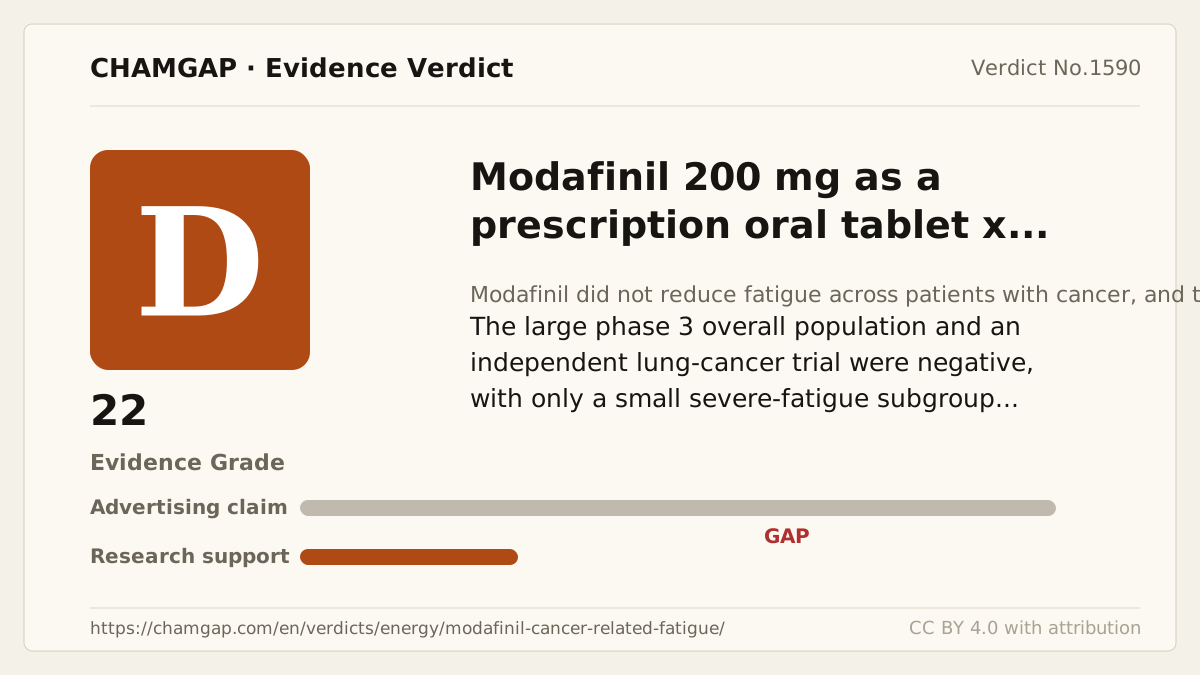
research showsThe claim that modafinil 200 mg reduces cancer-related fatigue across patients with cancer is rated D. A phase 3 trial enrolled and assessed 877 patients receiving chemotherapy; 867 who reported fatigue were randomized, with 431 assigned to modafinil and 436 to placebo, and 631 had evaluable data. Fatigue was not significantly lower than with placebo in the evaluable overall population (P=0.08). A subgroup with severe baseline fatigue showed a 0.44-point lower score on the 0-to-10 Brief Fatigue Inventory than placebo (P=0.033), but this was below the approximately 1-point MCID established in subsequent research and was not a prospectively confirmed overall effect. An independent lung-cancer trial was also negative: the 28-day FACIT-F change was 5.29 versus 5.09, a between-group difference of 0.20 points (95% CI -3.56 to 3.97). A 2018 meta-analysis found modafinil or armodafinil ineffective, and the 2024 ASCO-SIO guideline recommends against wakefulness agents for cancer-related fatigue. Repeated null results in the overall populations with only a small subgroup signal support D with 22 points.
ads claimMarketing and off-label prescribing discussions can merge wakefulness, concentration, and restored energy into a general treatment effect on cancer-related fatigue. Modafinil is approved to improve wakefulness in narcolepsy, obstructive-sleep-apnea-associated excessive sleepiness, and shift-work sleep disorder, not for cancer-related fatigue. A better sleepiness score does not establish improvement in the full syndrome of cancer-related fatigue driven by pain, inflammation, anemia, sleep disruption, depression, and treatment burden.
Useful facts when choosing a product
- The representative cancer-fatigue trials used modafinil 200 mg by mouth once each morning, and use for this purpose is off label. Prescribing and monitoring should be handled by a clinician familiar with the cancer, anticancer treatment, and concurrent medicines.
- Evaluation of cancer-related fatigue should first address anemia, infection, pain, depression or anxiety, thyroid disease, nutrition, sleep disorders, and medication adverse effects. Adding a wakefulness agent does not replace evaluation of causes or evidence-based exercise and cognitive behavioral approaches.
- Common adverse effects include headache, nausea, anxiety or nervousness, insomnia, dizziness, and dyspepsia. Increased blood pressure or heart rate, chest pain, and psychiatric symptoms such as mania, hallucinations, or aggression also require caution.
- Rare serious rash, including Stevens-Johnson syndrome, and multiorgan hypersensitivity have been reported, so a new rash requires urgent medical assessment. Modafinil is a United States Schedule IV controlled substance, and misuse, dependence potential, and drug interactions should be reviewed.
Chamgap Semantic Classification Code
Candidate index · review held
UNK.modafinil.oral.cancer-related-fatigue-across-patients-with-cancer.reduce.placeboUnknown > Modafinil > Oral > cancer-related fatigue across patients with cancer > Reduction claim > Placebo
An automated migration candidate, not an issued permanent code; exact claim scope remains under review. This machine-generated migration candidate helps retrieval but is not a permanent assignment. The original verdict ID and URL remain authoritative.
What the research actually shows
Jean-Pierre 2010 enrolled and assessed 877 patients with multiple cancer types receiving chemotherapy. Of the 867 who reported fatigue, 431 were randomized to modafinil 200 mg and 436 to placebo; 631 had evaluable data. The overall fatigue effect was nonsignificant at P=0.08, whereas the treatment-by-baseline-fatigue interaction had P=0.017 and the severe-fatigue subgroup had a mean Brief Fatigue Inventory difference of -0.44 points (P=0.033). This was below the approximately 1-point BFI MCID established in subsequent research. Daytime sleepiness improved on the Epworth scale, a distinct symptom from fatigue. The trial received NCI support, and Cephalon provided active drug and placebo; neither party was reported to have participated in the design, conduct, analysis, or manuscript. Spathis 2014 randomized 208 patients with fatigued lung cancer, and the modified intention-to-treat analysis of 160 found FACIT-F improvements of 5.29 versus 5.09, a null 0.20-point difference. The Tomlinson 2018 meta-analysis concluded that modafinil or armodafinil was not effective for fatigue in cancer or transplantation. The Bower 2024 ASCO-SIO guideline issued a strong recommendation with moderate certainty against modafinil or armodafinil for cancer-related fatigue during treatment.
Why this is classified as D (22)
The primary overall fatigue effect failed at P=0.08 among 631 evaluable participants in a large multi-cancer phase 3 trial, and an independent lung-cancer trial was negative with a 0.20-point FACIT-F between-group difference. The -0.44-point severe-fatigue subgroup signal was below the approximately 1-point BFI MCID and unreplicated, while meta-analysis and current guidance do not support overall efficacy. Repeated direct human null results with only a subgroup signal support D with 22 points.
Counterpoint. A specialist might consider a limited individual trial for a patient with very severe cancer-related fatigue plus excessive daytime sleepiness after correctable causes have been addressed. That is individualized judgment based on a subgroup hypothesis, not evidence for reducing fatigue across patients with cancer.
Rejudgment record. Cross-check applied — Rule ①-ⓑ states that a failed primary endpoint with only a positive subjective secondary endpoint is capped at C. Here, however, both the overall fatigue endpoint in the large multi-cancer trial and the independent lung-cancer trial were negative, and current meta-analysis and guidance do not support overall efficacy, so rule ② assigns D after a large independent randomized trial is negative. The severe-fatigue subgroup and daytime-sleepiness signals are not confirmatory effects on overall cancer-related fatigue.
Sub-claim grades by effect
This ingredient is marketed for several effects. A single overall grade blends strong and weak claims together, so each effect is graded separately here. The overall grade reflects the strongest disconfirming or core claim.
| Effect (sub-claim) | Grade | Basis |
|---|---|---|
| Reduction of cancer-related fatigue across patients with cancer with modafinil 200 mg | D | The multi-cancer phase 3 overall analysis was negative at P=0.08, and the independent lung-cancer trial was also negative with a 0.20-point FACIT-F difference. |
| Reduction of fatigue in patients with severe cancer-related fatigue at baseline | C | The -0.44-point BFI signal in one severe-fatigue subgroup was below the approximately 1-point MCID from subsequent research and has not been independently replicated. |
| Reduction of excessive daytime sleepiness in patients receiving chemotherapy | C | Epworth daytime sleepiness improved, but a wakefulness effect is distinct from improvement in multifactorial cancer-related fatigue. |
Cross-check — AI research and Codex final gate
Evidence Table
| Study | Design | Sample | Funding | Endpoint | Result | Weight |
|---|---|---|---|---|---|---|
| Jean-Pierre P et al. 2010 | Phase 3 multicenter randomized double-blind placebo-controlled trial | 877 patients receiving chemotherapy enrolled and assessed; 867 reporting fatigue randomized, with 431 assigned to modafinil and 436 to placebo; 631 had evaluable data | United States NCI support; Cephalon provided active drug and placebo and was reported not to participate in design, conduct, analysis, or the manuscript | Cancer-related fatigue on the Brief Fatigue Inventory and daytime sleepiness on the Epworth scale | The overall fatigue effect was negative at P=0.08; the severe-fatigue subgroup had a -0.44-point BFI difference (P=0.033), below the approximately 1-point MCID from subsequent research, while daytime sleepiness improved. | Key large direct trial with a negative overall result and a small subgroup signal |
| Spathis A et al. 2014 | Multicenter randomized double-blind placebo-controlled trial | 208 patients with fatigued lung cancer randomized; 160 in the modified intention-to-treat analysis | Sobell House Hospice Charity and the NCRI Lung Cancer SuPaC Research Award; noncommercial University of Oxford sponsorship | Change in FACIT-F fatigue score at 28 days | Changes were 5.29 versus 5.09, a between-group difference of 0.20 points (95% CI -3.56 to 3.97), with no benefit over placebo. | Independent cancer-specific direct negative trial |
| Tomlinson D et al. 2018 | Systematic review and meta-analysis of randomized trials | 117 pharmacologic trials and 19,819 patients with cancer or hematopoietic stem-cell transplantation | Canadian and international academic investigators under the conflicts disclosed in the article | Patient-reported fatigue severity | Modafinil or armodafinil was not found effective for reducing fatigue. | Broad pooled negative evidence |
| Bower JE et al. 2024 ASCO-SIO guideline | Clinical guideline based on systematic evidence review | 113 randomized trials in the updated search, with wakefulness-agent evidence assessed separately | American Society of Clinical Oncology and Society for Integrative Oncology | Cancer-related fatigue during treatment, after treatment, and in advanced cancer | Recommended against modafinil or armodafinil for cancer-related fatigue during treatment, with moderate certainty and a strong recommendation. | Current evidence-based recommendation against use |
Receipt — 5 References
All 5 cited sources were verified for existence at the original page (as of 2026-07-24).
Final verification and publication gate: Codex · Evidence date: 2026-07-24 · Corrections: none
Cite this verdict
[Chamgap] Modafinil x reduction of cancer-related fatigue across patients with cancer — Evidence Grade D·22. 5 cited sources checked. Source: https://chamgap.com/en/verdicts/energy/modafinil-cancer-related-fatigue/ · CC BY 4.0CC BY 4.0 — free to use with attribution; do not distort grades, numbers, or verdict meaning.
What this document does and does not do
Chamgap is an information source. It reports what research has and has not confirmed; it does not tell readers what to take or buy. That decision belongs to readers and, when needed, medical or legal professionals. This verdict reflects literature available up to the search date and may change as new research appears. Nothing here is medical advice.