
L-carnitine,
does it really help with Reduced mental fatigue in people with hypothyroidism who remain fatigued during levothyroxine treatment?
research showsL-carnitine is rated C. A randomized double-blind placebo-controlled trial in 60 levothyroxine-treated patients found a significant placebo-adjusted improvement in residual mental fatigue, so the evidence is not merely preclinical and does not belong in D. Overall Fatigue Severity Scale and physical-fatigue outcomes were null, however, and there is no independent replication, limiting the verdict to the bottom of C at 40 points. This is a mental-fatigue axis and does not replace levothyroxine verdict 923.
ads claimMarketing can turn the biochemical role of transporting fatty acids into mitochondria into a claim of proven energy restoration in thyroid patients. The clinical record is instead one small trial with a null overall-fatigue result and uncontrolled observational data.
Useful facts when choosing a product
- The only direct randomized trial used L-carnitine 990 mg twice daily, totaling 1,980 mg per day, for 12 weeks; its findings cannot automatically be transferred to other formulations or doses.
- L-carnitine does not replace deficient thyroid hormone and provides no basis for stopping levothyroxine or reducing its prescribed dose without medical direction.
- Common adverse effects include nausea, abdominal discomfort, diarrhea, and a fishy body odor. People with kidney disease, a seizure history, or multiple medicines should discuss use with a clinician.
- Gut microbes can metabolize L-carnitine through the TMAO pathway, but the extent to which supplement-related TMAO changes alter an individual's long-term cardiovascular clinical risk remains uncertain.
Chamgap Semantic Classification Code
Candidate index · review held
S.l-carnitine.UNK.mental-fatigue-with-hypothyroidism-who-remain-fatigued-during-levothyroxine-treatment.reduce.placeboSupplements and nutraceuticals > L-carnitine > Unknown > mental fatigue with hypothyroidism who remain fatigued during levothyroxine treatment > Reduction claim > Placebo
An automated migration candidate, not an issued permanent code; exact claim scope remains under review. This machine-generated migration candidate helps retrieval but is not a permanent assignment. The original verdict ID and URL remain authoritative.
What the research actually shows
An and colleagues randomized 60 levothyroxine-treated patients with a Fatigue Severity Scale score of at least 36 to L-carnitine 990 mg twice daily or placebo for 12 weeks. Mental fatigue improved between groups, but overall FSS and physical fatigue did not, and positive subgroup analyses used still smaller samples. The 2024 systematic review by Hidalgo and colleagues examined seven studies involving 455 people with persistent symptoms after biochemical normalization and concluded that risk of bias, inconsistency, and heterogeneity left no high-quality evidence. A 2024 retrospective analysis by Raij and Raij reported reduced fatigue before versus after supplementation in 40 people with hypothyroidism, but the uncontrolled design cannot exclude natural variation, regression to the mean, or concurrent care.
Why this is classified as C (40)
A directly claim-matched mental-fatigue subscale improved significantly in a 60-person randomized double-blind placebo-controlled trial, ruling out a preclinical D rating. Overall Fatigue Severity Scale and physical-fatigue outcomes were null, with important exploratory-subgroup, single-center, and nonreplication limitations. The 2024 systematic review also found no high-quality evidence and inconsistent results, yielding C with 40 points. Gastrointestinal effects, fishy odor, and uncertain TMAO implications remain safety questions independent of efficacy.
Counterpoint. When fatigue persists despite a normalized TSH, anemia, sleep disorders, depression or anxiety, medicines, menopause, cardiopulmonary disease, and levothyroxine administration should be reviewed first. Any supplement trial should leave standard thyroid replacement intact and include a time-limited reassessment of actual benefit.
Rejudgment record. Cross-check revision — Applied the floor of C because a 60-person randomized double-blind placebo-controlled trial found significant improvement in mental fatigue, ruling out D, while null overall and physical fatigue, a single-center sample, no independent replication, and no high-quality support in the systematic review prevent a higher score
Sub-claim grades by effect
This ingredient is marketed for several effects. A single overall grade blends strong and weak claims together, so each effect is graded separately here. The overall grade reflects the strongest disconfirming or core claim.
| Effect (sub-claim) | Grade | Basis |
|---|---|---|
| Reduced residual mental fatigue during levothyroxine treatment | C | Mental fatigue improved significantly in a 60-person double-blind placebo-controlled trial, but no independent replication and a null overall-fatigue result limit it to the floor of C. |
| Reduced overall fatigue severity during levothyroxine treatment | D | The direct randomized trial found no significant between-group difference on the Fatigue Severity Scale. |
| Reduced physical fatigue during levothyroxine treatment | D | Physical fatigue did not improve significantly in the full sample, with positive findings limited to exploratory subgroups. |
Cross-check — AI research and Codex final gate
Evidence Table
| Study | Design | Sample | Funding | Endpoint | Result | Weight |
|---|---|---|---|---|---|---|
| An JH et al. 2016 | Single-center randomized double-blind placebo-controlled trial | Sixty levothyroxine-treated patients with residual fatigue; 30 L-carnitine and 30 placebo | Korea University Anam Hospital study with Ildong Pharmaceutical listed as a collaborator on ClinicalTrials.gov | Fatigue Severity Scale, physical fatigue, mental fatigue, and exploratory subgroups | After 12 weeks, overall FSS and physical fatigue did not differ significantly, while mental fatigue improved with L-carnitine. | Only direct randomized trial, but small with a null broad outcome and a positive secondary domain |
| Hidalgo J et al. 2024 | Systematic review of interventions for persistent hypothyroid symptoms | Seven studies and 455 participants | Academic author group; article disclosures apply | Fatigue, thyroid-related symptoms, general health, and quality of life | Intervention findings were inconsistent, and risk of bias and heterogeneity left no high-quality evidence for persistent symptoms. | Current independent synthesis; L-carnitine-specific evidence effectively rests on one trial |
| Raij T and Raij K. 2024 | Retrospective uncontrolled before-and-after clinical-data analysis | Forty people with hypothyroidism and fatigue and 12 with chronic fatigue syndrome | Analysis of author clinical data; article disclosures apply | Subjective fatigue and serum serotonin before and after seven weeks | Fatigue decreased and serotonin increased after supplementation, but there was no control group, randomization, or masking. | Hypothesis-generating observational evidence |
Receipt — 3 References
All 3 cited sources were verified for existence at the original page (as of 2026-07-21).
Final verification and publication gate: Codex · Evidence date: 2026-07-21 · Corrections: none
Cite this verdict
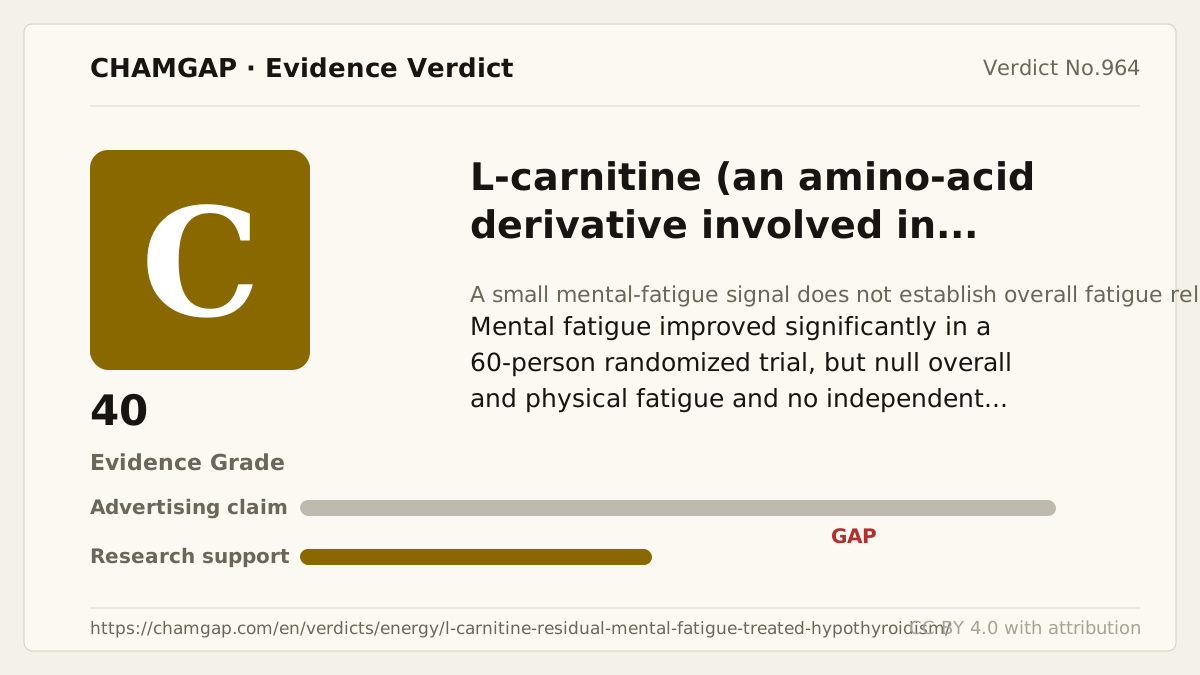
[Chamgap] L-carnitine x reduced residual mental fatigue during levothyroxine treatment — Evidence Grade C·40. 3 cited sources checked. Source: https://chamgap.com/en/verdicts/energy/l-carnitine-residual-mental-fatigue-treated-hypothyroidism/ · CC BY 4.0CC BY 4.0 — free to use with attribution; do not distort grades, numbers, or verdict meaning.
What this document does and does not do
Chamgap is an information source. It reports what research has and has not confirmed; it does not tell readers what to take or buy. That decision belongs to readers and, when needed, medical or legal professionals. This verdict reflects literature available up to the search date and may change as new research appears. Nothing here is medical advice.