
Hot-water immersion,
does it really help with Faster relief of acute pain than ice packs or other topical measures?
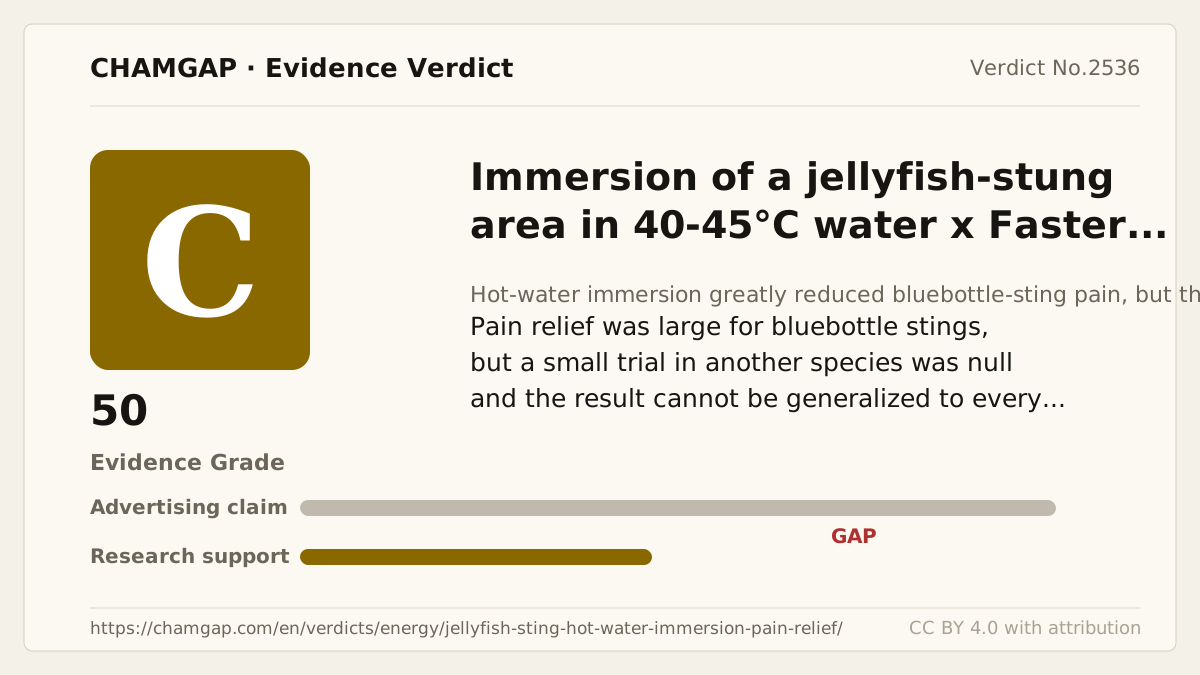
research showsThe grade is C. In a 96-participant bluebottle trial, clinically important pain improvement at 20 minutes occurred in 87% with hot water versus 33% with ice, a 54-point difference (95% CI 35-69). The sample was small and the trial stopped after an efficacy interim analysis, while a 42-participant major box-jellyfish trial found 65% versus 56%, difference 9 points (95% CI -22 to 39). Different species and settings give C with 50 points.
ads claimHuman trials support faster pain relief from 40-45°C water for some jellyfish species. That does not establish neutralization of every jellyfish venom or treatment of severe systemic envenoming.
Useful facts when choosing a product
- Trials used water at 40-45°C for about 20 minutes.
- Bluebottles and major box jellyfish are different species and produced different direct-comparison results.
- Existing verdicts address different pain or first-aid claims, and no direct duplicate of the selected PMIDs or DOIs was found.
Chamgap Semantic Classification Code
Candidate index · review held
UNK.immersion-of-a-jellyfish-stung-area-in-40-45c-water.UNK.faster-relief-of-acute-pain-than-ice-packs-or-other-topical-measures.relieve.UNKUnknown > Immersion of a jellyfish-stung area in 40-45°C water > Unknown > Faster relief of acute pain than ice packs or other topical measures > Symptom-relief claim > Unknown
An automated migration candidate, not an issued permanent code; exact claim scope remains under review. This machine-generated migration candidate helps retrieval but is not a permanent assignment. The original verdict ID and URL remain authoritative.
What the research actually shows
Loten randomized 96 beach first-aid patients to hot water, 49, or ice packs, 47, in an open trial with intention-to-treat as the primary analysis. The 20-minute result was 87% versus 33%, but the trial stopped at a planned halfway analysis for apparent efficacy. Isbister randomized 42 major box-jellyfish patients to 25 ice and 17 hot-water treatment; its registration was ACTRN12605000007639. Nomura deliberately stung both arms of 30 healthy volunteers, analyzed paired data from 25, and found a 1.6-cm VAS difference at 20 minutes (95% CI 0.9-2.3). Complete funding text for all three trials was not confirmed, so nonprofit independence was not asserted.
Why this is classified as C (50)
A large patient-centered pain effect appeared in one randomized trial. Its two counted flaws were the small sample and early stopping after an efficacy interim analysis; an imprecise null result in another species also limits the claim, giving C with 50 points.
Counterpoint. C does not mean hot water is ineffective; it means the effect may depend on species and setting and the confirmatory designs remain weak.
Rejudgment record. Cross-check applied — We cross-checked species, analyzed denominators, primary pain outcomes, interim stopping, registration, and funding uncertainty against the three original reports and the current systematic review.
| Endpoint | P | Symptom or function itself is the target - including patient reports and performance tests |
| Replication | R1 | Single confirmatory trial |
| Independence | I1 | Mixed funding sources |
| Effect size | E+ | Meets the clinically important threshold |
Stored derived and displayed grades match; this is not a current recalculation or validity check (C).
Sub-claim grades by effect
This ingredient is marketed for several effects. A single overall grade blends strong and weak claims together, so each effect is graded separately here. The overall grade reflects the strongest disconfirming or core claim.
| Effect (sub-claim) | Grade | Basis |
|---|---|---|
| Hot-water immersion relieves bluebottle-sting pain better than ice packs. | C | The 96-person trial found 87% versus 33% improvement at 20 minutes, but it was small and stopped early after an efficacy interim analysis. |
| The same benefit applies to major box-jellyfish stings. | D | The 42-person trial found 65% versus 56% with a very wide interval. |
Cross-check — AI research and Codex final gate
Evidence Table
| Study | Design | Sample | Funding | Endpoint | Result | Weight |
|---|---|---|---|---|---|---|
| Loten et al., bluebottle trial 2006 | Open randomized beach first-aid trial of hot water versus ice packs | 96 randomized and included in ITT, 49 hot water and 47 ice; 88 contributed the 20-minute result | Complete funding or acknowledgment text was not confirmed | Proportion with clinically important VAS pain reduction at 20 minutes | 87% versus 33%, difference 54 points (95% CI 35-69), P=0.002; stopped after interim analysis | Largest directly positive trial, but small and stopped early after an efficacy interim analysis |
| Isbister et al., major box-jellyfish trial 2017 | Open emergency-department randomized trial of hot water versus ice packs | 42 randomized and analyzed, 17 hot water and 25 ice | Complete funding or acknowledgment text was not confirmed | Clinically improved VAS pain at 30 minutes | 11/17 (65%) versus 14/25 (56%), difference 9 points (95% CI -22 to 39), P=0.75 | Imprecise null trial in a different species |
| Nomura et al., healthy-volunteer split-body trial 2002 | Randomized split-body comparison of hot water versus vinegar or papain | 30 experimentally stung; paired data from 25 analyzed | Funding or acknowledgment text was not confirmed | 10-cm VAS pain at 20 minutes | Mean difference favoring hot water was 1.6 cm (95% CI 0.9-2.3) | Small experimental-sting supporting evidence |
Receipt — 3 References
Of 3 cited sources, 1 had limited original-page access (blocked or summary-only) and were verified via index/summary, marked partial; the rest were verified at the original page. As of 2026-08-14.
Final verification and publication gate: Codex · Evidence date: 2026-08-14 · Corrections: none
Cite this verdict
[Chamgap] Hot-water immersion x jellyfish-sting pain relief — Evidence Grade C·50. 3 cited sources checked. Source: https://chamgap.com/en/verdicts/energy/jellyfish-sting-hot-water-immersion-pain-relief/ · CC BY 4.0CC BY 4.0 — free to use with attribution; do not distort grades, numbers, or verdict meaning.
What this document does and does not do
Chamgap is an information source. It reports what research has and has not confirmed; it does not tell readers what to take or buy. That decision belongs to readers and, when needed, medical or legal professionals. This verdict reflects literature available up to the search date and may change as new research appears. Nothing here is medical advice.