
Intradialytic cycling,
does it really help with Clinically improved physical health-related quality of life?
research showsThe grade is D. The publicly funded PEDAL trial randomized 379 people, but the six-month primary-endpoint analysis contained 234. The adjusted between-group difference in KDQOL-SF physical component change was 2.4 points (95% CI -0.1 to 4.8; P=.055), so the prespecified primary endpoint failed. A smaller 12-week study used different score structures and analyses and cannot be counted as a direct replication or overturn the large null trial. This gives D with 30 points.
ads claimExercise may be feasible and useful for some patients. The positive completer findings from a small study cannot be used to claim established clinical improvement after the largest trial missed its prespecified target.
Useful facts when choosing a product
- PEDAL compared six months of progressive intradialytic cycling with usual care.
- Of 379 randomized participants, 335 completed baseline assessment, 243 completed the six-month visit, and 234 contributed the primary score analysis.
- Reported compliance was 49% and adherence to the prescribed exercise dose was 18%.
Chamgap Semantic Classification Code
Candidate index · review held
P.of-progressive-stationary-cycling-during-hemodialysis.UNK.clinically-improved-physical-health-related-quality-of-life.improve.usual-careProcedures, devices and tests > of progressive stationary cycling during hemodialysis > Unknown > Clinically improved physical health-related quality of life > Improvement claim > Usual care
An automated migration candidate, not an issued permanent code; exact claim scope remains under review. This machine-generated migration candidate helps retrieval but is not a permanent assignment. The original verdict ID and URL remain authoritative.
What the research actually shows
Greenwood SA, Koufaki P, Macdonald et al. randomized 379 people at 12 UK dialysis centers to exercise or usual care. Baseline assessment was completed by 335, six-month assessment by 127 exercise and 116 control participants, and the registered primary KDQOL-SF physical component analysis used 114 and 120. ISRCTN83508514 and NCT02222402 identify the same PEDAL trial. Moeinzadeh F, Shahidi S, Shahzeidi et al. randomized 139 but analyzed 60 and 50 completers after 12 weeks and reported positive quality-of-life signals. The studies differed in duration, score construction, estimand, and units, and the smaller paper did not provide a comparable key between-group confidence interval. Statistical incompatibility between point estimates therefore cannot be tested, so they were not treated as conflicting replications.
Why this is classified as D (30)
The largest publicly funded registered trial was null on its patient-centered primary endpoint. The smaller 12-week study was not directly comparable, and substantial attrition plus a wide interval give D with 30 points.
Counterpoint. The confidence interval did not exclude benefit, and fitness or post-dialysis recovery are separate endpoints.
Rejudgment record. Cross-check applied — The PEDAL article, HTA report, ISRCTN record, and Moeinzadeh article were cross-checked for randomized and analyzed counts, prespecified primary outcome, adjusted estimate, attrition, funding, and cross-study comparability.
| Endpoint | P | Symptom or function itself is the target - including patient reports and performance tests |
| Replication | R1 | Single confirmatory trial |
| Independence | I2 | Decisive evidence is publicly or non-profit funded |
| Effect size | E0 | Null |
| Precision | C0 | The confidence interval leaves room for benefit |
Stored derived and displayed grades match; this is not a current recalculation or validity check (D).
Sub-claim grades by effect
This ingredient is marketed for several effects. A single overall grade blends strong and weak claims together, so each effect is graded separately here. The overall grade reflects the strongest disconfirming or core claim.
| Effect (sub-claim) | Grade | Basis |
|---|---|---|
| Clinically improved physical quality of life at six months | D | The PEDAL primary endpoint was null at P=.055. |
| Improved quality-of-life scores at 12 weeks | C | A small completer analysis was positive but not directly comparable with the large trial. |
Cross-check — AI research and Codex final gate
Evidence Table
| Study | Design | Sample | Funding | Endpoint | Result | Weight |
|---|---|---|---|---|---|---|
| Greenwood SA, Koufaki P, Macdonald et al., 2021 PEDAL | Twelve-center assessor-masked randomized usual-care-controlled trial | 379 randomized; 335 baseline-assessed; 243 completed six-month assessment; 234 in primary score analysis, 114 exercise and 120 control | NIHR Health Technology Assessment programme 12/23/09; funder had no role | Six-month change in KDQOL-SF 1.3 physical component summary score | Adjusted between-group change difference 2.4 points, 95% CI -0.1 to 4.8, P=.055 | Decisive large publicly funded registered trial |
| Moeinzadeh F, Shahidi S, Shahzeidi et al., 2022 | Single-center open-label randomized trial | 139 randomized, 70 and 69; 110 twelve-week completers analyzed, 60 and 50 | Financial support nil; no conflicts declared | Twelve-week generic, kidney-disease, and overall quality-of-life scores and post-dialysis recovery time | Completer analysis reported positive between-group quality-of-life differences but did not provide a confidence interval in the same estimand and units as PEDAL PCS | Small short supportive study not directly comparable |
Receipt — 3 References
All 3 cited sources were verified for existence at the original page (as of 2026-08-14).
Final verification and publication gate: Codex · Evidence date: 2026-08-14 · Corrections: none
Cite this verdict
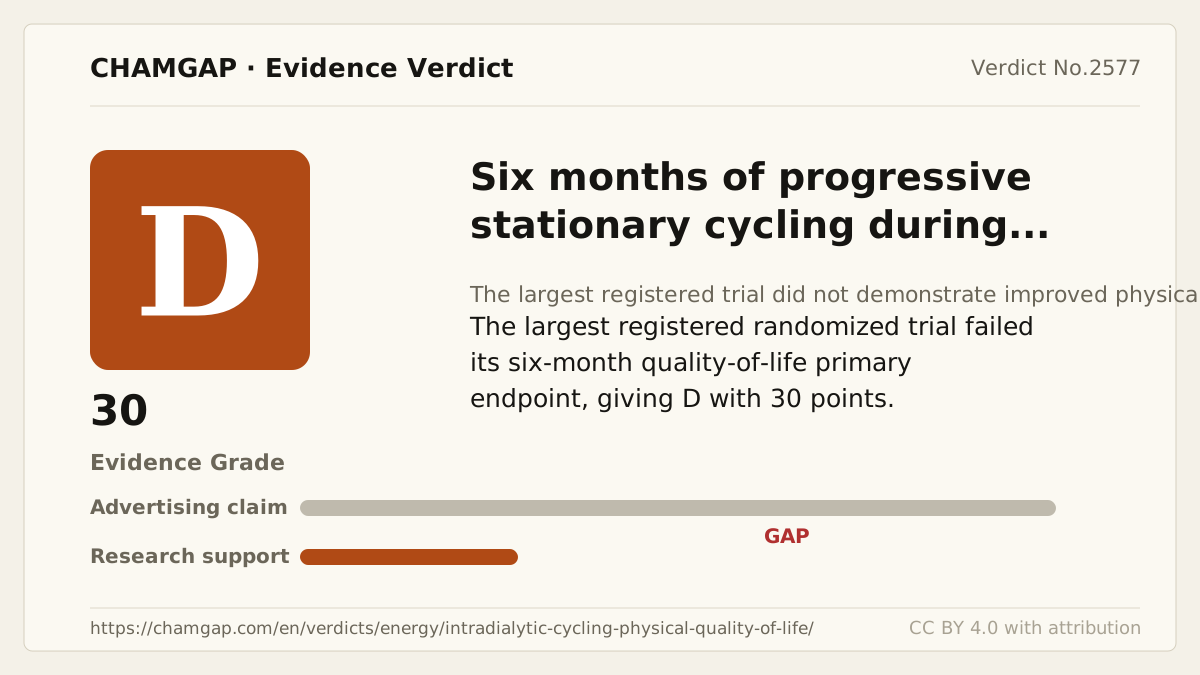
[Chamgap] Intradialytic cycling x physical health-related quality of life — Evidence Grade D·30. 3 cited sources checked. Source: https://chamgap.com/en/verdicts/energy/intradialytic-cycling-physical-quality-of-life/ · CC BY 4.0CC BY 4.0 — free to use with attribution; do not distort grades, numbers, or verdict meaning.
What this document does and does not do
Chamgap is an information source. It reports what research has and has not confirmed; it does not tell readers what to take or buy. That decision belongs to readers and, when needed, medical or legal professionals. This verdict reflects literature available up to the search date and may change as new research appears. Nothing here is medical advice.