
Gold kiwifruit plus iron-fortified cereal,
does it really help with Improved iron-storage markers in nonanemic women with low iron stores?
research showsThe grade is C with 46 points. Eighty-nine nonanemic women aged 18 to 44 with low iron stores were randomized, 44 versus 45, and 33 versus 36 entered the final analysis after sixteen weeks. Median ferritin change, with interquartile range, was +10.0 (3.0 to 17.5) versus +1.0 (-2.8 to 6.5) micrograms/L. Twenty participants were absent from the completer analysis, a 22.5% withdrawal or exclusion rate, and standardized effect size cannot be reconstructed from medians and quartiles alone.
ads claimAdvice to pair vitamin-C-rich fruit with iron has direct iron-storage evidence in this specific population and fortified-cereal context. It should not be generalized to iron-replete people, every iron-containing food, treatment of anemia, or immediate fatigue relief.
Useful facts when choosing a product
- Participants were not the general population: they had ferritin at or below 25 micrograms/L and hemoglobin at or above 115 g/L.
- Each breakfast contained 64.4 g cereal fortified with 16 mg iron, 150 mL milk, and either 171 g gold kiwifruit or 104 g banana.
- Two gold kiwifruit supplied an average 164 mg vitamin C, varying from 182 mg early to 144 mg later during storage.
- Median ferritin change was +10.0 versus +1.0 micrograms/L; between-group hemoglobin change was not significant.
Chamgap Semantic Classification Code
Candidate index · review held
F.iron-fortified-cereal-providing-iron.oral.iron-storage-markers-in-nonanemic-women-with-low-iron-stores.improve.UNKFoods and beverages > Iron-fortified cereal providing iron > Oral > iron-storage markers in nonanemic women with low iron stores > Improvement claim > Unknown
An automated migration candidate, not an issued permanent code; exact claim scope remains under review. This machine-generated migration candidate helps retrieval but is not a permanent assignment. The original verdict ID and URL remain authoritative.
What the research actually shows
Eighty-nine women aged 18 to 44 with ferritin at or below 25 micrograms/L and hemoglobin at or above 115 g/L were randomized, 44 versus 45. They ate iron-fortified cereal and milk with either two gold kiwifruit or one banana for sixteen weeks; final analyses included 33 and 36. The registry target was 100, but 89 were randomized. ACTRN12608000360314 exists and matches the trial, although the registry page could not be opened directly to verify its exact primary-outcome wording. The protocol prespecified iron status including ferritin, hemoglobin, C-reactive protein, and soluble transferrin receptor. Ferritin changes of +10.0 (interquartile range 3.0 to 17.5) and +1.0 (-2.8 to 6.5) micrograms/L are medians and interquartile ranges, not confidence intervals. The intervention was whole gold kiwifruit, so vitamin C cannot be separated from its other components. This measured sixteen-week iron status rather than single-meal fractional absorption. More absorption and better health are different questions, and no trial was identified that directly measured anemia or fatigue outcomes for this exact pairing.
Why this is classified as C (46)
Ferritin and soluble transferrin receptor improved in a sixteen-week randomized trial, but no validated clinical threshold exists, standardized magnitude cannot be recovered from medians and quartiles, and only 69 completers were analyzed, giving C with 46 points.
Counterpoint. Iron-deficiency anemia or persistently low ferritin warrants evaluation for bleeding, malabsorption, or another cause rather than reliance on this food pairing alone.
Rejudgment record. Cross-check applied — Ferritin was reported only as medians and interquartile ranges, preventing standardized effect-size reconstruction; 2.5 micrograms/L was a sample-size assumption, not an externally validated threshold
| Endpoint | S | Surrogate marker - laboratory or imaging measures |
| Replication | R1 | Single confirmatory trial |
| Independence | I1 | Mixed funding sources |
| Effect size | EX | The clinical size of the effect could not be judged |
Stored derived and displayed grades match; this is not a current recalculation or validity check (C).
Sub-claim grades by effect
This ingredient is marketed for several effects. A single overall grade blends strong and weak claims together, so each effect is graded separately here. The overall grade reflects the strongest disconfirming or core claim.
| Effect (sub-claim) | Grade | Basis |
|---|---|---|
| Improved ferritin and soluble transferrin receptor in women with low iron stores | C | Both iron-storage markers improved versus banana in a sixteen-week randomized trial. |
| Treatment of anemia or fatigue | ? | A between-group hemoglobin effect and a clinical fatigue endpoint were not established. |
Cross-check — AI research and Codex final gate
Evidence Table
| Study | Design | Sample | Funding | Endpoint | Result | Weight |
|---|---|---|---|---|---|---|
| Beck et al. 2011 | Sixteen-week stratified randomized controlled dietary trial | Eighty-nine randomized, 44/45; 69 in final analysis, 33/36 | Zespri International, Massey University Research Fund, and New Horizons for Women Trust | Iron status including ferritin and soluble transferrin receptor | Ferritin change +10.0 versus +1.0 micrograms/L, P<0.001; sTfR -0.5 versus 0.0 mg/L, P=0.001 | Core longer-term iron-storage evidence |
Receipt — 2 References
All 2 cited sources were verified for existence at the original page (as of 2026-08-04).
Final verification and publication gate: Codex · Evidence date: 2026-08-04 · Corrections: none
Cite this verdict
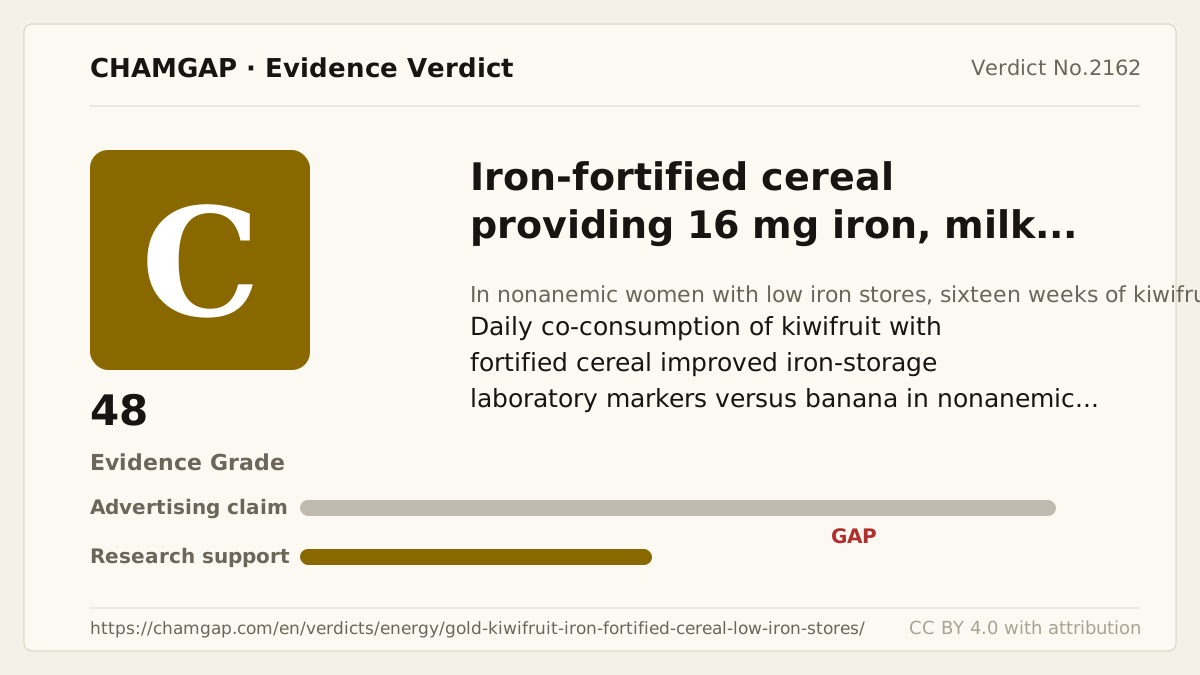
[Chamgap] Gold kiwifruit plus iron-fortified cereal x improved low iron stores — Evidence Grade C·46. 2 cited sources checked. Source: https://chamgap.com/en/verdicts/energy/gold-kiwifruit-iron-fortified-cereal-low-iron-stores/ · CC BY 4.0CC BY 4.0 — free to use with attribution; do not distort grades, numbers, or verdict meaning.
What this document does and does not do
Chamgap is an information source. It reports what research has and has not confirmed; it does not tell readers what to take or buy. That decision belongs to readers and, when needed, medical or legal professionals. This verdict reflects literature available up to the search date and may change as new research appears. Nothing here is medical advice.