
Ferric carboxymaltose,
does it really help with Reduced heart-failure rehospitalization through 52 weeks after stabilization from acute heart failure with iron deficiency?
research showsFerric carboxymaltose is rated C because there is a signal for fewer heart-failure hospitalizations through 52 weeks after stabilization from acute heart failure with iron deficiency, but the prespecified primary result was not significant. AFFIRM-AHF randomized 1,132 patients; the primary composite of total heart-failure hospitalizations plus cardiovascular death gave a rate ratio of 0.79 (95% CI 0.62 to 1.01), P=0.059. Total heart-failure hospitalizations, a secondary endpoint, were reduced with a rate ratio of 0.74 (95% CI 0.58 to 0.94). A positive secondary result after a failed primary endpoint is capped at C under boundary rule ①; a COVID-19 sensitivity analysis does not replace the main analysis, and safety is assessed separately.
ads claimClaims that the infusion definitively prevents heart-failure readmission can present a positive secondary endpoint as though the primary trial succeeded. The evidence is a 52-week recurrent-admission signal in stabilized acute-heart-failure patients with confirmed iron deficiency, not longer survival or benefit for every heart-failure patient.
Useful facts when choosing a product
- Ferric carboxymaltose is a prescription intravenous ferric complex marketed under names including Ferinject.
- AFFIRM-AHF enrolled patients stabilized after an acute-heart-failure admission whose iron deficiency was confirmed with ferritin and transferrin-saturation criteria.
- Patients require observation during and after infusion for reactions and uncommon serious hypersensitivity; extravasation can cause long-lasting brown skin discoloration.
- Repeated or high-dose exposure can cause symptomatic hypophosphatemia and osteomalacia, so serum phosphate should be considered in patients at risk.
Chamgap Semantic Classification Code
Candidate index · review held
M.ferric-carboxymaltose.intravenous.heart-failure-rehospitalization-through-after-stabilization-from-acute-heart-failure-with-iron-deficiency.reduce.placeboMedicinal interventions > Ferric carboxymaltose > Intravenous > heart-failure rehospitalization through after stabilization from acute heart failure with iron deficiency > Reduction claim > Placebo
An automated migration candidate, not an issued permanent code; exact claim scope remains under review. This machine-generated migration candidate helps retrieval but is not a permanent assignment. The original verdict ID and URL remain authoritative.
What the research actually shows
Ponikowski and the AFFIRM-AHF investigators randomized 1,132 patients stabilized after acute heart failure with iron deficiency across multiple centers, with 1,108 included in the modified intention-to-treat analysis. The 52-week total heart-failure hospitalization plus cardiovascular-death result was RR 0.79, P=0.059, whereas total heart-failure hospitalizations alone were RR 0.74, P=0.013. A prespecified analysis censored before COVID-19 disruption reached significance, but the main analysis including pandemic-era follow-up did not. An individual-patient meta-analysis of 4,501 participants from three long-term ferric carboxymaltose trials also found only a trend for total heart-failure hospitalization plus cardiovascular death, RR 0.87, P=0.076, with effects driven by admissions rather than survival.
Why this is classified as C (52)
The secondary total heart-failure hospitalization rate ratio of 0.74 is a real clinical-admission signal. The prespecified AFFIRM-AHF primary composite nevertheless failed, RR 0.79 with P=0.059, and the corresponding individual-patient meta-analytic composite had P=0.076. Rule ① limits the verdict to C with 52 points. Hypophosphatemia, hypersensitivity, and extravasation remain separate safety issues.
Counterpoint. Iron repletion may have separate evidence for symptoms and function in heart failure, but this verdict is restricted to 52-week rehospitalization after stabilization from acute heart failure. It should not be conflated with the chronic HFrEF symptom verdict.
Rejudgment record. New verdict — Accepted the secondary total heart-failure hospitalization signal in AFFIRM-AHF, rate ratio 0.74, but applied the rule ① ceiling of C because the prespecified primary composite was nonsignificant, rate ratio 0.79 and P=0.059, while the corresponding individual-patient meta-analytic composite also remained a trend
Sub-claim grades by effect
This ingredient is marketed for several effects. A single overall grade blends strong and weak claims together, so each effect is graded separately here. The overall grade reflects the strongest disconfirming or core claim.
| Effect (sub-claim) | Grade | Basis |
|---|---|---|
| Reduced total heart-failure rehospitalizations through 52 weeks after stabilization from iron-deficient acute heart failure | C | The secondary endpoint was positive at RR 0.74, but the failed primary composite invokes the rule ① ceiling of C. |
| Reduced composite of total heart-failure hospitalizations and cardiovascular death through 52 weeks | D | The prespecified primary composite did not reach statistical significance, RR 0.79 with P=0.059. |
| Reduced cardiovascular death through 52 weeks | D | Neither AFFIRM-AHF nor the individual-patient meta-analysis showed a mortality benefit; effects were driven by fewer admissions. |
Cross-check — AI research and Codex final gate
Evidence Table
| Study | Design | Sample | Funding | Endpoint | Result | Weight |
|---|---|---|---|---|---|---|
| Ponikowski P et al. and AFFIRM-AHF investigators. 2020 | Multicenter randomized double-blind placebo-controlled trial | 1,132 randomized; 1,108 in the modified intention-to-treat analysis | Vifor Pharma | Primary 52-week composite of total heart-failure hospitalizations plus cardiovascular death and total heart-failure hospitalizations | Primary composite RR 0.79 (95% CI 0.62 to 1.01), P=0.059; total heart-failure hospitalization RR 0.74 (95% CI 0.58 to 0.94), P=0.013. | Pivotal randomized trial with a failed primary endpoint |
| Ponikowski P et al. 2023 | Individual-patient meta-analysis of long-term placebo-controlled randomized trials | 4,501 participants in three trials | Industry support and author involvement from CSL Vifor and American Regent | Recurrent cardiovascular or heart-failure hospitalizations and cardiovascular death through 52 weeks | Total heart-failure hospitalization plus cardiovascular death was a trend, RR 0.87 (95% CI 0.75 to 1.01), P=0.076, with benefit driven by admissions rather than mortality. | Synthesis with limited confirmatory strength |
Receipt — 2 References
All 2 cited sources were verified for existence at the original page (as of 2026-07-22).
Final verification and publication gate: Codex · Evidence date: 2026-07-22 · Corrections: none
Cite this verdict
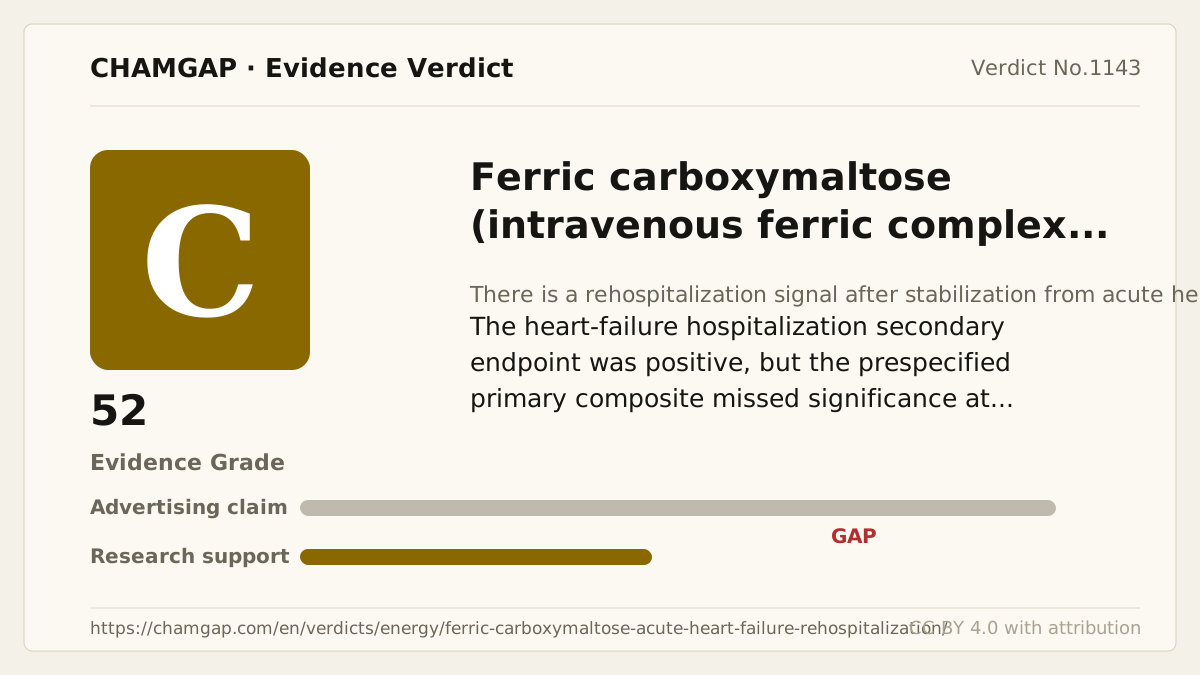
[Chamgap] Ferric carboxymaltose x reduced rehospitalization after stabilization from iron-deficient acute heart failure — Evidence Grade C·52. 2 cited sources checked. Source: https://chamgap.com/en/verdicts/energy/ferric-carboxymaltose-acute-heart-failure-rehospitalization/ · CC BY 4.0CC BY 4.0 — free to use with attribution; do not distort grades, numbers, or verdict meaning.
What this document does and does not do
Chamgap is an information source. It reports what research has and has not confirmed; it does not tell readers what to take or buy. That decision belongs to readers and, when needed, medical or legal professionals. This verdict reflects literature available up to the search date and may change as new research appears. Nothing here is medical advice.