
Efgartigimod,
does it really help with Improved activities of daily living in AChR-antibody-positive generalized myasthenia gravis?
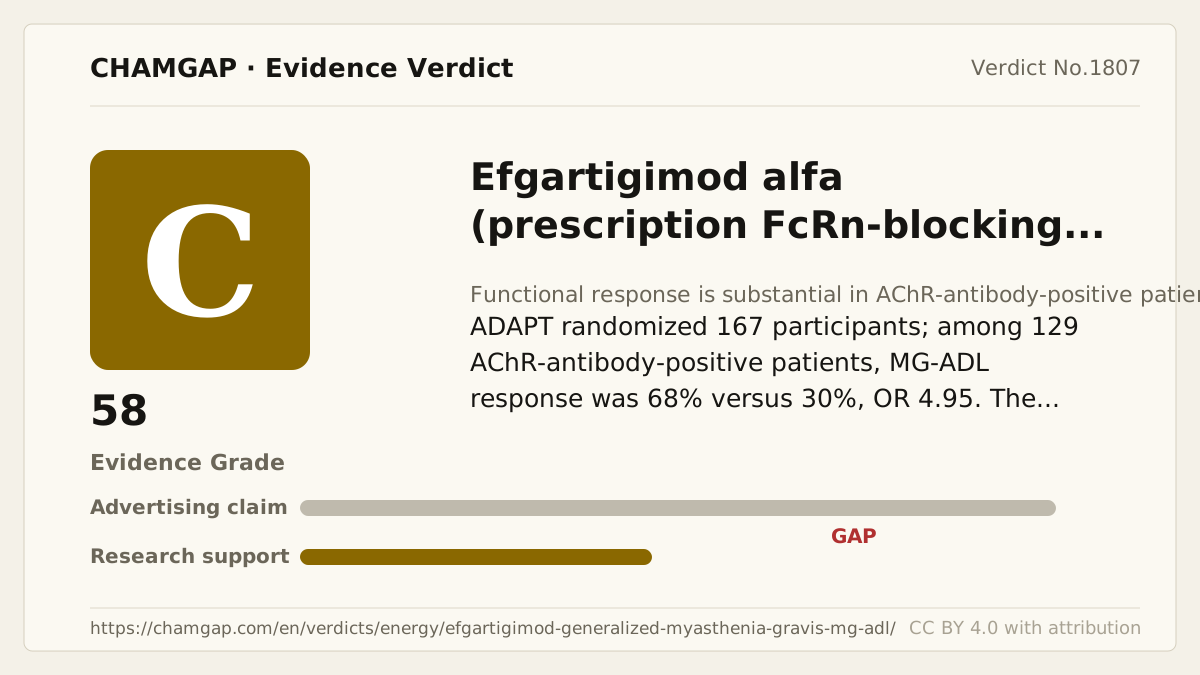
research showsIn ADAPT, efgartigimod increased the first-cycle MG-ADL responder rate to 68% from 30% with placebo among AChR-antibody-positive patients. Response required at least a two-point MG-ADL reduction sustained for four consecutive weeks, with the first improvement beginning within one week after the last infusion. Muppidi 2011 found that a two-point improvement best predicted clinical improvement, making this a meaningful patient-reported functional outcome. However, the prespecified primary analysis included 129 antibody-positive patients from 167 randomized, there is one confirmatory placebo-controlled trial, and the evidence is manufacturer-only. The P, R1, I0, and B1 profile yields C with 50 points.
ads claimMarketing may extend an antibody-lowering pharmacologic description into sustained functional recovery for every patient with generalized myasthenia gravis. Direct confirmation concerns AChR-antibody-positive adults and response during the first treatment cycle.
Useful facts when choosing a product
- ADAPT randomized and treated 167 participants, but the prespecified primary efficacy analysis included 129 AChR-antibody-positive patients, 65 and 64 per group.
- MG-ADL response required at least a two-point improvement sustained for four consecutive weeks, beginning within one week after the last infusion.
- ADAPT was funded by argenx; no independently funded confirmatory placebo-controlled trial was identified.
Chamgap Semantic Classification Code
Candidate index · review held
M.efgartigimod-alfa.UNK.activities-of-daily-living-in-achr-antibody-positive-generalized-myasthenia-gravis.improve.placeboMedicinal interventions > Efgartigimod alfa > Unknown > activities of daily living in AChR-antibody-positive generalized myasthenia gravis > Improvement claim > Placebo
An automated migration candidate, not an issued permanent code; exact claim scope remains under review. This machine-generated migration candidate helps retrieval but is not a permanent assignment. The original verdict ID and URL remain authoritative.
What the research actually shows
Howard and colleagues randomized 167 participants 1:1 to efgartigimod or placebo in phase 3 ADAPT. The actual prespecified primary analysis included 129 AChR-antibody-positive patients, 65 and 64 per group, and first-cycle MG-ADL response succeeded at 68% versus 30%, OR 4.95. The ADAPT paper defines response as a reduction of at least two points sustained for four consecutive weeks, with the first reduction starting within one week after the last infusion. An independent scale study by Muppidi and colleagues found that a two-point MG-ADL improvement best predicted clinical improvement. ADAPT was the single confirmatory trial and was funded by argenx; company employees were coauthors.
Why this is classified as C (50)
The validated patient-reported functional endpoint showed a large E+ effect, but R1, I0, and B1 ceilings apply. Restricted to the 129 AChR-antibody-positive patients, the verdict is C with 50 points.
Counterpoint. AChR-antibody-positive adults have a meaningfully higher chance of functional response, but repeat-cycle and long-term treatment decisions require specialist care.
Rejudgment record. Cross-check applied — Accepted the validated patient-reported MG-ADL response while applying ceilings for one confirmatory trial, manufacturer-only evidence, and fewer than 200 participants
| Endpoint | P | Symptom or function itself is the target - including patient reports and performance tests |
| Replication | R1 | Single confirmatory trial |
| Independence | I0 | Evidence comes only from manufacturer studies |
| Effect size | E+ | Meets the clinically important threshold |
Stored derived and displayed grades match; this is not a current recalculation or validity check (C).
Sub-claim grades by effect
This ingredient is marketed for several effects. A single overall grade blends strong and weak claims together, so each effect is graded separately here. The overall grade reflects the strongest disconfirming or core claim.
| Effect (sub-claim) | Grade | Basis |
|---|---|---|
| Higher first-cycle MG-ADL response in AChR-antibody-positive patients | C | The endpoint succeeded at 68% versus 30%, but evidence comes from one manufacturer-funded confirmatory trial. |
| Sustained four-week functional improvement of at least two MG-ADL points | C | The trial used a validated clinically meaningful threshold and found a large first-cycle effect. |
| Equivalent functional improvement in AChR-antibody-negative patients | ? | The primary efficacy analysis was restricted to 129 antibody-positive patients and did not establish efficacy in the antibody-negative group. |
Cross-check — AI research and Codex final gate
Evidence Table
| Study | Design | Sample | Funding | Endpoint | Result | Weight |
|---|---|---|---|---|---|---|
| Howard JF Jr et al. 2021 ADAPT | Phase 3 multicenter randomized double-blind placebo-controlled trial | 167 randomized and treated; actual primary analysis 129 AChR-antibody-positive patients (65/64) | Funded by argenx; company employees were coauthors | First-cycle MG-ADL response: at least two-point improvement sustained for four consecutive weeks | 44/65 (68%) versus 19/64 (30%), OR 4.95 (95% CI 2.21 to 11.53), P<0.0001; primary endpoint met. | Pivotal confirmatory efficacy evidence |
| Muppidi S et al. 2011 | MG-ADL validity and clinically meaningful change study | Clinical myasthenia gravis assessment cohort | Academic multicenter research; not a manufacturer efficacy trial | Association between MG-ADL change and clinical improvement | A two-point MG-ADL improvement best predicted clinical improvement. | Source for clinical meaningfulness of the responder threshold |
Receipt — 2 References
All 2 cited sources were verified for existence at the original page (as of 2026-07-24).
Final verification and publication gate: Codex · Evidence date: 2026-07-24 · Corrections: none
Cite this verdict
[Chamgap] Efgartigimod x improved daily function in generalized myasthenia gravis — Evidence Grade C·50. 2 cited sources checked. Source: https://chamgap.com/en/verdicts/energy/efgartigimod-generalized-myasthenia-gravis-mg-adl/ · CC BY 4.0CC BY 4.0 — free to use with attribution; do not distort grades, numbers, or verdict meaning.
What this document does and does not do
Chamgap is an information source. It reports what research has and has not confirmed; it does not tell readers what to take or buy. That decision belongs to readers and, when needed, medical or legal professionals. This verdict reflects literature available up to the search date and may change as new research appears. Nothing here is medical advice.