
Early acute-phase rehabilitation,
does it really help with Reduced 12-month readmission and mortality?
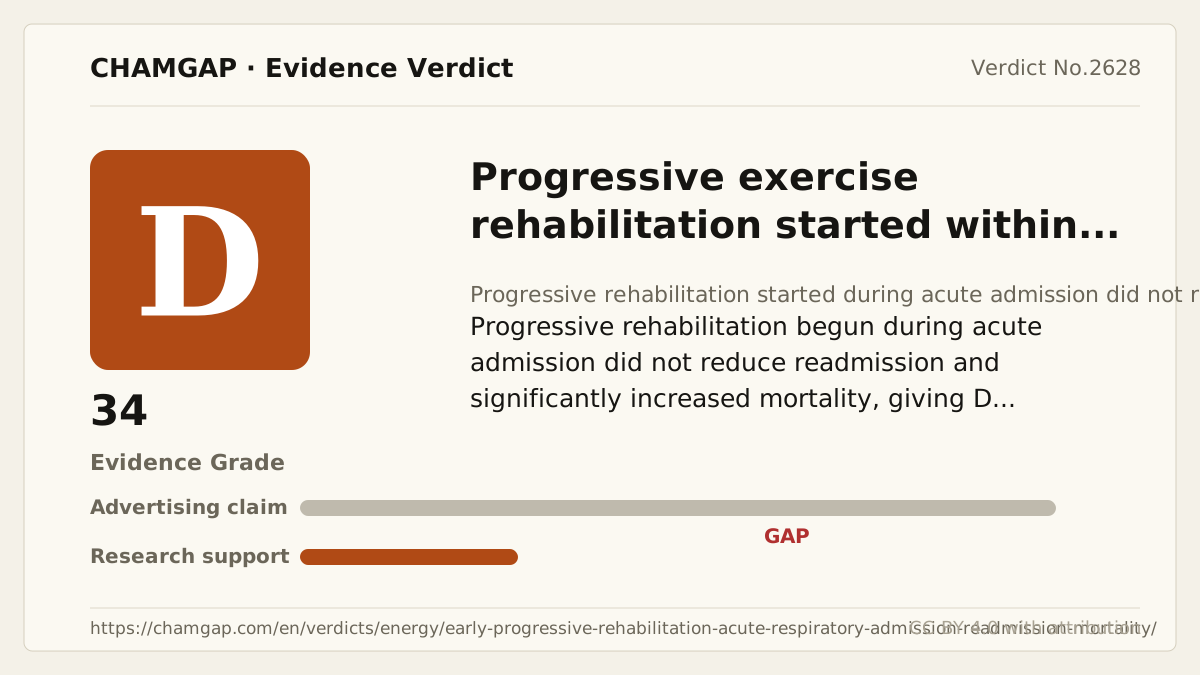
research showsThe grade is D. A trial randomized 389 people admitted with exacerbations of chronic respiratory disease, 196 versus 193. The 12-month primary readmission outcome was 62% versus 58%, HR 1.10 (95% CI 0.86-1.43), showing no reduction. Mortality was higher, 49/196 (25%) versus 31/193 (16%), OR 1.74 (1.05-2.88), giving D with 34 points.
ads claimEvidence that pulmonary rehabilitation helps during stable disease or recovery after discharge cannot simply be transferred to progressive exercise during the earliest phase of acute illness. Timing and patient state define a different treatment.
Useful facts when choosing a product
- The program began within 48 hours and combined progressive aerobic and resistance exercise with neuromuscular electrical stimulation for six weeks.
- The registered and published primary endpoint was 12-month readmission.
- Unlike verdict 1562 on post-discharge pulmonary rehabilitation, this verdict concerns initiation during acute admission.
Chamgap Semantic Classification Code
Candidate index · review held
X.progressive-exercise-rehabilitation-started-within-of-acute-respiratory-admission.behavioral.readmission-and-mortality.reduce.usual-careBehaviors, exposures and policies > Progressive exercise rehabilitation started within of acute respiratory admission > Behavioral delivery > readmission and mortality > Reduction claim > Usual care
An automated migration candidate, not an issued permanent code; exact claim scope remains under review. This machine-generated migration candidate helps retrieval but is not a permanent assignment. The original verdict ID and URL remain authoritative.
What the research actually shows
Two UK hospitals randomized 389 patients admitted with exacerbations of chronic respiratory disease to early rehabilitation, 196, or usual care, 193; 320 (82%) had COPD as the primary diagnosis. The intervention began within 48 hours and continued for six weeks with aerobic, resistance, neuromuscular electrical stimulation, and self-management components. The ISRCTN05557928 registered primary endpoint was 12-month readmission and matched the paper. Primary analysis followed intention to treat. NIHR CLAHRC funded the study. The implementation method for allocation concealment was not confirmed in the accessible report.
Why this is classified as D (34)
A large publicly funded randomized trial found no clinical-event benefit and significant mortality harm, but there was no independent repeated trial, giving D with 34 points.
Counterpoint. This grade addresses benefit from immediate acute-phase progressive rehabilitation, not all stable or post-discharge pulmonary rehabilitation.
Rejudgment record. Cross-check applied — The BMJ paper and ISRCTN record were checked for allocation, primary endpoint, intention-to-treat analysis, readmission, mortality, and NIHR funding
| Endpoint | H | Hard endpoint - actual events such as death |
| Replication | R1 | Single confirmatory trial |
| Independence | I2 | Decisive evidence is publicly or non-profit funded |
| Effect size | E- | Harm increased in the trials |
| Precision | C0 | The confidence interval leaves room for benefit |
Stored derived and displayed grades match; this is not a current recalculation or validity check (D).
Sub-claim grades by effect
This ingredient is marketed for several effects. A single overall grade blends strong and weak claims together, so each effect is graded separately here. The overall grade reflects the strongest disconfirming or core claim.
| Effect (sub-claim) | Grade | Basis |
|---|---|---|
| Reduced 12-month readmission | D | Rates were 62% versus 58%, HR 1.10, with no benefit. |
| Reduced 12-month mortality | D | Mortality was significantly higher, 25% versus 16%. |
Cross-check — AI research and Codex final gate
Evidence Table
| Study | Design | Sample | Funding | Endpoint | Result | Weight |
|---|---|---|---|---|---|---|
| Greening NJ, Williams JEA, Hussain SF, et al. 2014 | Prospective randomized usual-care-controlled trial | 389 randomized, 196 versus 193; primary intention-to-treat analysis | NIHR CLAHRC Leicestershire, Northamptonshire and Rutland | Primary 12-month readmission and secondary mortality | Readmission was 62% versus 58%, HR 1.10 (0.86-1.43); mortality was 49/196 versus 31/193, OR 1.74 (1.05-2.88). | Only large publicly funded direct trial |
Receipt — 1 References
All 1 cited sources were verified for existence at the original page (as of 2026-08-15).
Final verification and publication gate: Codex · Evidence date: 2026-08-15 · Corrections: none
Cite this verdict
[Chamgap] Early acute-phase rehabilitation x lower respiratory readmission and mortality — Evidence Grade D·34. 1 cited sources checked. Source: https://chamgap.com/en/verdicts/energy/early-progressive-rehabilitation-acute-respiratory-admission-readmission-mortality/ · CC BY 4.0CC BY 4.0 — free to use with attribution; do not distort grades, numbers, or verdict meaning.
What this document does and does not do
Chamgap is an information source. It reports what research has and has not confirmed; it does not tell readers what to take or buy. That decision belongs to readers and, when needed, medical or legal professionals. This verdict reflects literature available up to the search date and may change as new research appears. Nothing here is medical advice.