
Dunggulle tea,
does it really help with Recovery from everyday fatigue in non-deficient adults?
research showsThe verdict is pending. The target species is dunggulle, Polygonatum odoratum. No human comparison of its roasted-rhizome infusion for everyday fatigue was identified within the search scope. Extract evidence for P. sibiricum and P. kingianum concerns different species and forms.
ads claimPure Polygonatum rhizome infusion is not a tea-leaf caffeine beverage, but that does not establish fatigue recovery. Blends may include rice, tea leaf, or other ingredients. No previous corpus verdict concerns the same food, so no extract or other tea result was substituted.
Useful facts when choosing a product
- Pure Polygonatum rhizome infusion is not inherently a caffeine source; blended products require ingredient-label review.
- Infusate composition depends on species, roasting, rhizome dose, water volume, and steeping time; no standardized trial dose was found.
- Bencao Gangmu volume 12 lists Yuzhu as an alias under Weirui while listing Huangjing separately. The verified Donguibogam heading is Huangjing, so it should not automatically be equated with Yuzhu or Weirui.
- Reproducible search: exact PubMed query stated above, ClinicalTrials.gov, and Google Scholar; run 2026-08-03; no eligible study of traditional Polygonatum odoratum infusion and everyday fatigue identified within the search scope. Capsules, a 6 g concentrated extract drink, and animal studies were excluded for formulation or endpoint mismatch.
Chamgap Semantic Classification Code
Candidate index · review held
F.dunggulle-tea-brewed-from-roasted-polygonatum-odoratum-rhizome.food.recovery-from-everyday-fatigue.assess.UNKFoods and beverages > Dunggulle tea brewed from roasted Polygonatum odoratum rhizome > Food consumption > Recovery from everyday fatigue > Association or change assessment > Unknown
An automated migration candidate, not an issued permanent code; exact claim scope remains under review. This machine-generated migration candidate helps retrieval but is not a permanent assignment. The original verdict ID and URL remain authoritative.
What the research actually shows
Human records found in screening concerned a four-week extract-capsule insomnia trial and a manufacturer extract-drink exercise trial. No traditional infusion trial supplied rhizome grams, water volume, cups per day, primary fatigue scale, analyzed sample, or between-group effect size. A 2025 clinical overview likewise concluded that Polygonatum clinical studies are insufficient for indication or dosing guidance.
Why this is classified as ?
No human comparison matched both the brewed form and everyday-fatigue endpoint, leaving the verdict unscored and pending.
Counterpoint. Extract studies do not prove brewed-tea efficacy, while the absence of brewed-tea data is also not a null result.
Rejudgment record. Cross-check applied — Extract studies were separated from traditional infusion, and reproducible searches found no eligible human everyday-fatigue study
| Endpoint | P | Symptom or function itself is the target - including patient reports and performance tests |
Stored derived and displayed grades match; this is not a current recalculation or validity check (?).
Sub-claim grades by effect
This ingredient is marketed for several effects. A single overall grade blends strong and weak claims together, so each effect is graded separately here. The overall grade reflects the strongest disconfirming or core claim.
| Effect (sub-claim) | Grade | Basis |
|---|---|---|
| Everyday-fatigue recovery from Polygonatum odoratum infusion | ? | No human study matching species, form, and endpoint was identified within the search scope. |
Cross-check — AI research and Codex final gate
Evidence Table
| Study | Design | Sample | Funding | Endpoint | Result | Weight |
|---|---|---|---|---|---|---|
| Reproducible literature search on 2026-08-03 | PubMed, ClinicalTrials.gov, and Google Scholar searches | No eligible P. odoratum brewed-tea human study identified within the search scope | Not applicable | Everyday fatigue score | No P. odoratum infusion trial identified within the search scope | Direct basis for a pending verdict |
Receipt — 2 References
Of 2 cited sources, 1 had limited original-page access (blocked or summary-only) and were verified via index/summary, marked partial; the rest were verified at the original page. As of 2026-08-03.
Final verification and publication gate: Codex · Evidence date: 2026-08-03 · Corrections: none
Cite this verdict
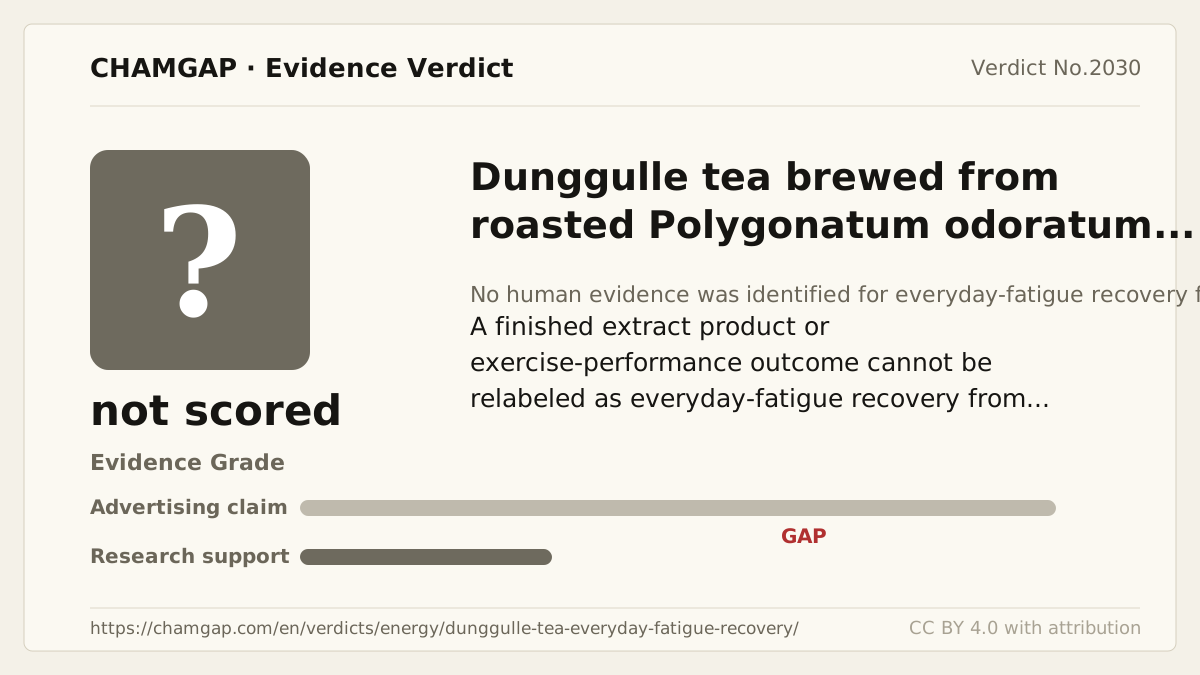
[Chamgap] Dunggulle tea x recovery from everyday fatigue — Evidence Grade ?. 2 cited sources checked. Source: https://chamgap.com/en/verdicts/energy/dunggulle-tea-everyday-fatigue-recovery/ · CC BY 4.0CC BY 4.0 — free to use with attribution; do not distort grades, numbers, or verdict meaning.
What this document does and does not do
Chamgap is an information source. It reports what research has and has not confirmed; it does not tell readers what to take or buy. That decision belongs to readers and, when needed, medical or legal professionals. This verdict reflects literature available up to the search date and may change as new research appears. Nothing here is medical advice.