
Extended-release fampridine or dalfampridine,
does it really help with Improved walking speed and ability in a subset of people with multiple sclerosis?
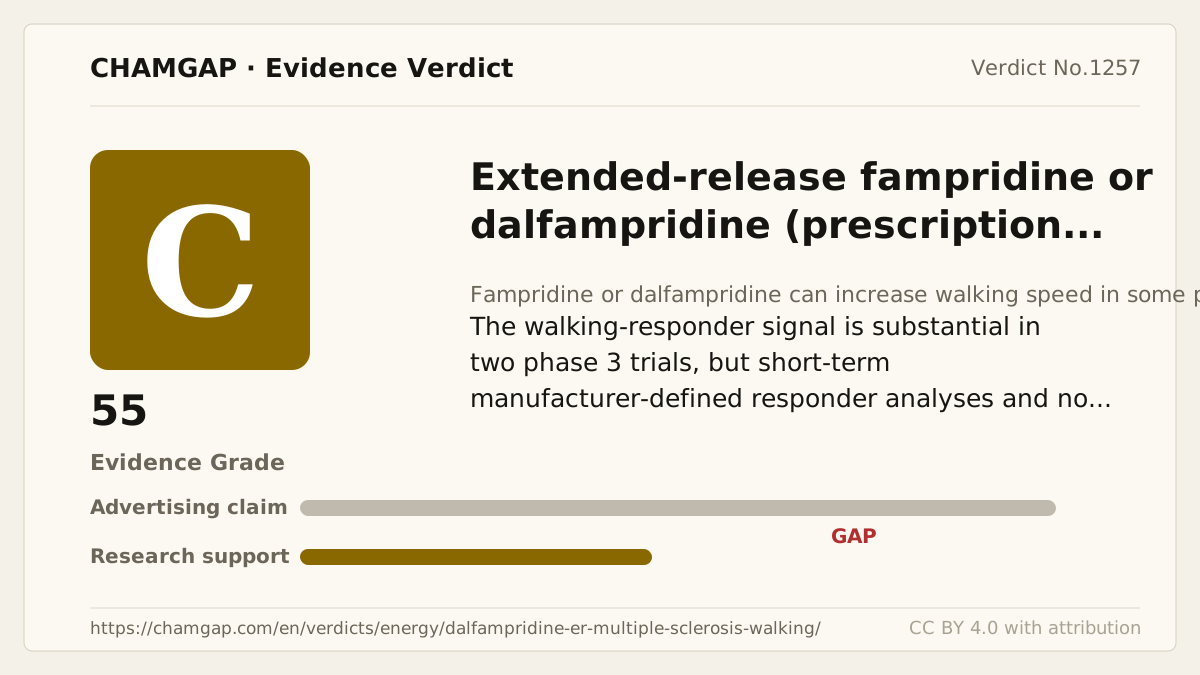
research showsExtended-release fampridine or dalfampridine is rated C because two phase 3 trials show short-term improvement in walking speed for a subset of people with multiple sclerosis. In the confirmatory nine-week trial, 42.9% versus 9.3% met the Timed 25-Foot Walk responder definition, and treated responders walked an average of 24.7% faster than baseline. The result depends on a manufacturer-developed responder analysis, most patients did not respond, and the effect reversed after discontinuation. This is symptomatic functional improvement rather than evidence of reduced disease progression, accumulated disability, or hospitalization, so the grade remains C.
ads claimMarketing can expand symptomatic faster walking into overall mobility recovery, greater energy, or slowed multiple-sclerosis progression. In practice, this is a limited symptomatic treatment whose value should be checked objectively within the first several weeks and discontinued in nonresponders.
Useful facts when choosing a product
- Fampridine and dalfampridine are regional names for the same 4-aminopyridine molecule. A common regimen is one 10-mg extended-release tablet twice daily about 12 hours apart.
- The tablet must be swallowed whole because splitting, crushing, or chewing can accelerate release and increase seizure risk. A missed dose should not be doubled.
- The medicine is contraindicated with a seizure history or moderate to severe kidney impairment, and increased exposure also requires caution in mild kidney impairment and older adults.
- Urinary tract infection, insomnia, dizziness, headache, nausea, and balance problems can occur. Seizures can occur at the recommended dose, requiring discontinuation and urgent medical assessment.
Chamgap Semantic Classification Code
Candidate index · review held
M.extended-release-fampridine-or-dalfampridine.UNK.walking-speed-and-ability-in-a-subset-of-people-with-multiple-sclerosis.improve.placeboMedicinal interventions > Extended-release fampridine or dalfampridine > Unknown > walking speed and ability in a subset of people with multiple sclerosis > Improvement claim > Placebo
An automated migration candidate, not an issued permanent code; exact claim scope remains under review. This machine-generated migration candidate helps retrieval but is not a permanent assignment. The original verdict ID and URL remain authoritative.
What the research actually shows
The 301-participant multicenter phase 3 trial by Goodman and colleagues in 2009 reported Timed 25-Foot Walk responders in 35% with extended-release fampridine 10 mg twice daily and 8% with placebo. The 239-participant confirmatory trial published in 2010 found 42.9% versus 9.3% after nine weeks, with a 24.7% average speed gain among treated responders. Both belonged to the Acorda Therapeutics development program and centered on a responder analysis. Product information summarizes effects across major MS course types but states that a drug-placebo difference was not established for the treatment groups on the patient-reported MSWS-12. Open-label extensions suggest persistent response in some patients but lose randomized control and do not establish disease modification or less long-term disability.
Why this is classified as C (55)
Two placebo-controlled phase 3 trials consistently support a higher walking-responder rate and greater speed among responders. The evidence nevertheless reflects a manufacturer-defined responder analysis rather than recovery across all patients, is short in duration, and shows loss of effect after discontinuation. No hard-outcome evidence establishes less disease progression, accumulated disability, or hospitalization, giving C with 55 points.
Counterpoint. Timed walking performance and the patient's perceived mobility should be assessed together soon after treatment starts. Without meaningful benefit, continued exposure to seizure risk and cost has little justification, while rehabilitation, assistive devices, fall prevention, and disease-modifying therapy remain separate needs.
Rejudgment record. Cross-check applied — Accepted positive Timed 25-Foot Walk responder findings from two manufacturer phase 3 trials, but assigned C for short duration, selected responder definition, reversal after discontinuation, and no evidence on disease progression or long-term disability hard outcomes
Sub-claim grades by effect
This ingredient is marketed for several effects. A single overall grade blends strong and weak claims together, so each effect is graded separately here. The overall grade reflects the strongest disconfirming or core claim.
| Effect (sub-claim) | Grade | Basis |
|---|---|---|
| Improved walking speed and ability in a subset of people with multiple sclerosis | C | Two short phase 3 trials found more responders than placebo, but most patients did not respond and the conclusion depends on a responder analysis. |
| Long-term walking improvement that persists after discontinuation | D | Walking-speed gains reversed after discontinuation in randomized trials, and persistent long-term benefit has not been established. |
| Reduction of multiple-sclerosis progression or long-term disability | D | As a symptomatic walking treatment, it has not established reduced disease progression, accumulated disability, or hospitalization. |
Cross-check — AI research and Codex final gate
Evidence Table
| Study | Design | Sample | Funding | Endpoint | Result | Weight |
|---|---|---|---|---|---|---|
| Goodman AD et al. 2009, MS-F203 | Multicenter randomized double-blind placebo-controlled phase 3 trial | 301 randomized; 296 in the modified intention-to-treat population | Acorda Therapeutics development trial; company employees among the authors | Timed 25-Foot Walk responders and MSWS-12 | Walking responders were 35% with fampridine and 8% with placebo; treated responders improved speed by an average of 25.2%. | First pivotal phase 3 functional evidence |
| Goodman AD et al. 2010, MS-F204 | Confirmatory randomized double-blind placebo-controlled phase 3 trial at 39 centers | 239 randomized; 237 in the modified intention-to-treat population | Acorda Therapeutics development trial with company employee coauthors | Timed 25-Foot Walk responder status over nine weeks | Responders were 42.9% with dalfampridine and 9.3% with placebo (p<0.0001); treated responders improved speed by 24.7% on average. | Pivotal confirmatory phase 3 functional evidence |
Receipt — 3 References
All 3 cited sources were verified for existence at the original page (as of 2026-07-24).
Final verification and publication gate: Codex · Evidence date: 2026-07-24 · Corrections: none
Cite this verdict
[Chamgap] Extended-release fampridine or dalfampridine x improved walking in a subset of people with multiple sclerosis — Evidence Grade C·55. 3 cited sources checked. Source: https://chamgap.com/en/verdicts/energy/dalfampridine-er-multiple-sclerosis-walking/ · CC BY 4.0CC BY 4.0 — free to use with attribution; do not distort grades, numbers, or verdict meaning.
What this document does and does not do
Chamgap is an information source. It reports what research has and has not confirmed; it does not tell readers what to take or buy. That decision belongs to readers and, when needed, medical or legal professionals. This verdict reflects literature available up to the search date and may change as new research appears. Nothing here is medical advice.